Practice
Meltdowns & Shutdowns
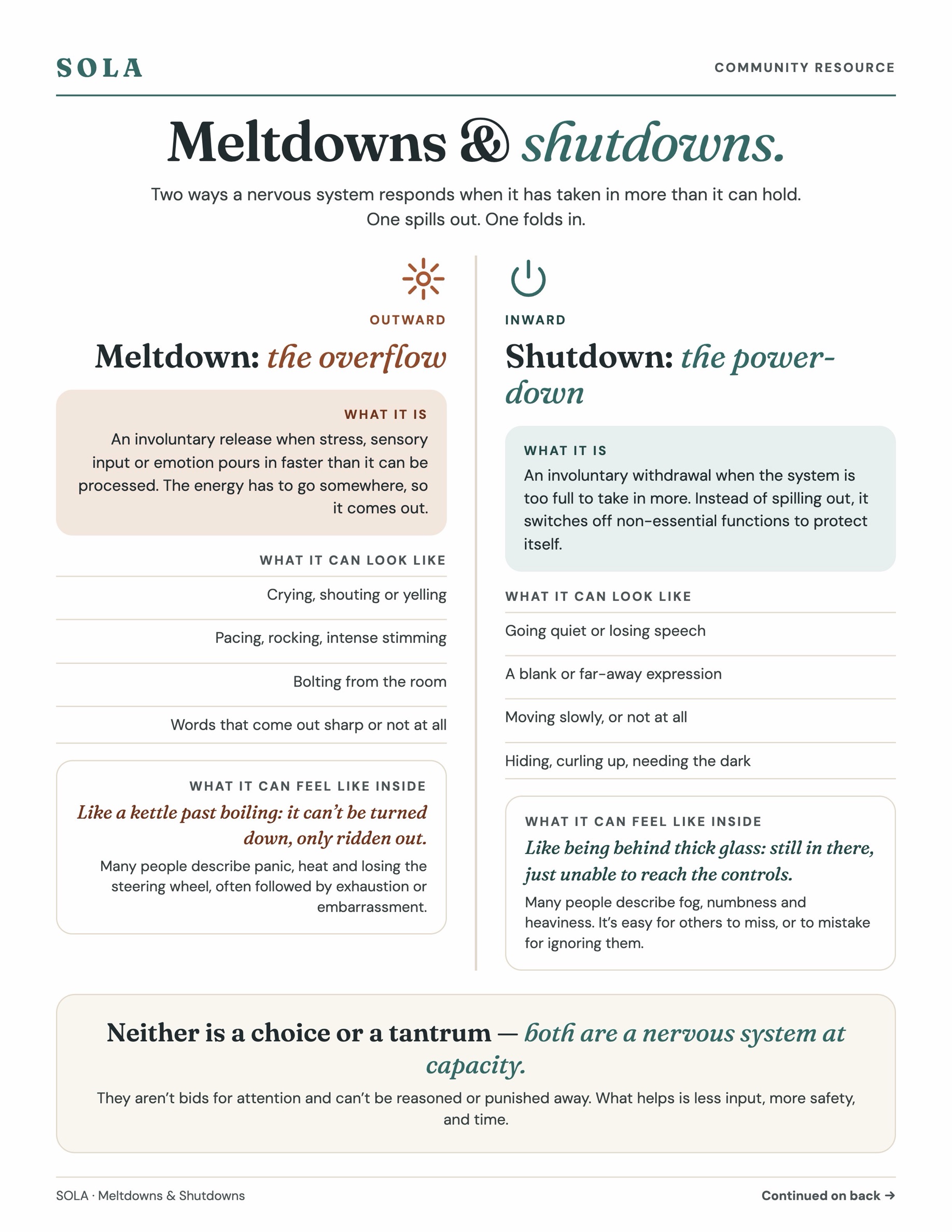
Two ways a nervous system responds when it has taken in more than it can hold. One spills out. One folds in.
The worksheet, as designed. The same content is written out below.
See page 2
Meltdown: the overflow
Outward
What it is
An involuntary release when stress, sensory input or emotion pours in faster than it can be processed. The energy has to go somewhere, so it comes out.
What it can look like
- Crying, shouting or yelling
- Pacing, rocking, intense stimming
- Bolting from the room
- Words that come out sharp or not at all
What it can feel like inside
Like a kettle past boiling: it can’t be turned down, only ridden out.
Many people describe panic, heat and losing the steering wheel, often followed by exhaustion or embarrassment.
Shutdown: the power-down
Inward
What it is
An involuntary withdrawal when the system is too full to take in more. Instead of spilling out, it switches off non-essential functions to protect itself.
What it can look like
- Going quiet or losing speech
- A blank or far-away expression
- Moving slowly, or not at all
- Hiding, curling up, needing the dark
What it can feel like inside
Like being behind thick glass: still in there, just unable to reach the controls.
Many people describe fog, numbness and heaviness. It’s easy for others to miss, or to mistake for ignoring them.
Neither is a choice or a tantrum — both are a nervous system at capacity.
They aren’t bids for attention and can’t be reasoned or punished away. What helps is less input, more safety, and time.
Before, during and after
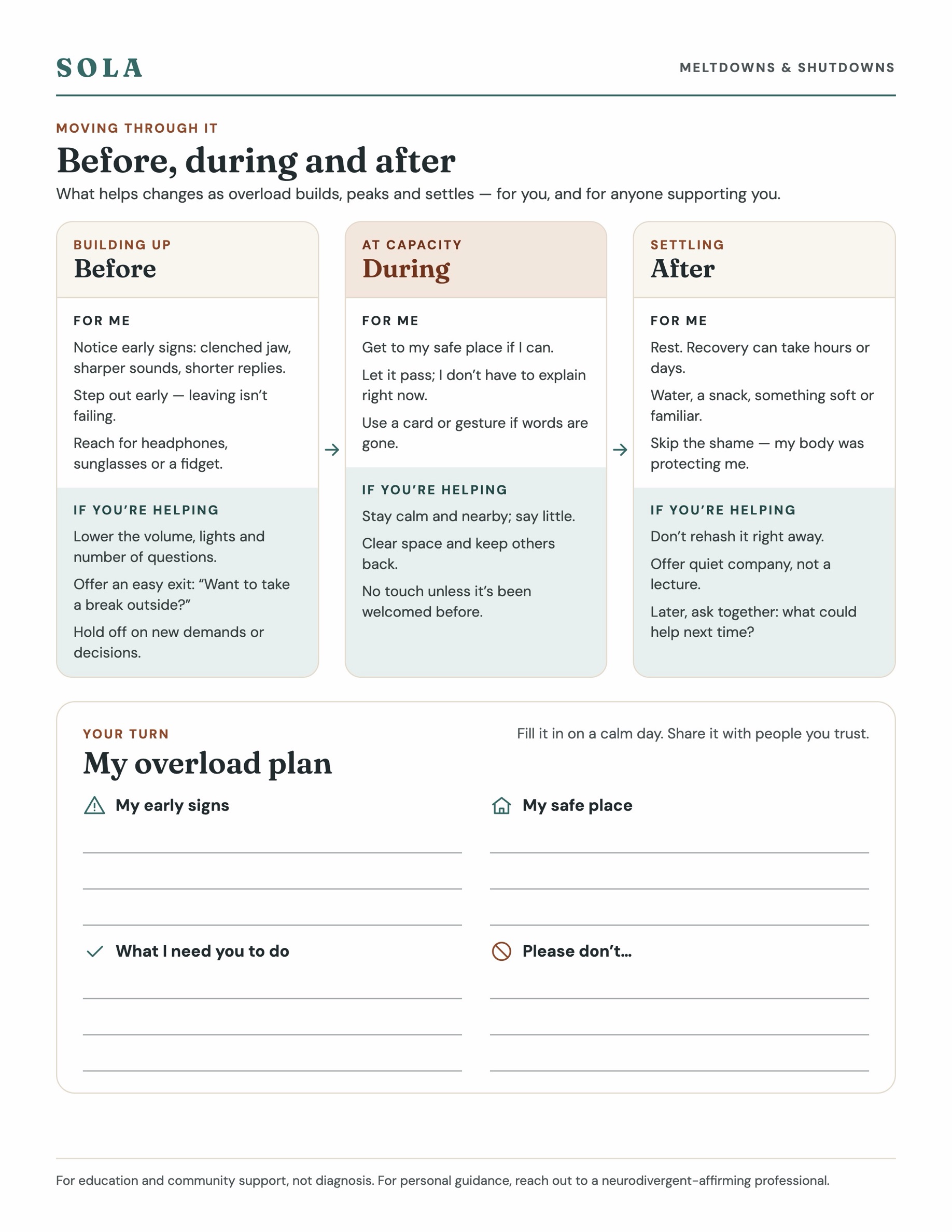
Moving through it. What helps changes as overload builds, peaks and settles — for you, and for anyone supporting you.
Building up — Before
For me
- Notice early signs: clenched jaw, sharper sounds, shorter replies.
- Step out early — leaving isn’t failing.
- Reach for headphones, sunglasses or a fidget.
If you’re helping
- Lower the volume, lights and number of questions.
- Offer an easy exit: “Want to take a break outside?”
- Hold off on new demands or decisions.
At capacity — During
For me
- Get to my safe place if I can.
- Let it pass; I don’t have to explain right now.
- Use a card or gesture if words are gone.
If you’re helping
- Stay calm and nearby; say little.
- Clear space and keep others back.
- No touch unless it’s been welcomed before.
Settling — After
For me
- Rest. Recovery can take hours or days.
- Water, a snack, something soft or familiar.
- Skip the shame — my body was protecting me.
If you’re helping
- Don’t rehash it right away.
- Offer quiet company, not a lecture.
- Later, ask together: what could help next time?
My overload plan
Your turn. Fill it in on a calm day. Share it with people you trust.
For education and community support, not diagnosis. For personal guidance, reach out to a neurodivergent-affirming professional.
Sources and credits. SOLA · Meltdowns & Shutdowns · COMMUNITY RESOURCE