Practice
Time is slippery.
Brain Library · Time Blindness
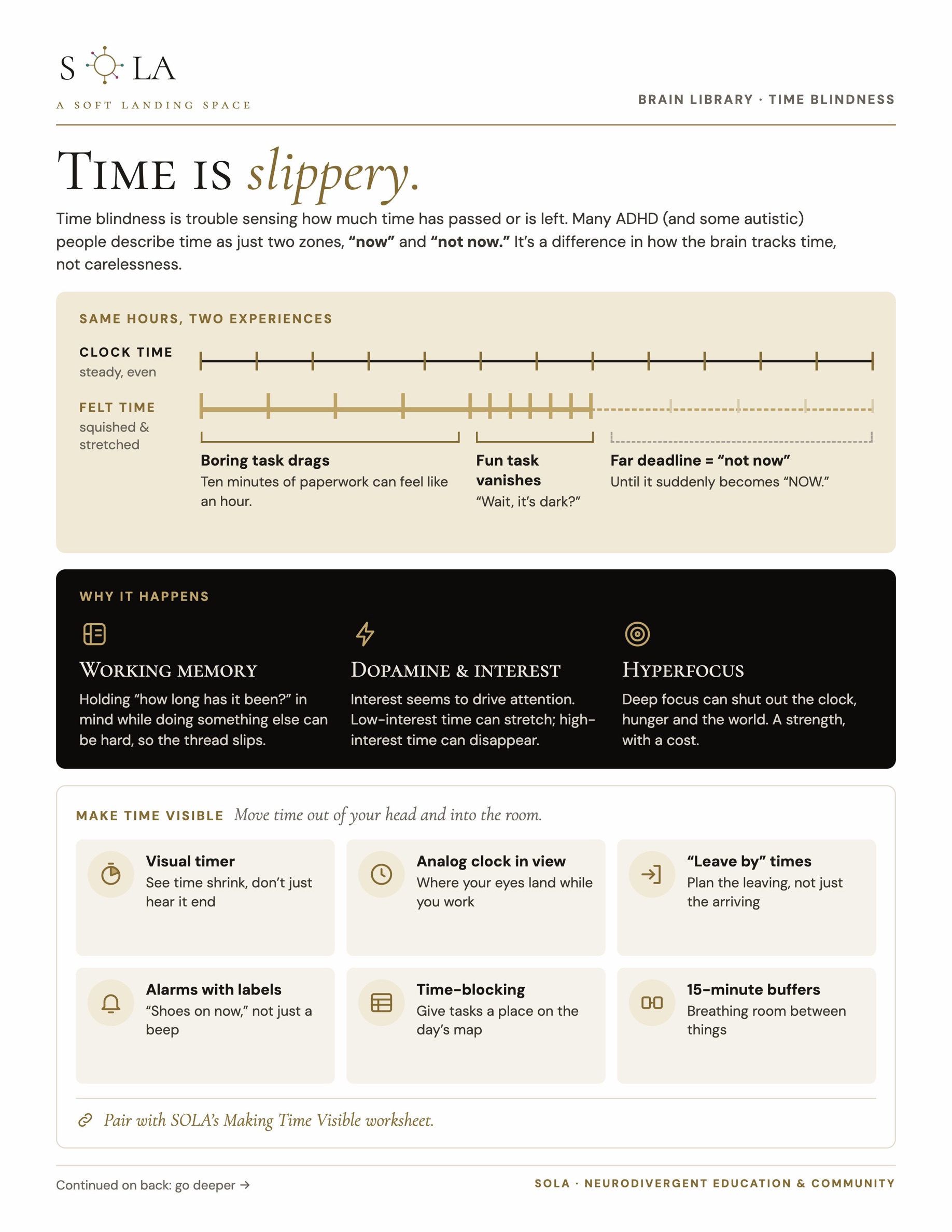
Time blindness is trouble sensing how much time has passed or is left. Many ADHD (and some autistic) people describe time as just two zones, “now” and “not now.” It’s a difference in how the brain tracks time, not carelessness.
Pairs with: Making Time Visible
The guide, as designed. The same content is written out below.
See page 2
Same hours, two experiences
steady, even
squished & stretched
Ten minutes of paperwork can feel like an hour.
“Wait, it’s dark?”
Until it suddenly becomes “NOW.”
Why it happens
Holding “how long has it been?” in mind while doing something else can be hard, so the thread slips.
Interest seems to drive attention. Low-interest time can stretch; high-interest time can disappear.
Deep focus can shut out the clock, hunger and the world. A strength, with a cost.
Make time visible
Move time out of your head and into the room.
See time shrink, don’t just hear it end
Where your eyes land while you work
Plan the leaving, not just the arriving
“Shoes on now,” not just a beep
Give tasks a place on the day’s map
Breathing room between things
Pair with SOLA’s Making Time Visible worksheet.
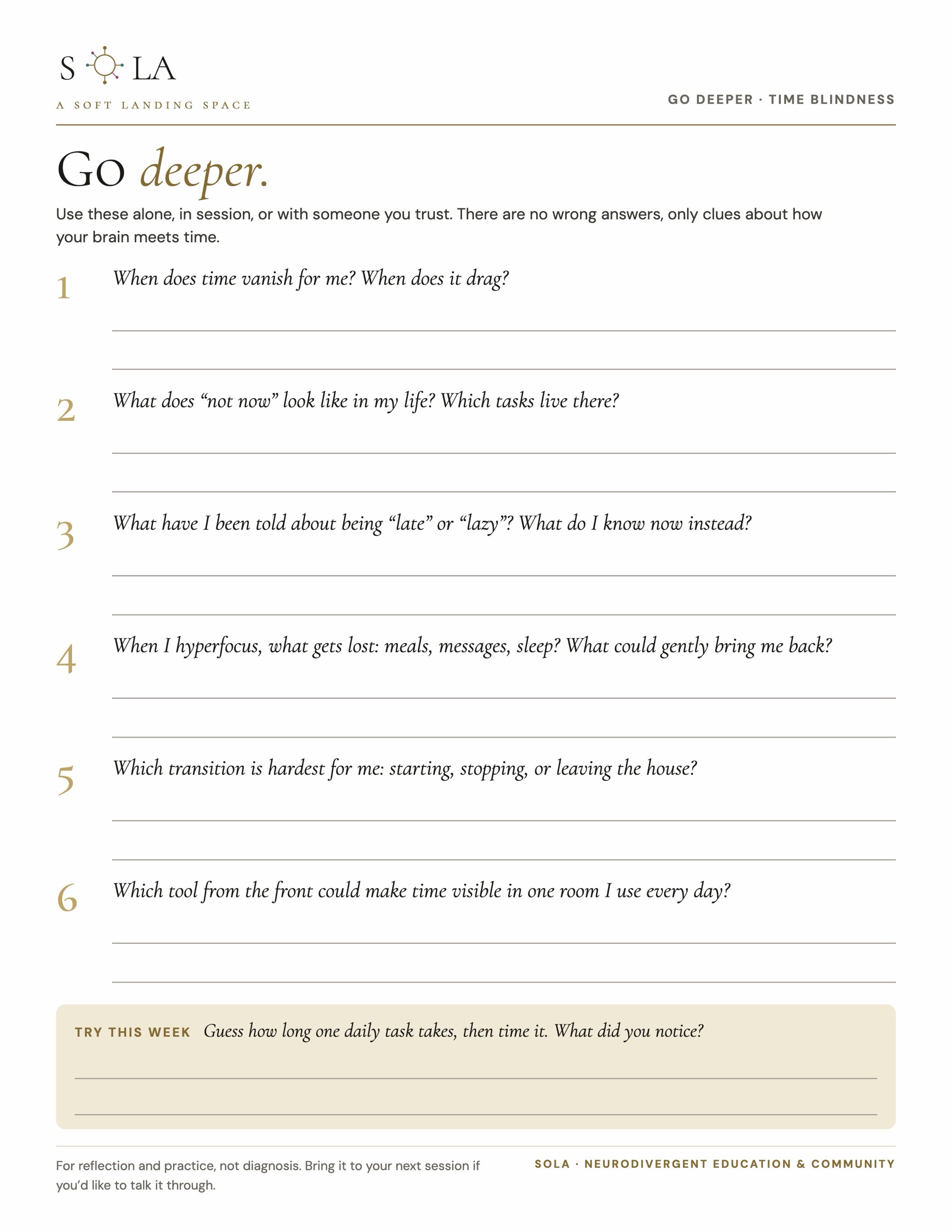
Go deeper.
Use these alone, in session, or with someone you trust. There are no wrong answers, only clues about how your brain meets time.
Try this week
For reflection and practice, not diagnosis. Bring it to your next session if you’d like to talk it through.
Sources and credits. SOLA · Neurodivergent Education & Community