Learn
ABC PLEASE for Neurodivergent Brains
DBT Skills, Adapted · Handout 1
A DBT emotion regulation skill that lowers how vulnerable you are to big emotions, by building cushion into your life and caring for your body. Here it is with neurodivergent accommodations built in.
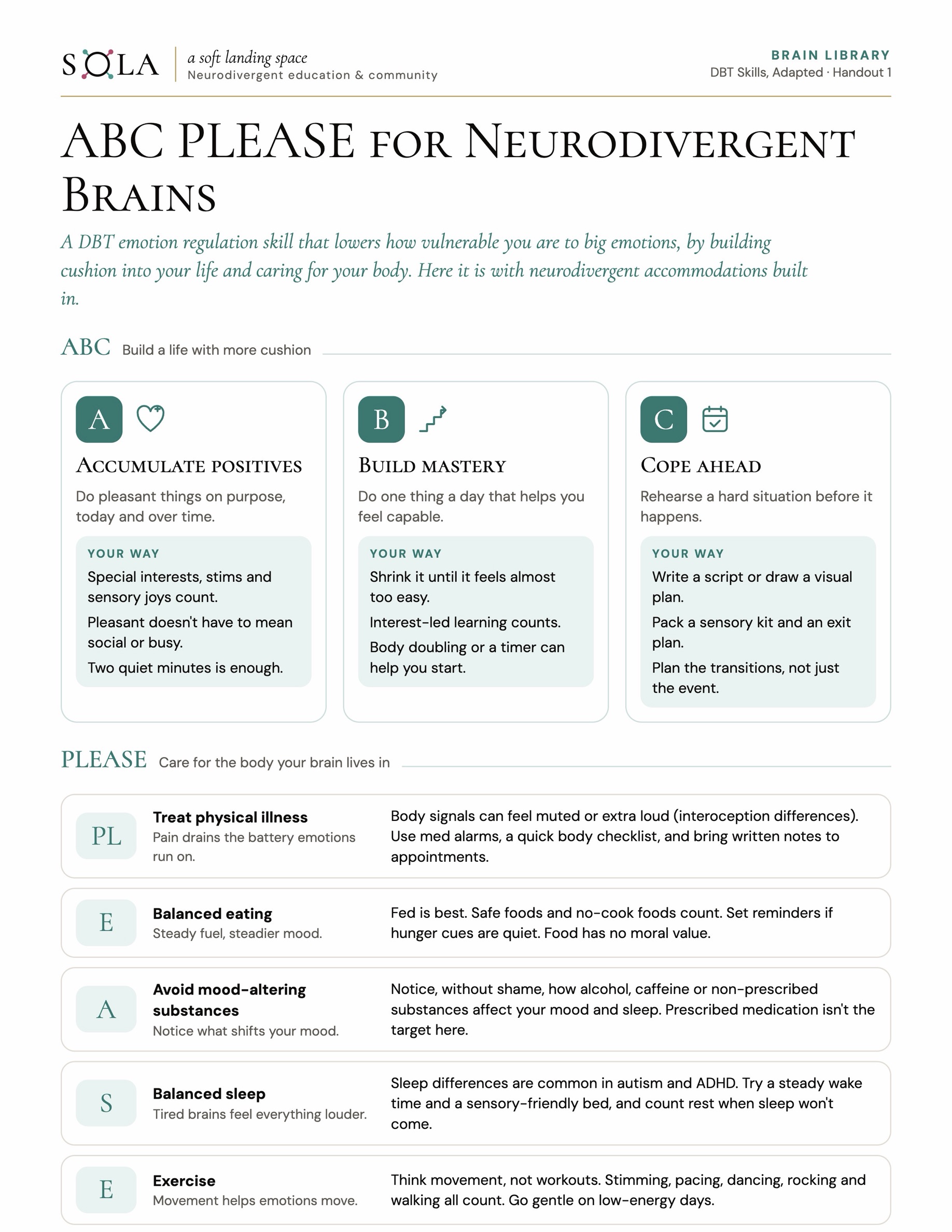
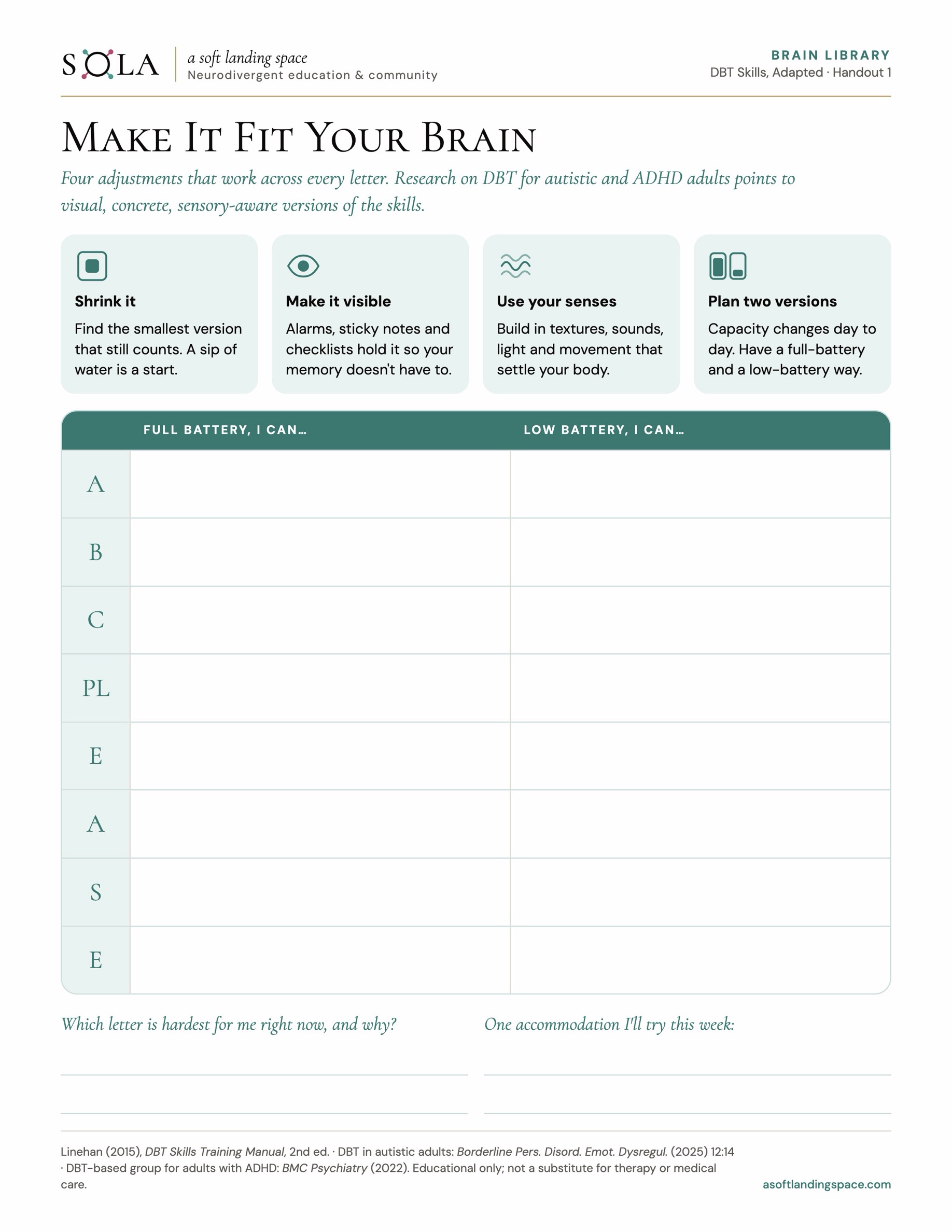
The guide, as designed. The same content is written out below.
See page 2
ABC
Build a life with more cushion
Do pleasant things on purpose, today and over time.
Your way
- Special interests, stims and sensory joys count.
- Pleasant doesn't have to mean social or busy.
- Two quiet minutes is enough.
Do one thing a day that helps you feel capable.
Your way
- Shrink it until it feels almost too easy.
- Interest-led learning counts.
- Body doubling or a timer can help you start.
Rehearse a hard situation before it happens.
Your way
- Write a script or draw a visual plan.
- Pack a sensory kit and an exit plan.
- Plan the transitions, not just the event.
PLEASE
Care for the body your brain lives in
Pain drains the battery emotions run on.
Body signals can feel muted or extra loud (interoception differences). Use med alarms, a quick body checklist, and bring written notes to appointments.
Steady fuel, steadier mood.
Fed is best. Safe foods and no-cook foods count. Set reminders if hunger cues are quiet. Food has no moral value.
Notice what shifts your mood.
Notice, without shame, how alcohol, caffeine or non-prescribed substances affect your mood and sleep. Prescribed medication isn't the target here.
Tired brains feel everything louder.
Sleep differences are common in autism and ADHD. Try a steady wake time and a sensory-friendly bed, and count rest when sleep won't come.
Movement helps emotions move.
Think movement, not workouts. Stimming, pacing, dancing, rocking and walking all count. Go gentle on low-energy days.
Make It Fit Your Brain
Four adjustments that work across every letter. Research on DBT for autistic and ADHD adults points to visual, concrete, sensory-aware versions of the skills.
Shrink it Find the smallest version that still counts. A sip of water is a start.
Make it visible Alarms, sticky notes and checklists hold it so your memory doesn't have to.
Use your senses Build in textures, sounds, light and movement that settle your body.
Plan two versions Capacity changes day to day. Have a full-battery and a low-battery way.
| Full battery, I can… | Low battery, I can… | |
|---|---|---|
| A | ||
| B | ||
| C | ||
| PL | ||
| E | ||
| A | ||
| S | ||
| E |
Educational only; not a substitute for therapy or medical care.
Sources and credits. Linehan (2015), DBT Skills Training Manual, 2nd ed. · DBT in autistic adults: Borderline Pers. Disord. Emot. Dysregul. (2025) 12:14 · DBT-based group for adults with ADHD: BMC Psychiatry (2022). Educational only; not a substitute for therapy or medical care.