Practice
Budgeting your spoons.
Spoon Theory & Energy Budgeting
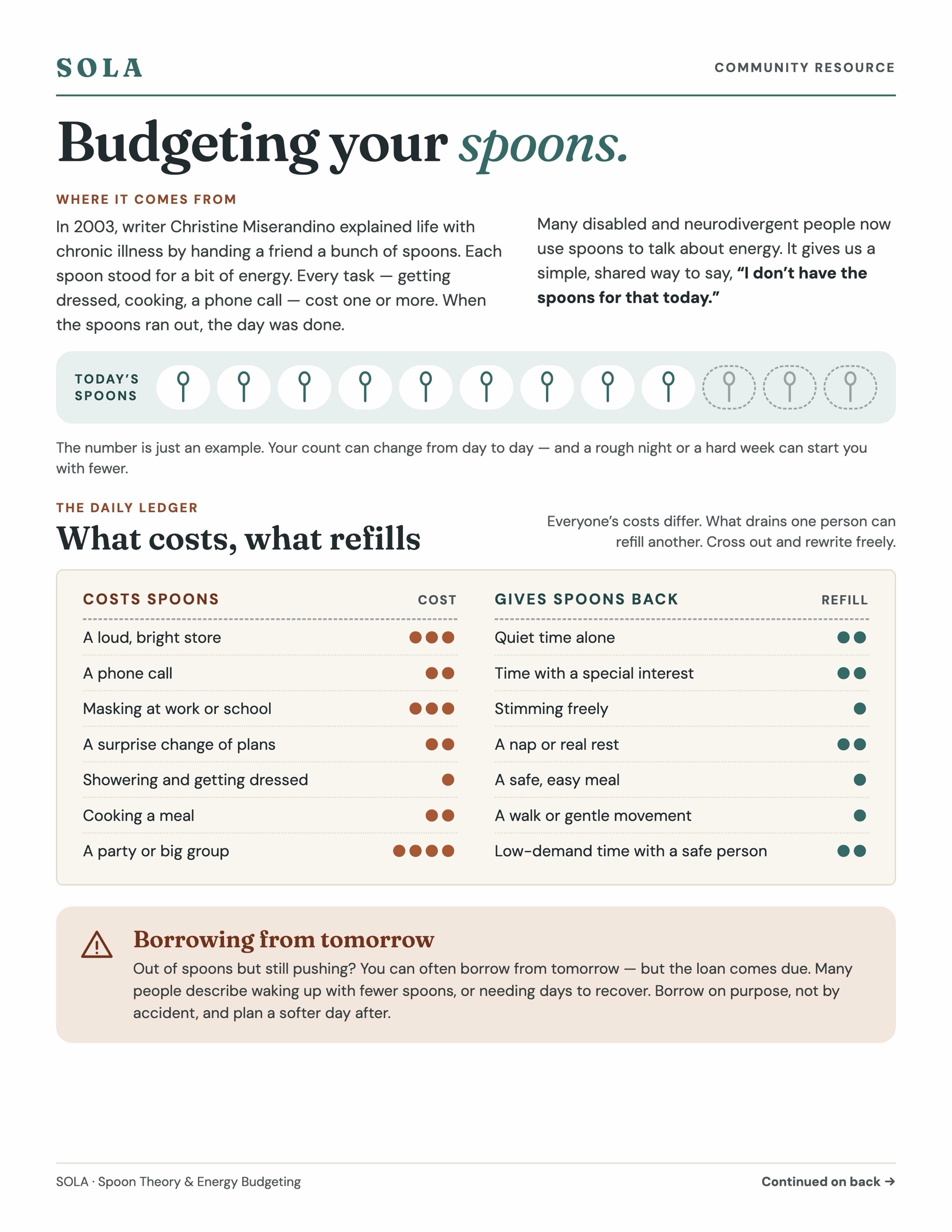
In 2003, writer Christine Miserandino explained life with chronic illness by handing a friend a bunch of spoons. Each spoon stood for a bit of energy. Every task — getting dressed, cooking, a phone call — cost one or more. When the spoons ran out, the day was done.
Many disabled and neurodivergent people now use spoons to talk about energy. It gives us a simple, shared way to say, “I don’t have the spoons for that today.”
The worksheet, as designed. The same content is written out below.
See page 2
Where it comes from
Today’s spoons: a row of twelve spoons, nine filled in and three dashed.
The number is just an example. Your count can change from day to day — and a rough night or a hard week can start you with fewer.
What costs, what refills
Everyone’s costs differ. What drains one person can refill another. Cross out and rewrite freely.
Costs spoons (cost):
- A loud, bright store: 3
- A phone call: 2
- Masking at work or school: 3
- A surprise change of plans: 2
- Showering and getting dressed: 1
- Cooking a meal: 2
- A party or big group: 4
Gives spoons back (refill):
- Quiet time alone: 2
- Time with a special interest: 2
- Stimming freely: 1
- A nap or real rest: 2
- A safe, easy meal: 1
- A walk or gentle movement: 1
- Low-demand time with a safe person: 2
Costs spoons
| Costs spoons | Cost |
|---|---|
Gives spoons back
| Gives spoons back | Refill |
|---|---|
Borrowing from tomorrow
Out of spoons but still pushing? You can often borrow from tomorrow — but the loan comes due. Many people describe waking up with fewer spoons, or needing days to recover. Borrow on purpose, not by accident, and plan a softer day after.
My weekly spoon planner
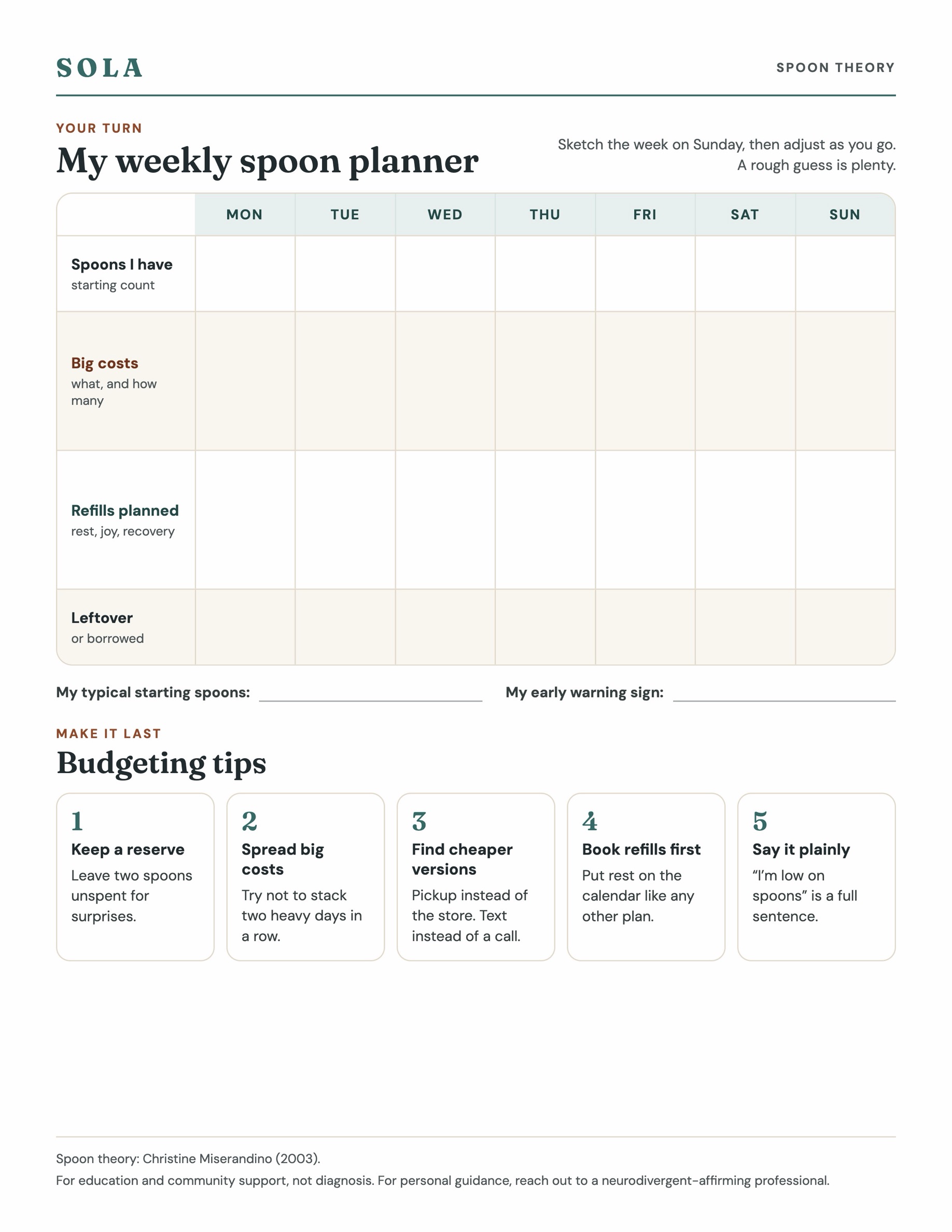
Sketch the week on Sunday, then adjust as you go. A rough guess is plenty.
| Spoons I have (starting count) | Big costs (what, and how many) | Refills planned (rest, joy, recovery) | Leftover (or borrowed) | |
|---|---|---|---|---|
| Mon | ||||
| Tue | ||||
| Wed | ||||
| Thu | ||||
| Fri | ||||
| Sat | ||||
| Sun |
Budgeting tips
- 1. Keep a reserve: Leave two spoons unspent for surprises.
- 2. Spread big costs: Try not to stack two heavy days in a row.
- 3. Find cheaper versions: Pickup instead of the store. Text instead of a call.
- 4. Book refills first: Put rest on the calendar like any other plan.
- 5. Say it plainly: “I’m low on spoons” is a full sentence.
For education and community support, not diagnosis. For personal guidance, reach out to a neurodivergent-affirming professional.
Sources and credits. Spoon theory: Christine Miserandino (2003).