Practice
Daily Rhythm Builder
A day that fits my brain.
Why this helps: a rhythm built around your energy bends on hard days instead of breaking. It’s a loose shape for the day, not a strict timetable.
How to use it: jot what usually happens in each part of your day, then shade the circles for how much energy you tend to have.
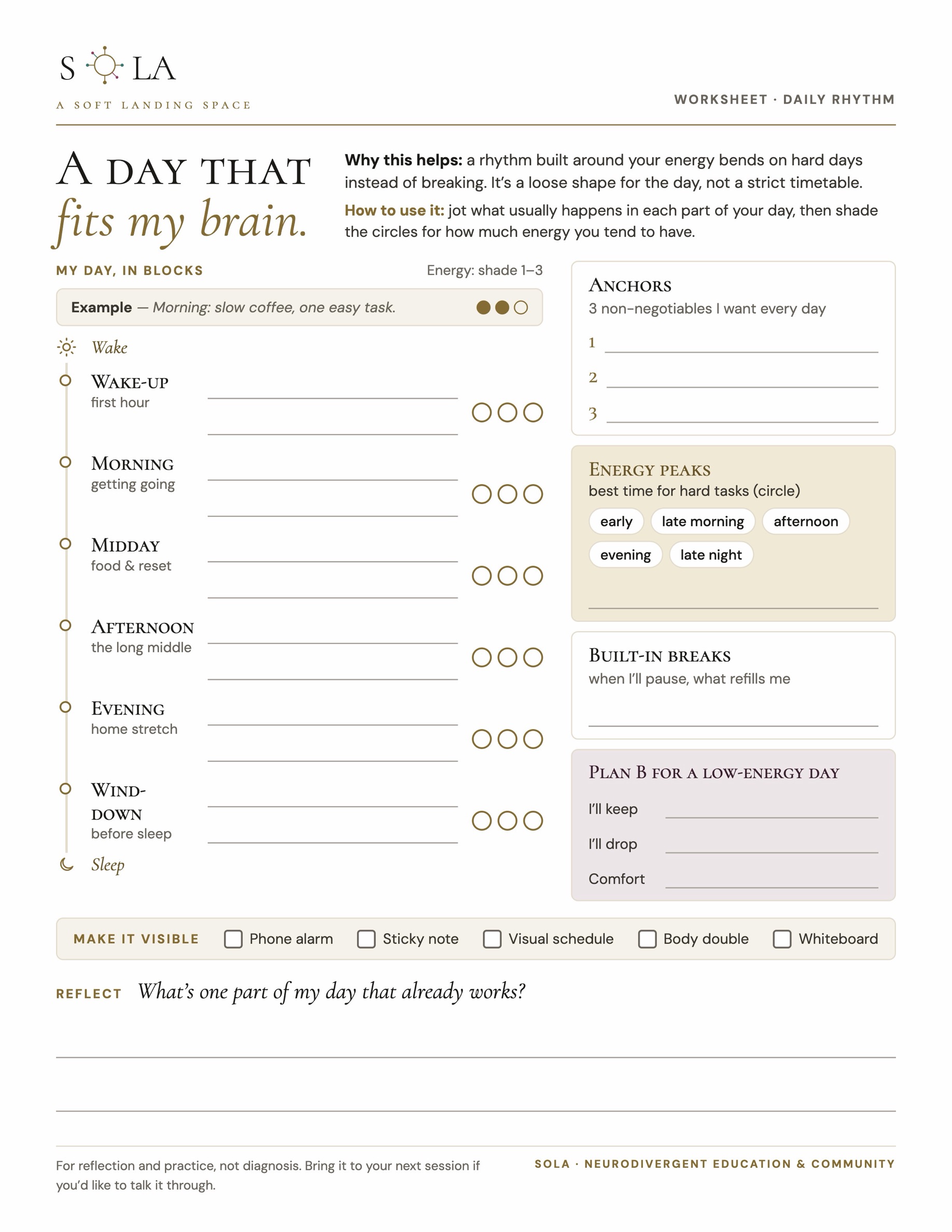
The worksheet, as designed. The same content is written out below.
My day, in blocks
Energy: shade 1–3
Example — Morning: slow coffee, one easy task. Energy: 2 of 3.
The blocks run down a timeline from Wake to Sleep.
| What usually happens | Energy | |
|---|---|---|
| Wake-up (first hour) | ||
| Morning (getting going) | ||
| Midday (food & reset) | ||
| Afternoon (the long middle) | ||
| Evening (home stretch) | ||
| Wind-down (before sleep) |
Anchors
3 non-negotiables I want every day
Anchors
Energy peaks
best time for hard tasks (circle)
Energy peaks Tick all that apply
- early
- late morning
- afternoon
- evening
- late night
- Other:
Built-in breaks
when I’ll pause, what refills me
Plan B for a low-energy day
Make it visible
Make it visible Tick all that apply
- Phone alarm
- Sticky note
- Visual schedule
- Body double
- Whiteboard
Reflect
For reflection and practice, not diagnosis. Bring it to your next session if you’d like to talk it through.
Sources and credits. SOLA · Neurodivergent education & community