Practice
Burnout or depression?
Burnout vs. Depression
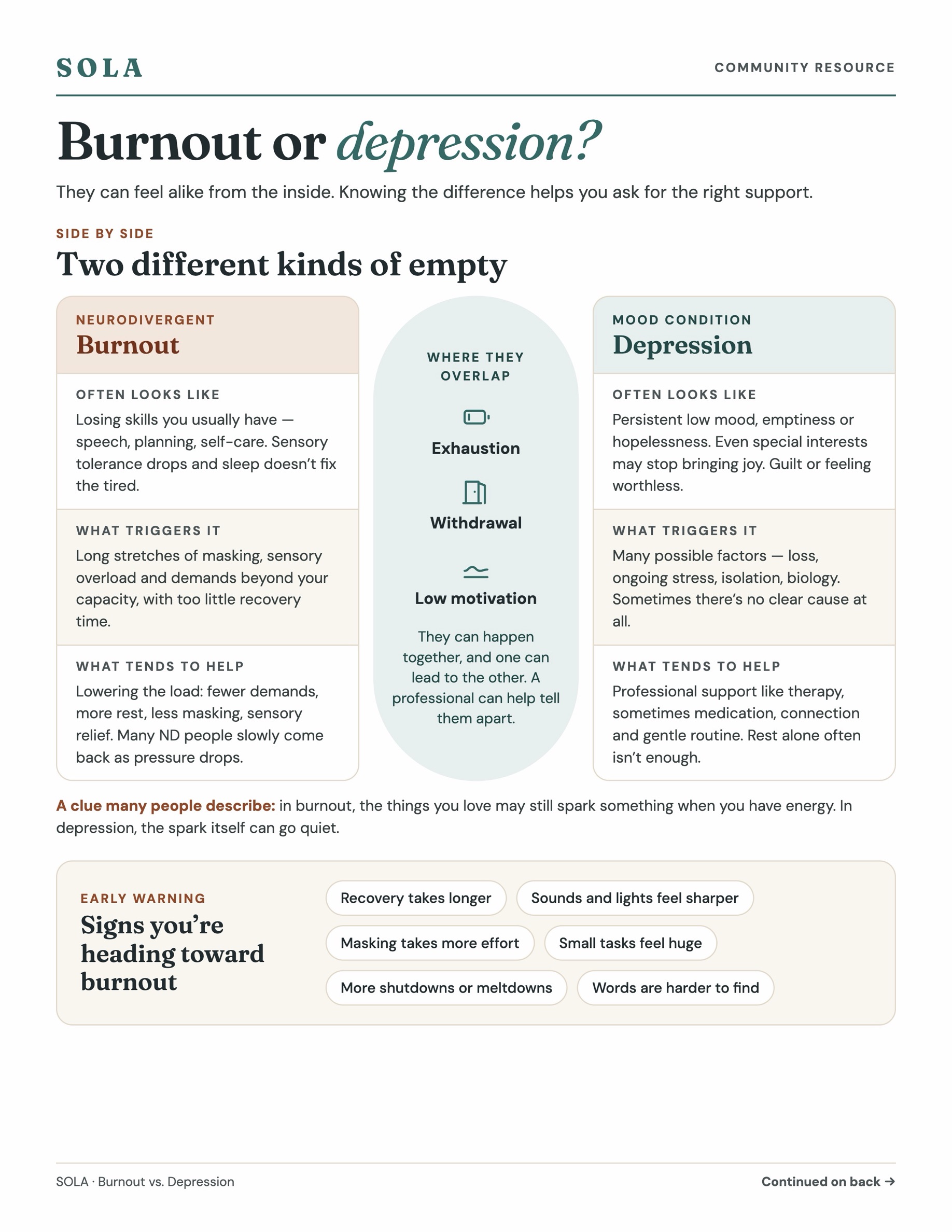
They can feel alike from the inside. Knowing the difference helps you ask for the right support.
The worksheet, as designed. The same content is written out below.
See page 2
Two different kinds of empty
Neurodivergent: Burnout
Often looks like: Losing skills you usually have — speech, planning, self-care. Sensory tolerance drops and sleep doesn’t fix the tired.
What triggers it: Long stretches of masking, sensory overload and demands beyond your capacity, with too little recovery time.
What tends to help: Lowering the load: fewer demands, more rest, less masking, sensory relief. Many ND people slowly come back as pressure drops.
Where they overlap
- Exhaustion
- Withdrawal
- Low motivation
They can happen together, and one can lead to the other. A professional can help tell them apart.
Mood condition: Depression
Often looks like: Persistent low mood, emptiness or hopelessness. Even special interests may stop bringing joy. Guilt or feeling worthless.
What triggers it: Many possible factors — loss, ongoing stress, isolation, biology. Sometimes there’s no clear cause at all.
What tends to help: Professional support like therapy, sometimes medication, connection and gentle routine. Rest alone often isn’t enough.
A clue many people describe: in burnout, the things you love may still spark something when you have energy. In depression, the spark itself can go quiet.
Signs you’re heading toward burnout
- Recovery takes longer
- Sounds and lights feel sharper
- Masking takes more effort
- Small tasks feel huge
- More shutdowns or meltdowns
- Words are harder to find
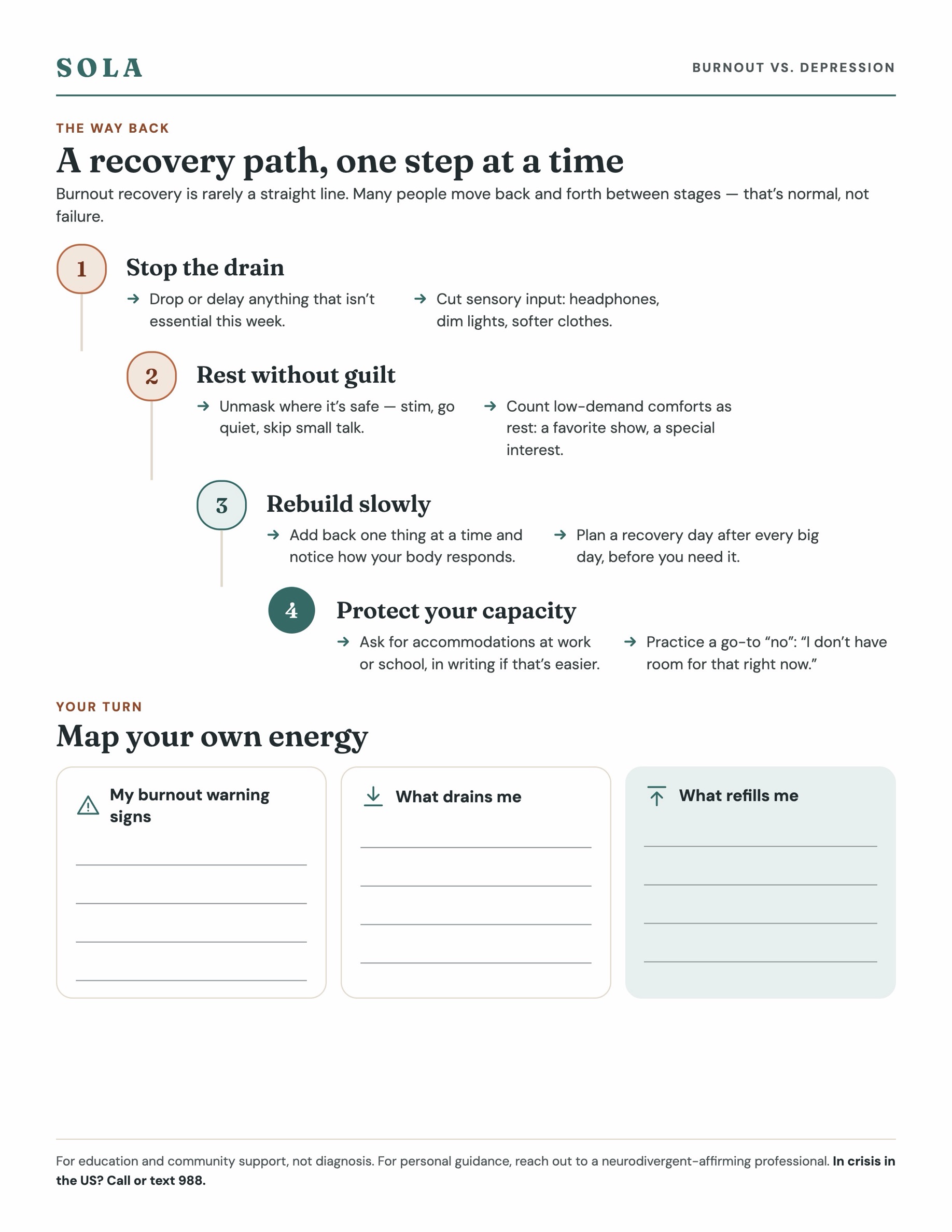
A recovery path, one step at a time
Burnout recovery is rarely a straight line. Many people move back and forth between stages — that’s normal, not failure.
1. Stop the drain
- Drop or delay anything that isn’t essential this week.
- Cut sensory input: headphones, dim lights, softer clothes.
2. Rest without guilt
- Unmask where it’s safe — stim, go quiet, skip small talk.
- Count low-demand comforts as rest: a favorite show, a special interest.
3. Rebuild slowly
- Add back one thing at a time and notice how your body responds.
- Plan a recovery day after every big day, before you need it.
4. Protect your capacity
- Ask for accommodations at work or school, in writing if that’s easier.
- Practice a go-to “no”: “I don’t have room for that right now.”
Map your own energy
My burnout warning signs
What drains me
What refills me
For education and community support, not diagnosis. For personal guidance, reach out to a neurodivergent-affirming professional. In crisis in the US? Call or text 988.