Practice
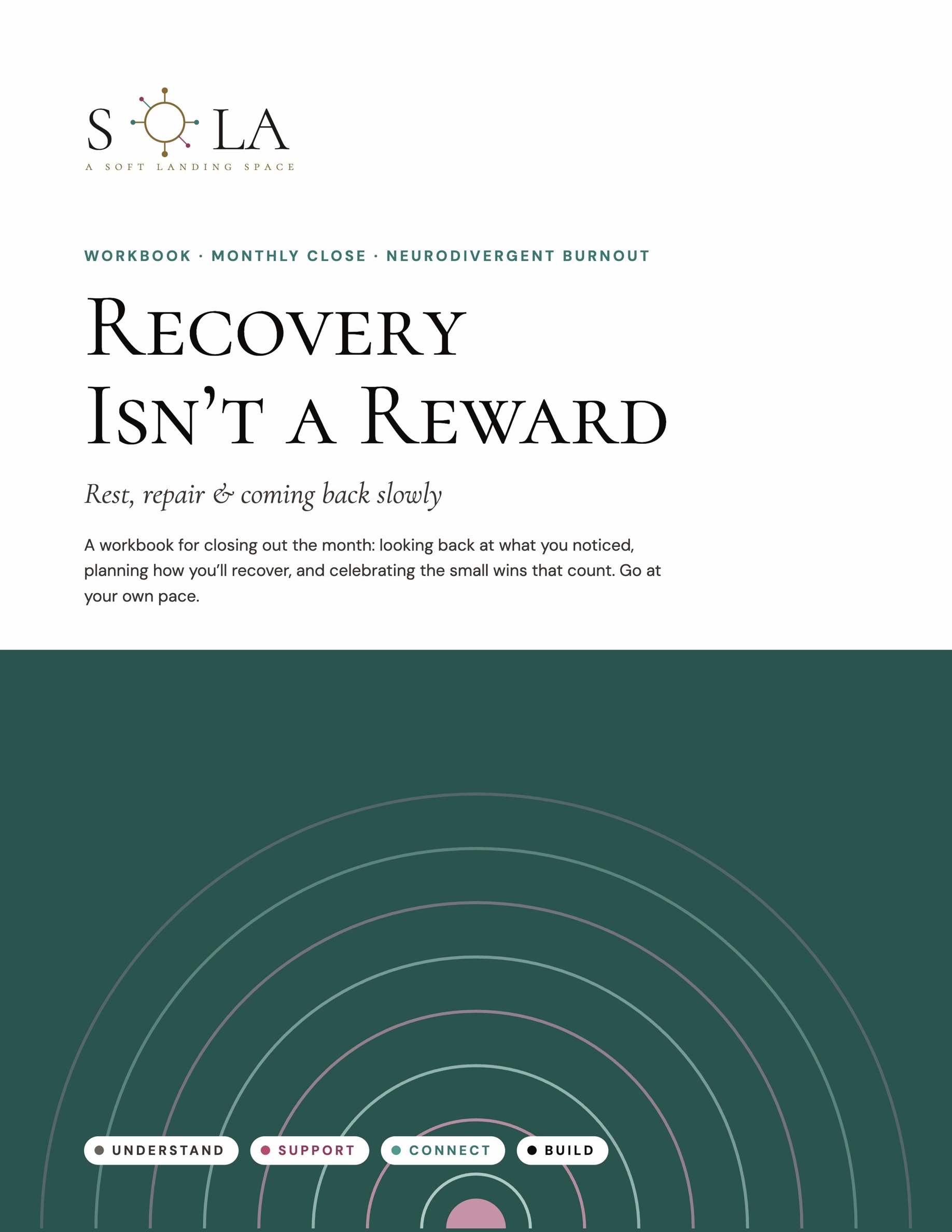
Recovery Isn’t a Reward
Rest, repair & coming back slowly
A workbook for closing out the month: looking back at what you noticed, planning how you’ll recover, and celebrating the small wins that count. Go at your own pace.
The workbook, as designed. The same content is written out below.
See the other 11 pages
Workbook · Monthly Close · Neurodivergent Burnout
Understand · Support · Connect · Build
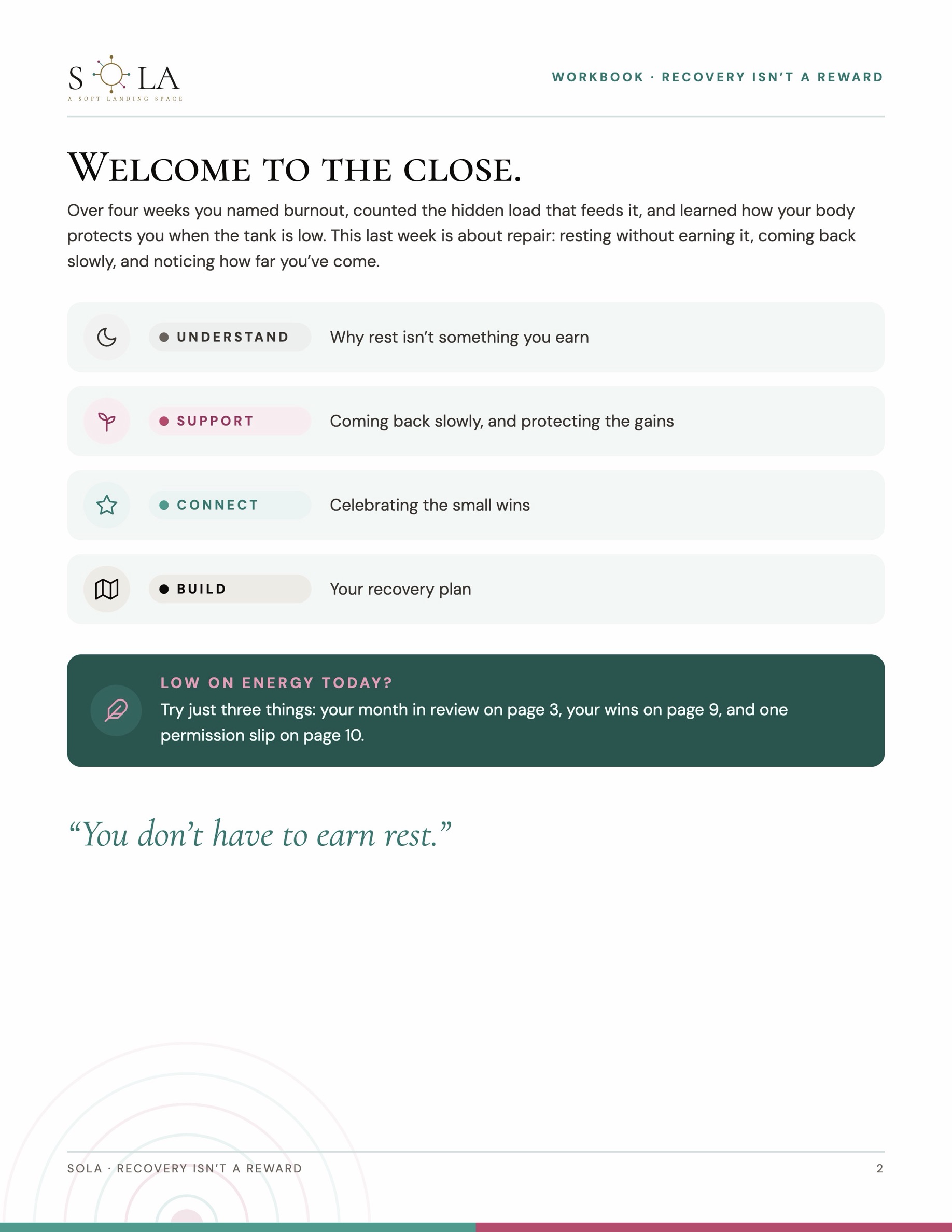
Welcome to the close.
Over four weeks you named burnout, counted the hidden load that feeds it, and learned how your body protects you when the tank is low. This last week is about repair: resting without earning it, coming back slowly, and noticing how far you’ve come.
- UNDERSTAND: Why rest isn’t something you earn
- SUPPORT: Coming back slowly, and protecting the gains
- CONNECT: Celebrating the small wins
- BUILD: Your recovery plan
LOW ON ENERGY TODAY? Try just three things: your month in review on page 3, your wins on page 9, and one permission slip on page 10.
“You don’t have to earn rest.”
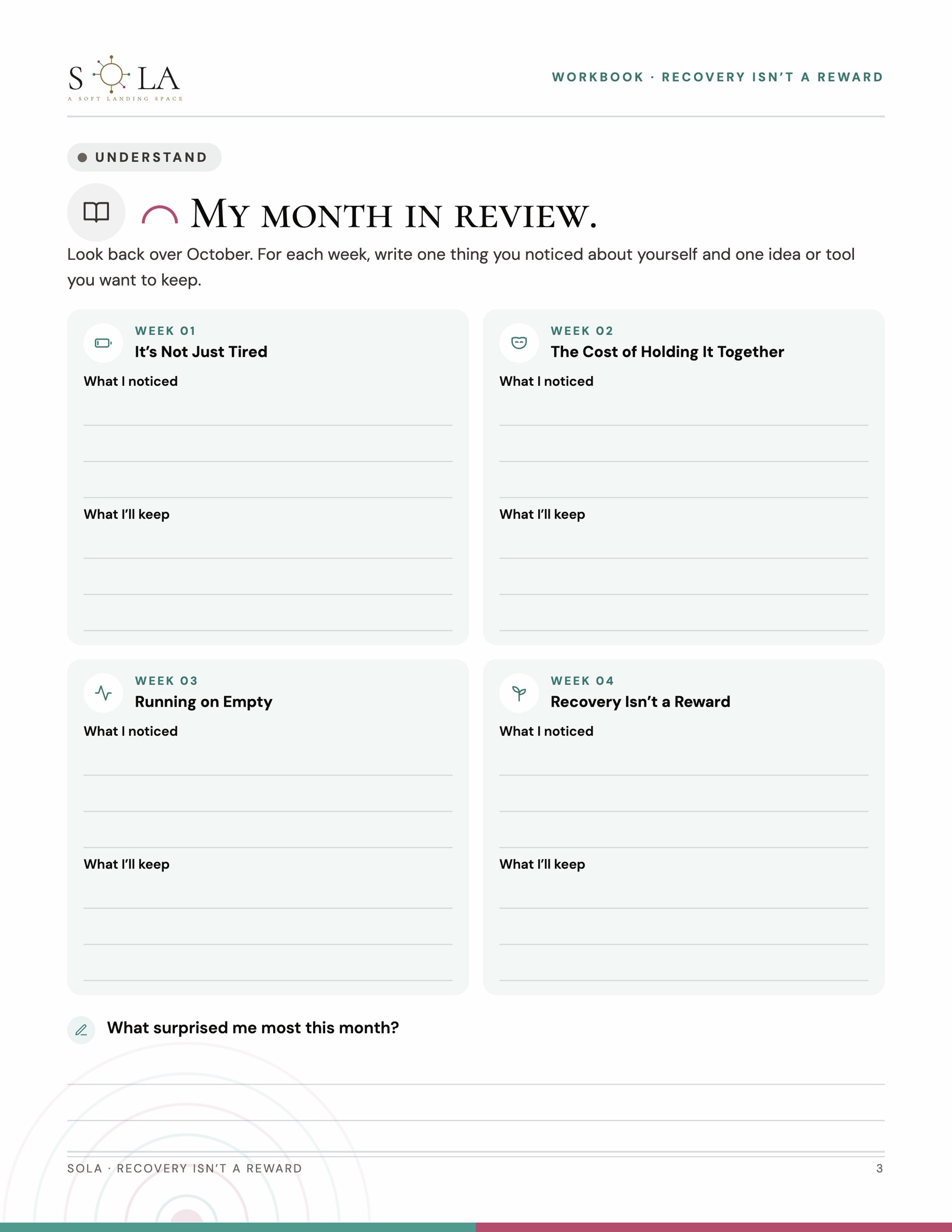
My month in review.
Look back over October. For each week, write one thing you noticed about yourself and one idea or tool you want to keep.
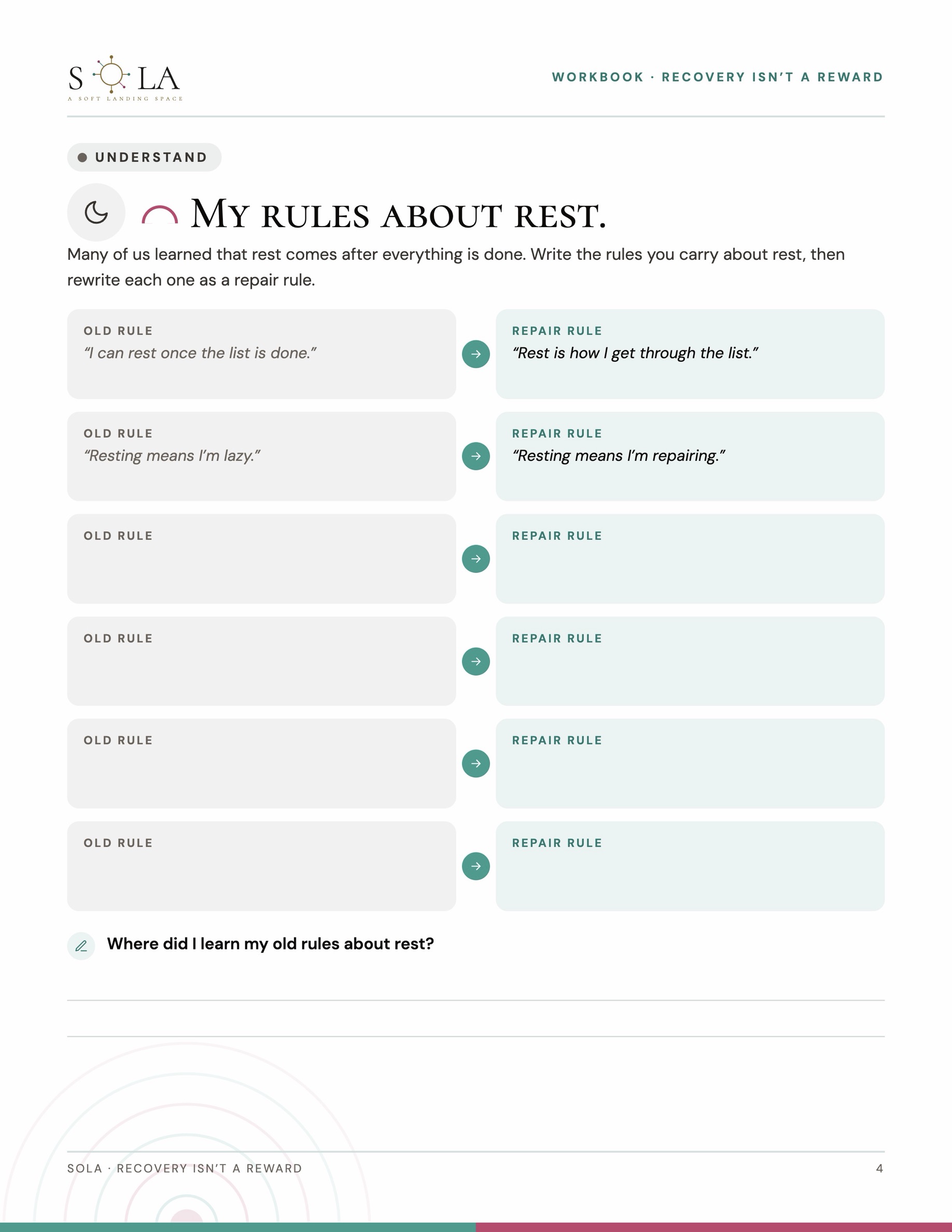
My rules about rest.
Many of us learned that rest comes after everything is done. Write the rules you carry about rest, then rewrite each one as a repair rule.
OLD RULE “I can rest once the list is done.” → REPAIR RULE “Rest is how I get through the list.”
OLD RULE “Resting means I’m lazy.” → REPAIR RULE “Resting means I’m repairing.”
| OLD RULE | REPAIR RULE |
|---|---|
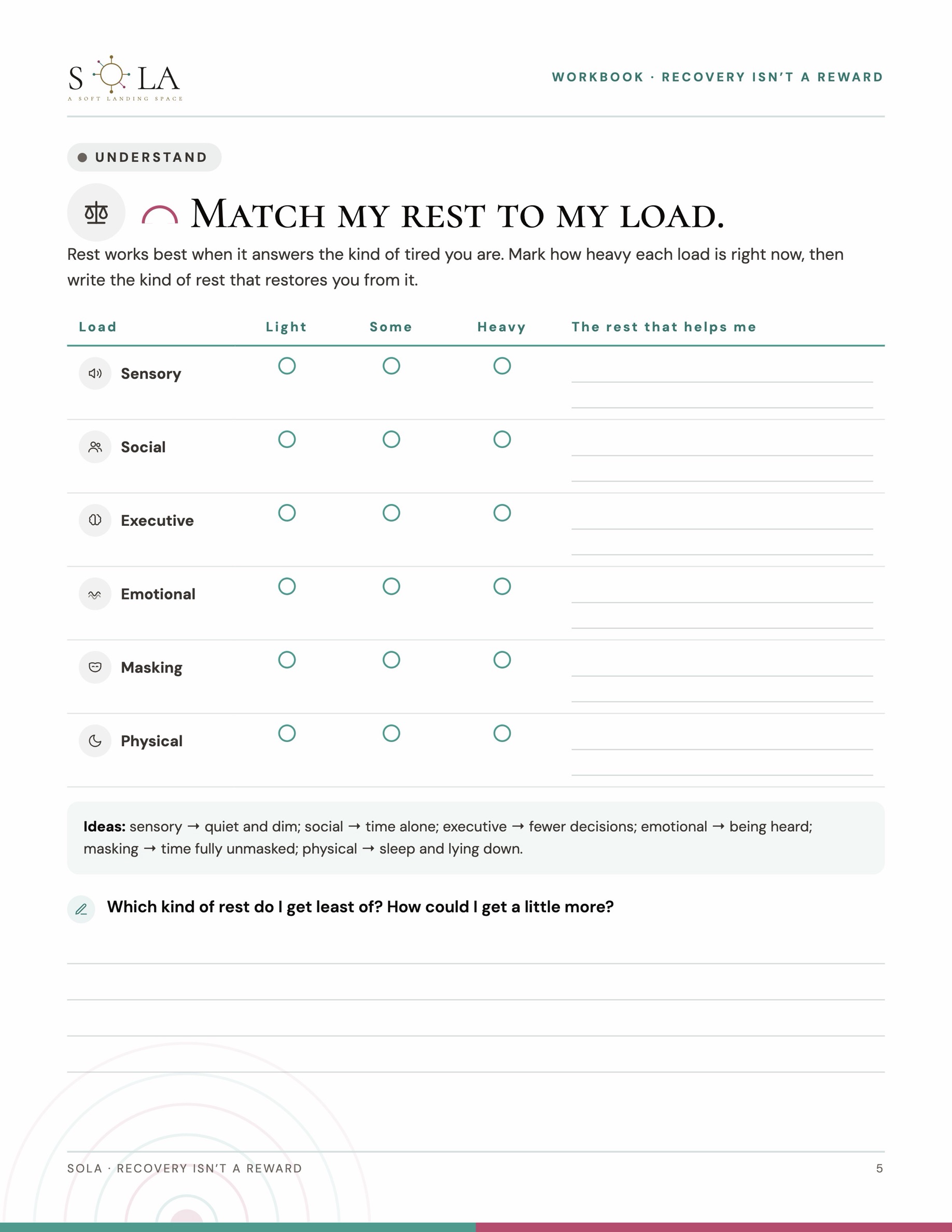
Match my rest to my load.
Rest works best when it answers the kind of tired you are. Mark how heavy each load is right now, then write the kind of rest that restores you from it.
Load
| How heavy | The rest that helps me | |
|---|---|---|
| Sensory | ||
| Social | ||
| Executive | ||
| Emotional | ||
| Masking | ||
| Physical |
Ideas: sensory → quiet and dim; social → time alone; executive → fewer decisions; emotional → being heard; masking → time fully unmasked; physical → sleep and lying down.
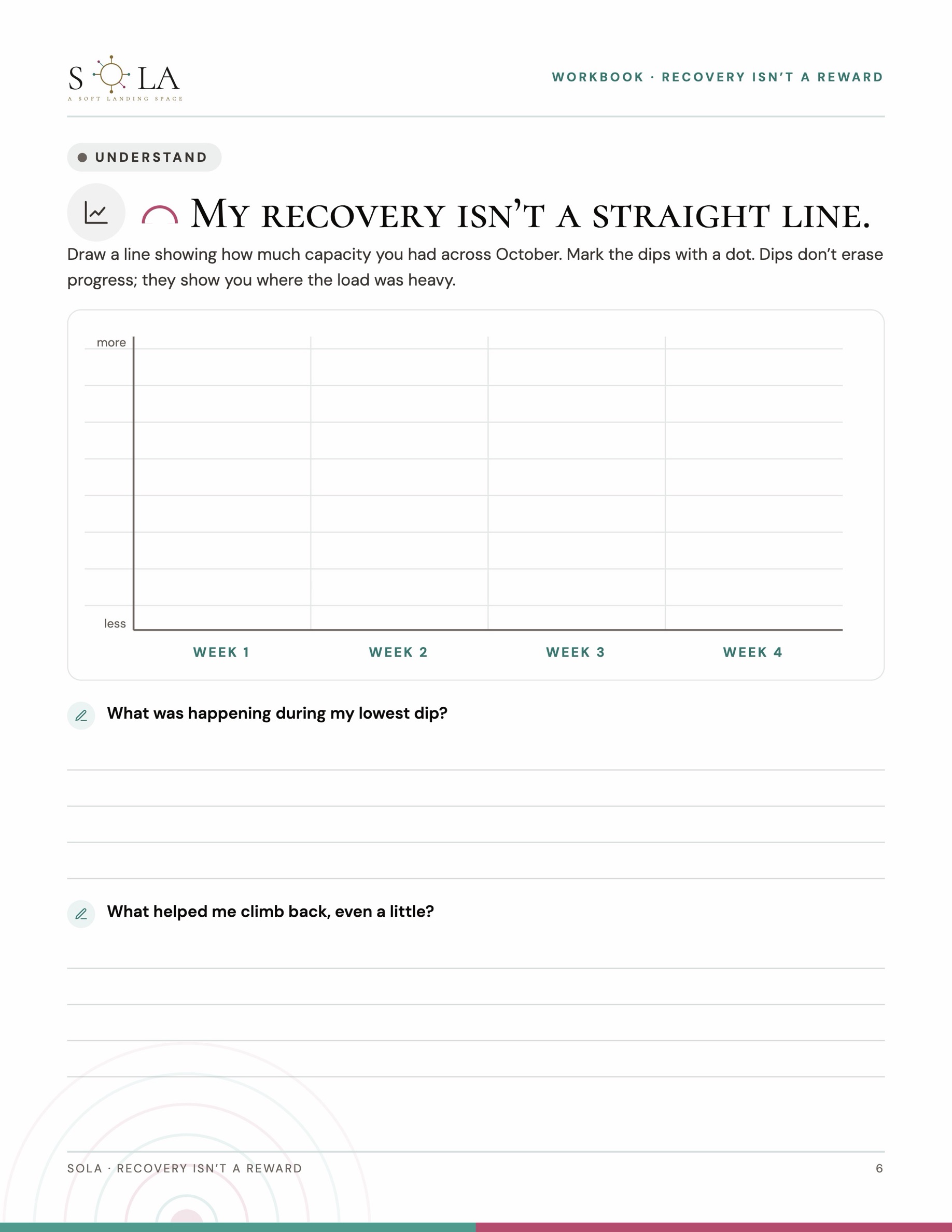
My recovery isn’t a straight line.
Draw a line showing how much capacity you had across October. Mark the dips with a dot. Dips don’t erase progress; they show you where the load was heavy.
On the sheet this is a graph: capacity from less (bottom) to more (top), across Week 1, Week 2, Week 3 and Week 4. Rate each week here to trace your line.
WEEK 1
WEEK 2
WEEK 3
WEEK 4
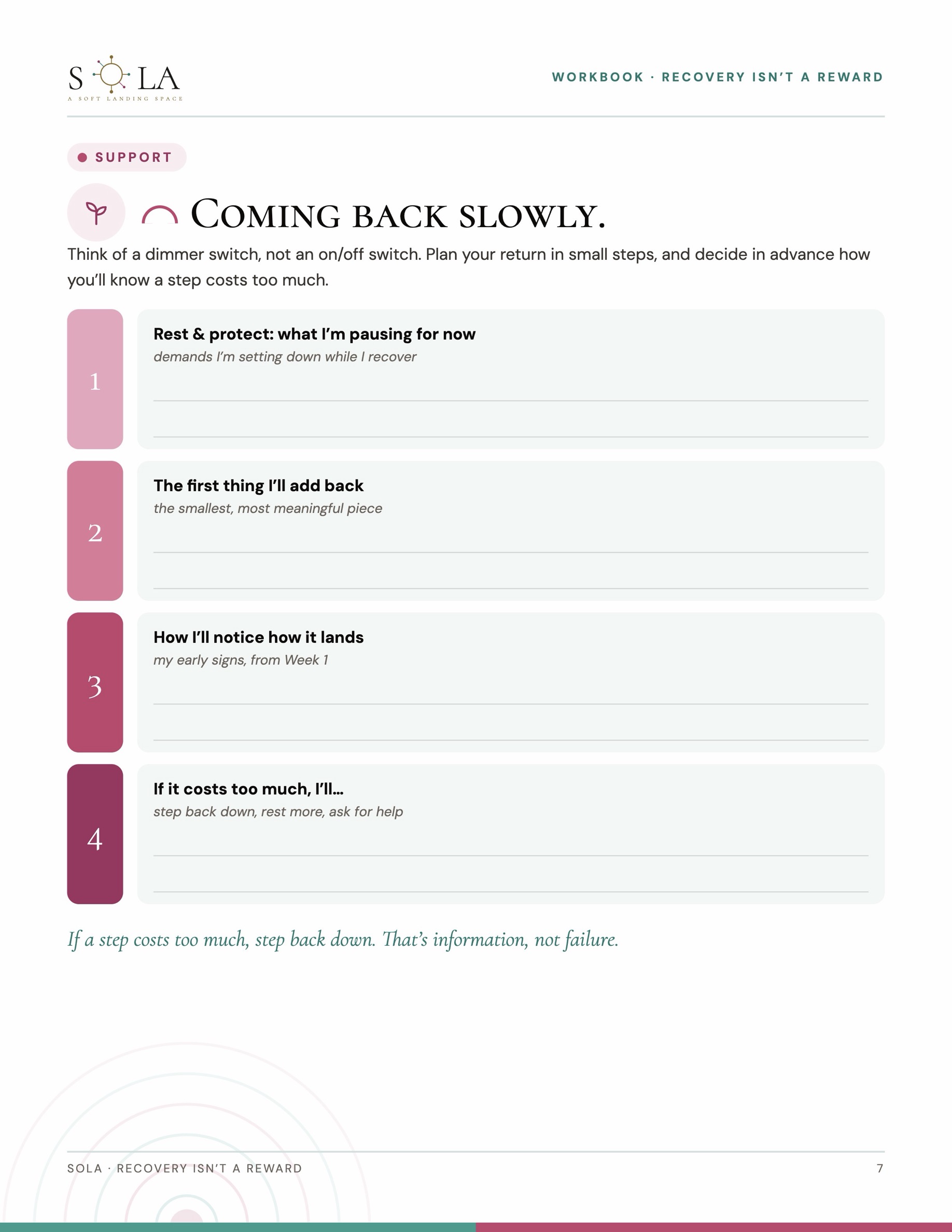
Coming back slowly.
Think of a dimmer switch, not an on/off switch. Plan your return in small steps, and decide in advance how you’ll know a step costs too much.
If a step costs too much, step back down. That’s information, not failure.
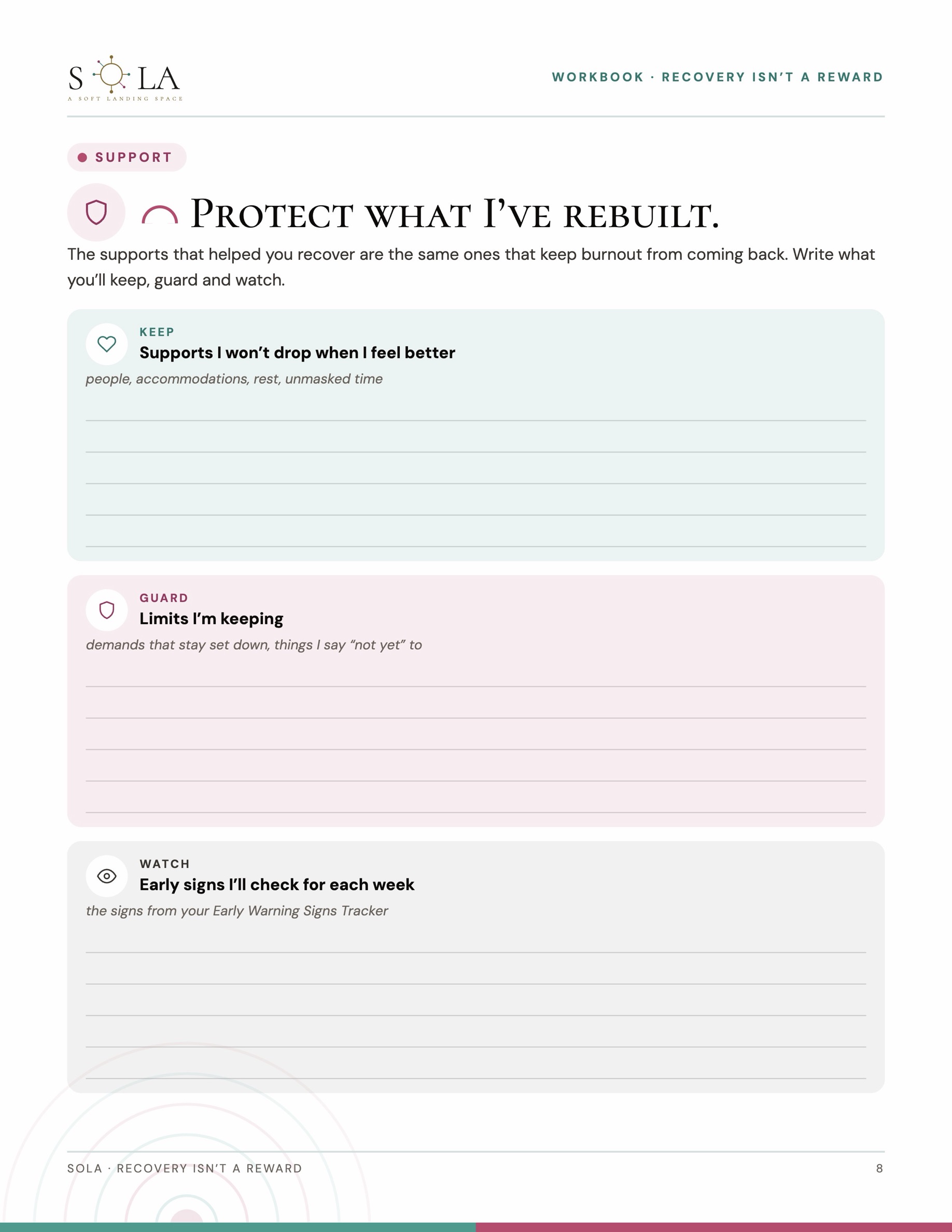
Protect what I’ve rebuilt.
The supports that helped you recover are the same ones that keep burnout from coming back. Write what you’ll keep, guard and watch.
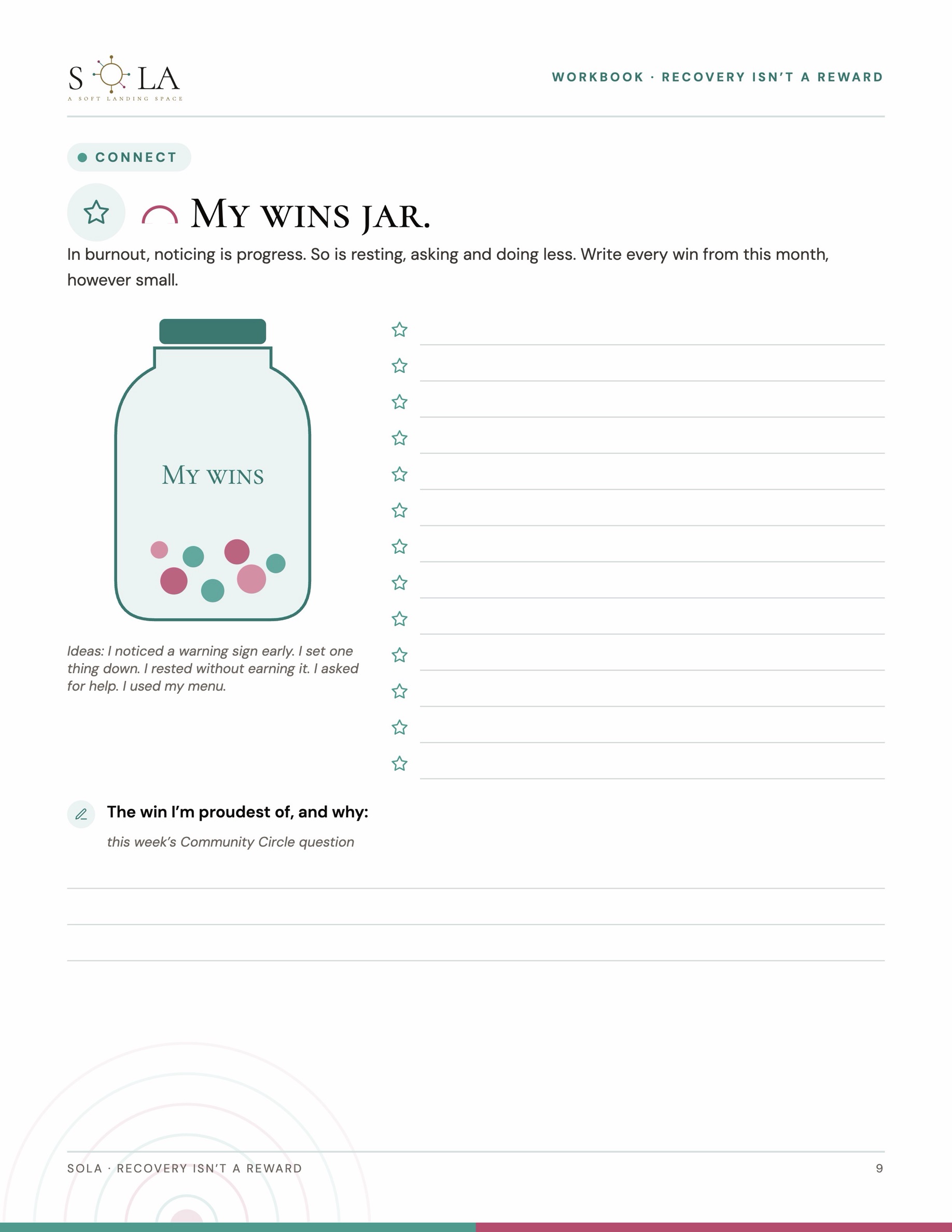
My wins jar.
In burnout, noticing is progress. So is resting, asking and doing less. Write every win from this month, however small.
My wins
Ideas: I noticed a warning sign early. I set one thing down. I rested without earning it. I asked for help. I used my menu.Permission to stop.
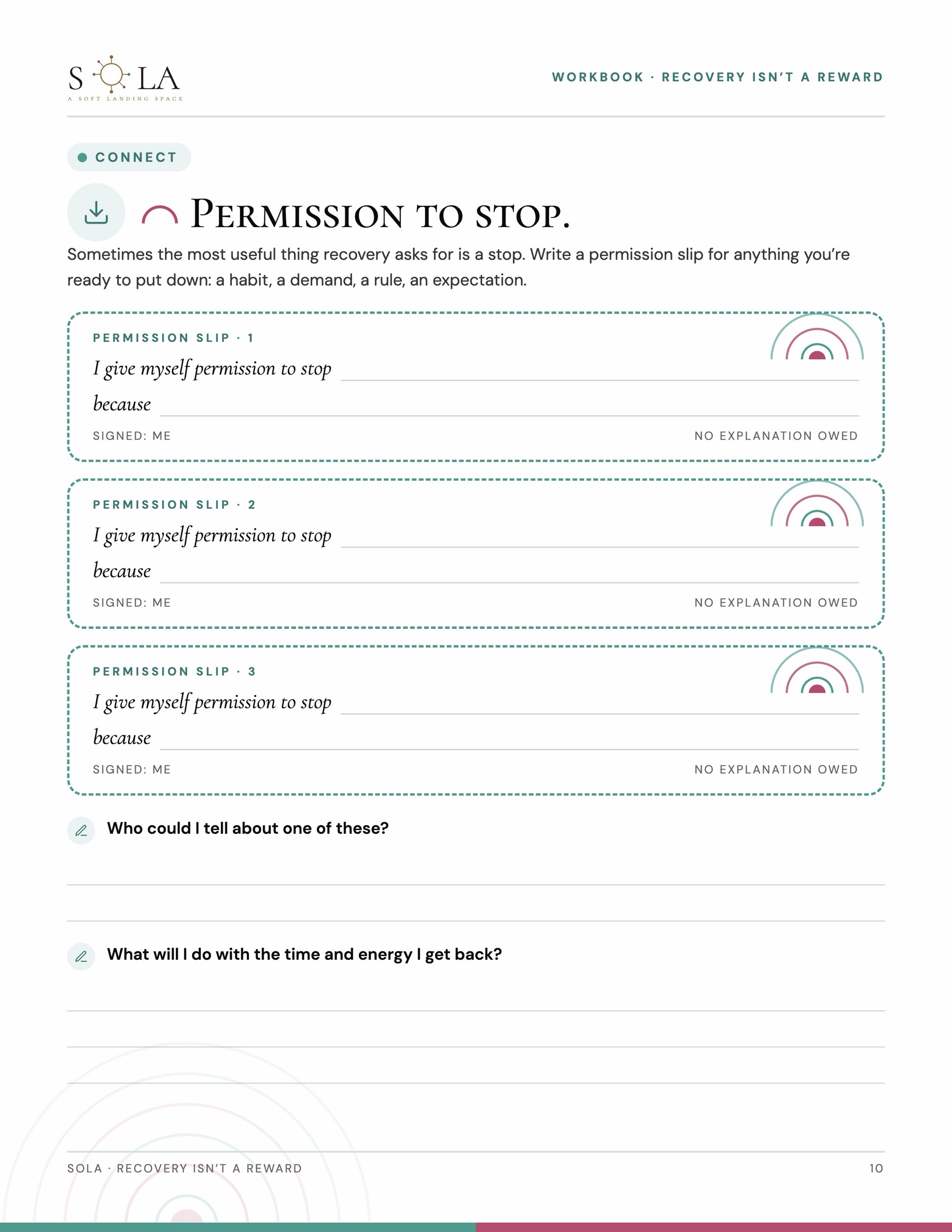
Sometimes the most useful thing recovery asks for is a stop. Write a permission slip for anything you’re ready to put down: a habit, a demand, a rule, an expectation.
PERMISSION SLIP · 1
PERMISSION SLIP · 2
PERMISSION SLIP · 3
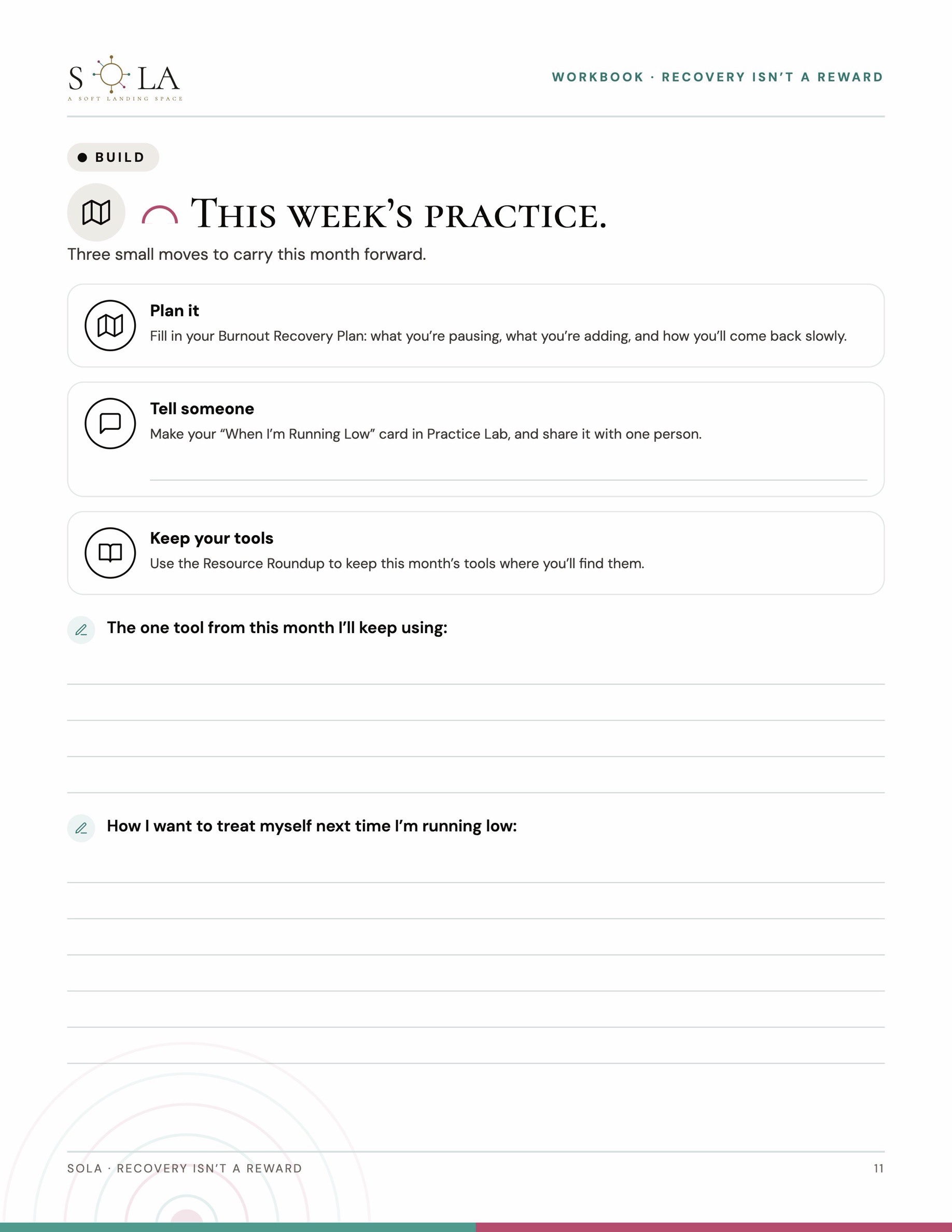
This week’s practice.
Three small moves to carry this month forward.
Plan it: Fill in your Burnout Recovery Plan: what you’re pausing, what you’re adding, and how you’ll come back slowly.
Keep your tools: Use the Resource Roundup to keep this month’s tools where you’ll find them.
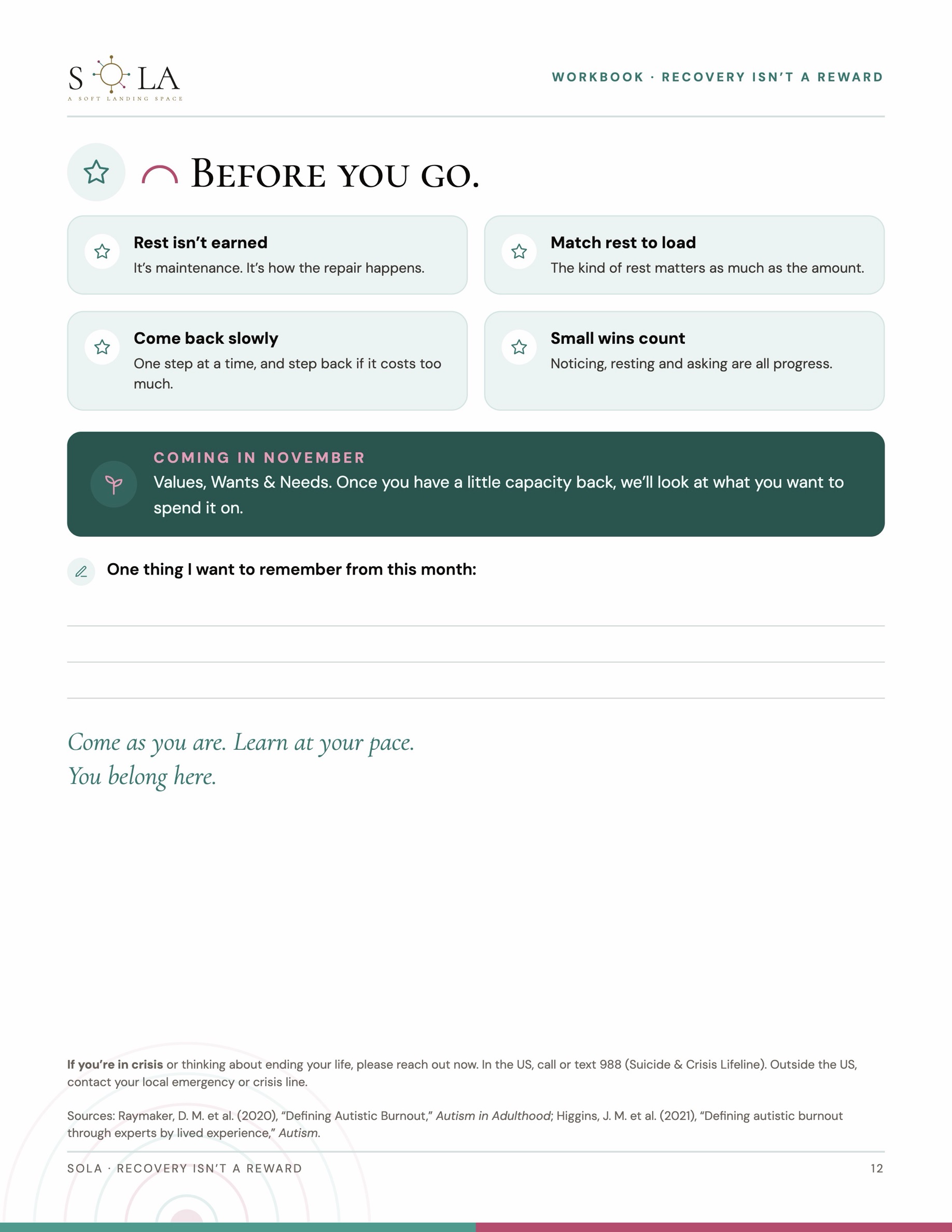
Before you go.
Rest isn’t earned: It’s maintenance. It’s how the repair happens.
Match rest to load: The kind of rest matters as much as the amount.
Come back slowly: One step at a time, and step back if it costs too much.
Small wins count: Noticing, resting and asking are all progress.
COMING IN NOVEMBER: Values, Wants & Needs. Once you have a little capacity back, we’ll look at what you want to spend it on.
Come as you are. Learn at your pace. You belong here.
If you’re in crisis or thinking about ending your life, please reach out now. In the US, call or text 988 (Suicide & Crisis Lifeline). Outside the US, contact your local emergency or crisis line.
Sources and credits. Sources: Raymaker, D. M. et al. (2020), “Defining Autistic Burnout,” Autism in Adulthood; Higgins, J. M. et al. (2021), “Defining autistic burnout through experts by lived experience,” Autism.