Practice
Emotional Regulation Toolkit
Try this when…
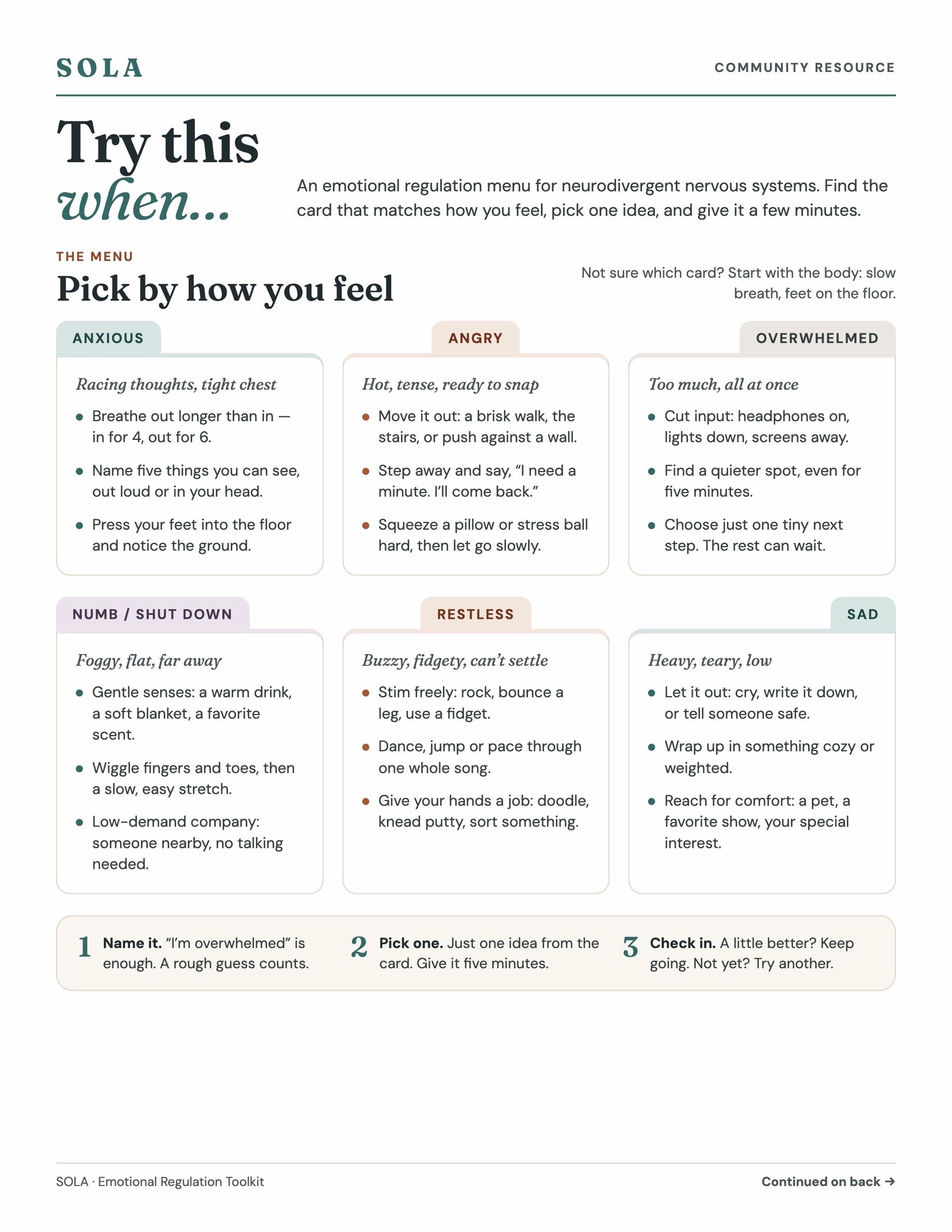
An emotional regulation menu for neurodivergent nervous systems. Find the card that matches how you feel, pick one idea, and give it a few minutes.
The worksheet, as designed. The same content is written out below.
See page 2
Pick by how you feel
Not sure which card? Start with the body: slow breath, feet on the floor.
Anxious — Racing thoughts, tight chest
- Breathe out longer than in — in for 4, out for 6.
- Name five things you can see, out loud or in your head.
- Press your feet into the floor and notice the ground.
Angry — Hot, tense, ready to snap
- Move it out: a brisk walk, the stairs, or push against a wall.
- Step away and say, “I need a minute. I’ll come back.”
- Squeeze a pillow or stress ball hard, then let go slowly.
Overwhelmed — Too much, all at once
- Cut input: headphones on, lights down, screens away.
- Find a quieter spot, even for five minutes.
- Choose just one tiny next step. The rest can wait.
Numb / shut down — Foggy, flat, far away
- Gentle senses: a warm drink, a soft blanket, a favorite scent.
- Wiggle fingers and toes, then a slow, easy stretch.
- Low-demand company: someone nearby, no talking needed.
Restless — Buzzy, fidgety, can’t settle
- Stim freely: rock, bounce a leg, use a fidget.
- Dance, jump or pace through one whole song.
- Give your hands a job: doodle, knead putty, sort something.
Sad — Heavy, teary, low
- Let it out: cry, write it down, or tell someone safe.
- Wrap up in something cozy or weighted.
- Reach for comfort: a pet, a favorite show, your special interest.
- 1. Name it. “I’m overwhelmed” is enough. A rough guess counts.
- 2. Pick one. Just one idea from the card. Give it five minutes.
- 3. Check in. A little better? Keep going. Not yet? Try another.
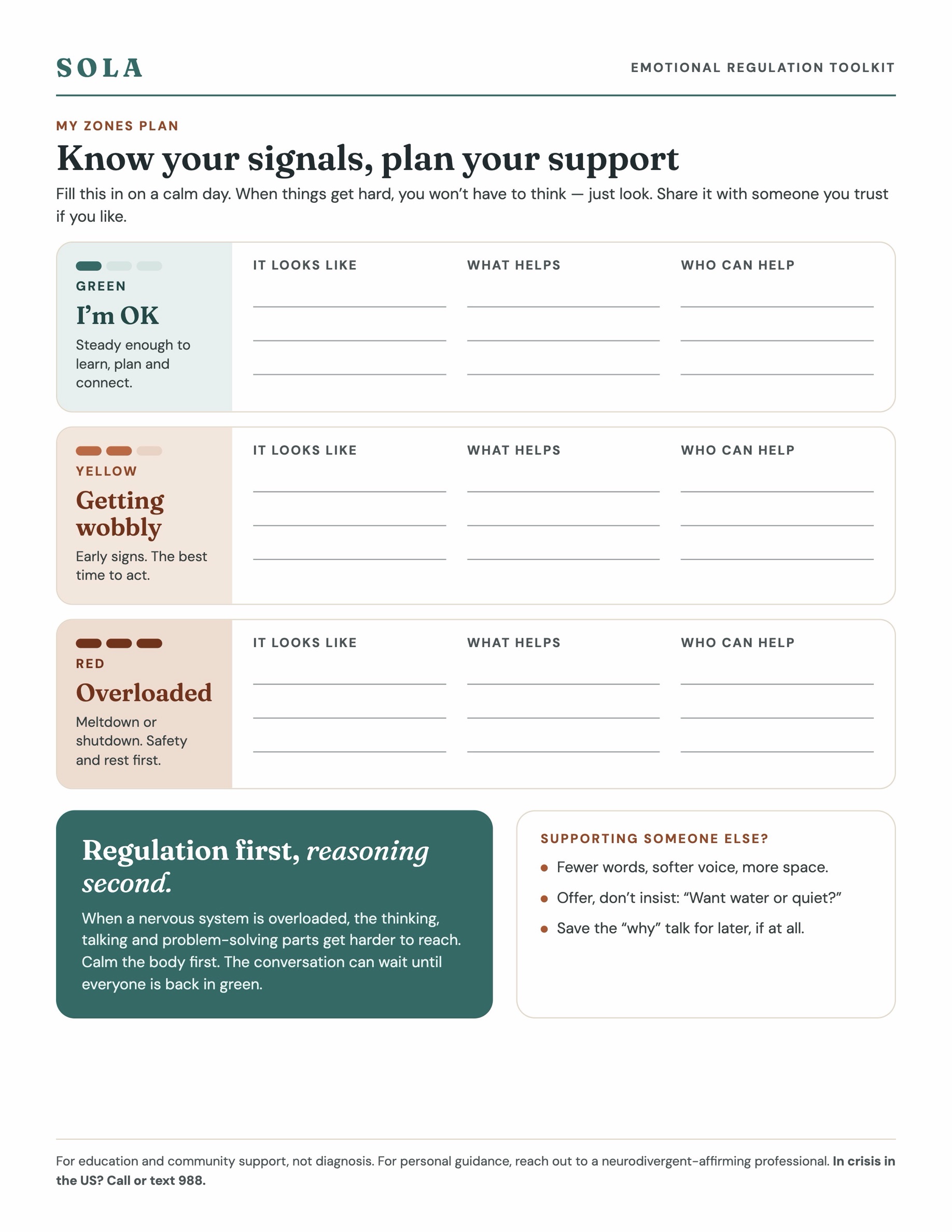
Know your signals, plan your support
Fill this in on a calm day. When things get hard, you won’t have to think — just look. Share it with someone you trust if you like.
- Green — I’m OK: Steady enough to learn, plan and connect.
- Yellow — Getting wobbly: Early signs. The best time to act.
- Red — Overloaded: Meltdown or shutdown. Safety and rest first.
My zones plan
| It looks like | What helps | Who can help | |
|---|---|---|---|
| Green — I’m OK | |||
| Yellow — Getting wobbly | |||
| Red — Overloaded |
Regulation first, reasoning second.
When a nervous system is overloaded, the thinking, talking and problem-solving parts get harder to reach. Calm the body first. The conversation can wait until everyone is back in green.
Supporting someone else?
- Fewer words, softer voice, more space.
- Offer, don’t insist: “Want water or quiet?”
- Save the “why” talk for later, if at all.
For education and community support, not diagnosis. For personal guidance, reach out to a neurodivergent-affirming professional. In crisis in the US? Call or text 988.