Practice
Thought Detective
Checking the evidence.
Why this helps: slowing a stuck thought down to look at the clues can loosen its grip. Your worries aren’t “irrational” — many grew from real experiences, and those count as evidence too.
Example: A friend left my message on read. “They’re annoyed with me” (80). For: it happened once before. Against: work is hectic for them. Balanced: “They might be swamped — I can check in tomorrow” (35).
The worksheet, as designed. The same content is written out below.
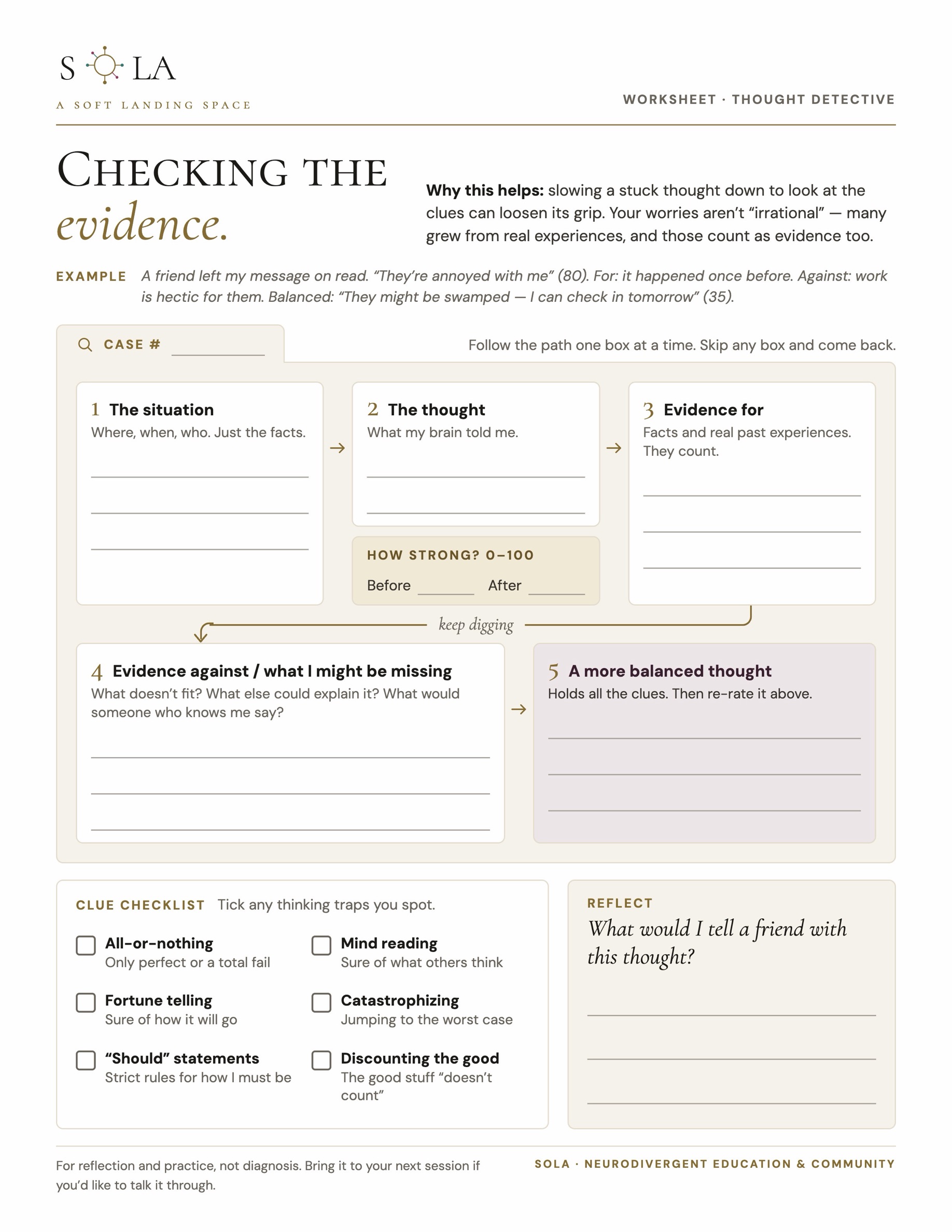
Case #
Follow the path one box at a time. Skip any box and come back.
How strong? 0–100 · Before
How strong? 0–100 · After
keep digging
Clue checklist
Tick any thinking traps you spot.
Tick any thinking traps you spot. Tick all that apply
All-or-nothing: Only perfect or a total fail. Mind reading: Sure of what others think. Fortune telling: Sure of how it will go. Catastrophizing: Jumping to the worst case. “Should” statements: Strict rules for how I must be. Discounting the good: The good stuff “doesn’t count”.- All-or-nothing
- Mind reading
- Fortune telling
- Catastrophizing
- “Should” statements
- Discounting the good
Reflect
For reflection and practice, not diagnosis. Bring it to your next session if you’d like to talk it through.