Learn
The Load vs. Capacity Scale
A simple picture of why burnout builds, and how it eases.
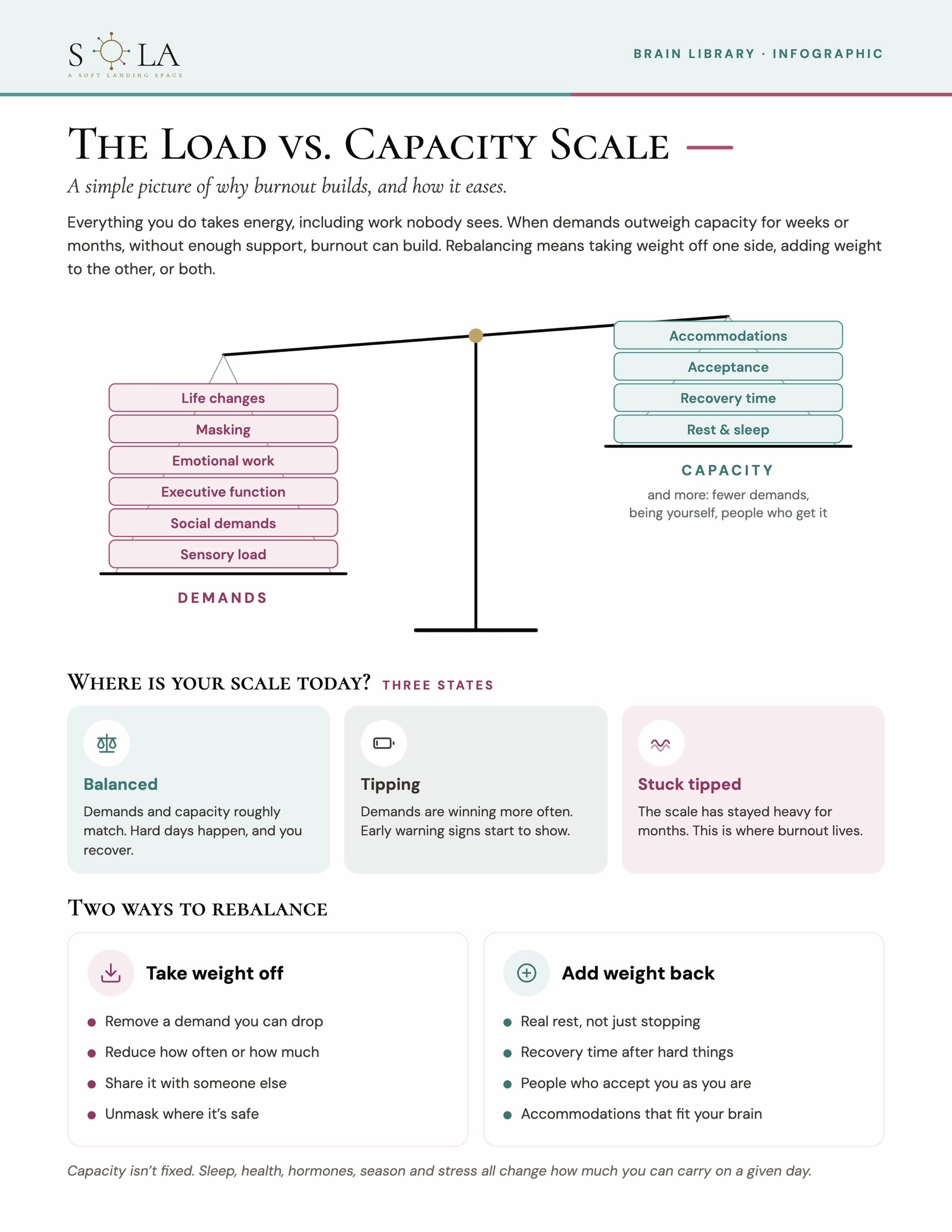
Everything you do takes energy, including work nobody sees. When demands outweigh capacity for weeks or months, without enough support, burnout can build. Rebalancing means taking weight off one side, adding weight to the other, or both.
The guide, as designed. The same content is written out below.
See page 2
A scale, tipped down on the left under the weight of Demands:
- Life changes
- Masking
- Emotional work
- Executive function
- Social demands
- Sensory load
On the right, lifted, Capacity:
- Accommodations
- Acceptance
- Recovery time
- Rest & sleep
and more: fewer demands, being yourself, people who get it
Where is your scale today?
Three states
Balanced Demands and capacity roughly match. Hard days happen, and you recover.
Tipping Demands are winning more often. Early warning signs start to show.
Stuck tipped The scale has stayed heavy for months. This is where burnout lives.
Two ways to rebalance
- Remove a demand you can drop
- Reduce how often or how much
- Share it with someone else
- Unmask where it’s safe
- Real rest, not just stopping
- Recovery time after hard things
- People who accept you as you are
- Accommodations that fit your brain
Capacity isn’t fixed. Sleep, health, hormones, season and stress all change how much you can carry on a given day.
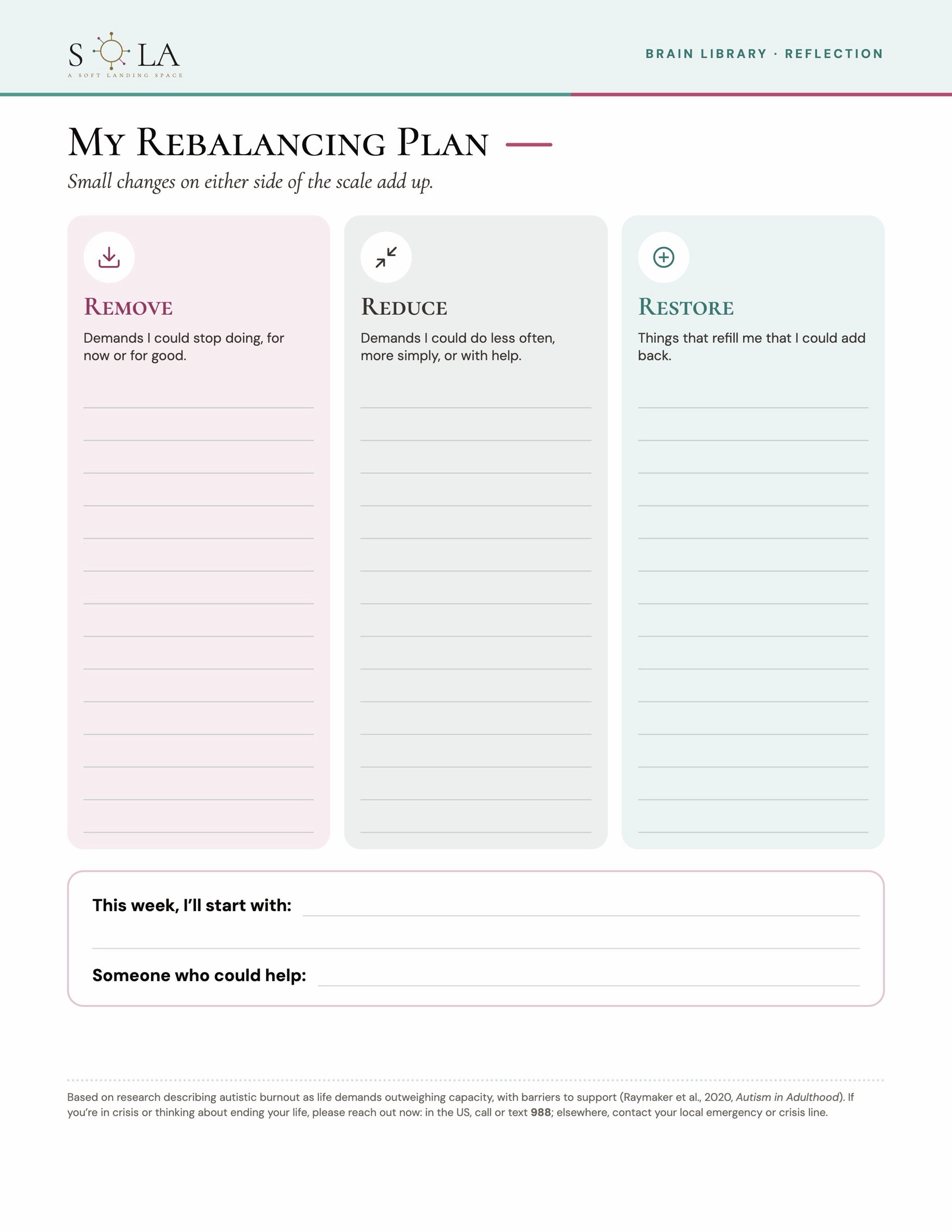
My Rebalancing Plan
Small changes on either side of the scale add up.
If you’re in crisis or thinking about ending your life, please reach out now: in the US, call or text 988; elsewhere, contact your local emergency or crisis line.
Sources and credits. Based on research describing autistic burnout as life demands outweighing capacity, with barriers to support (Raymaker et al., 2020, Autism in Adulthood).