Learn
Burnout at a Glance
What neurodivergent burnout is, how it builds, and what helps.
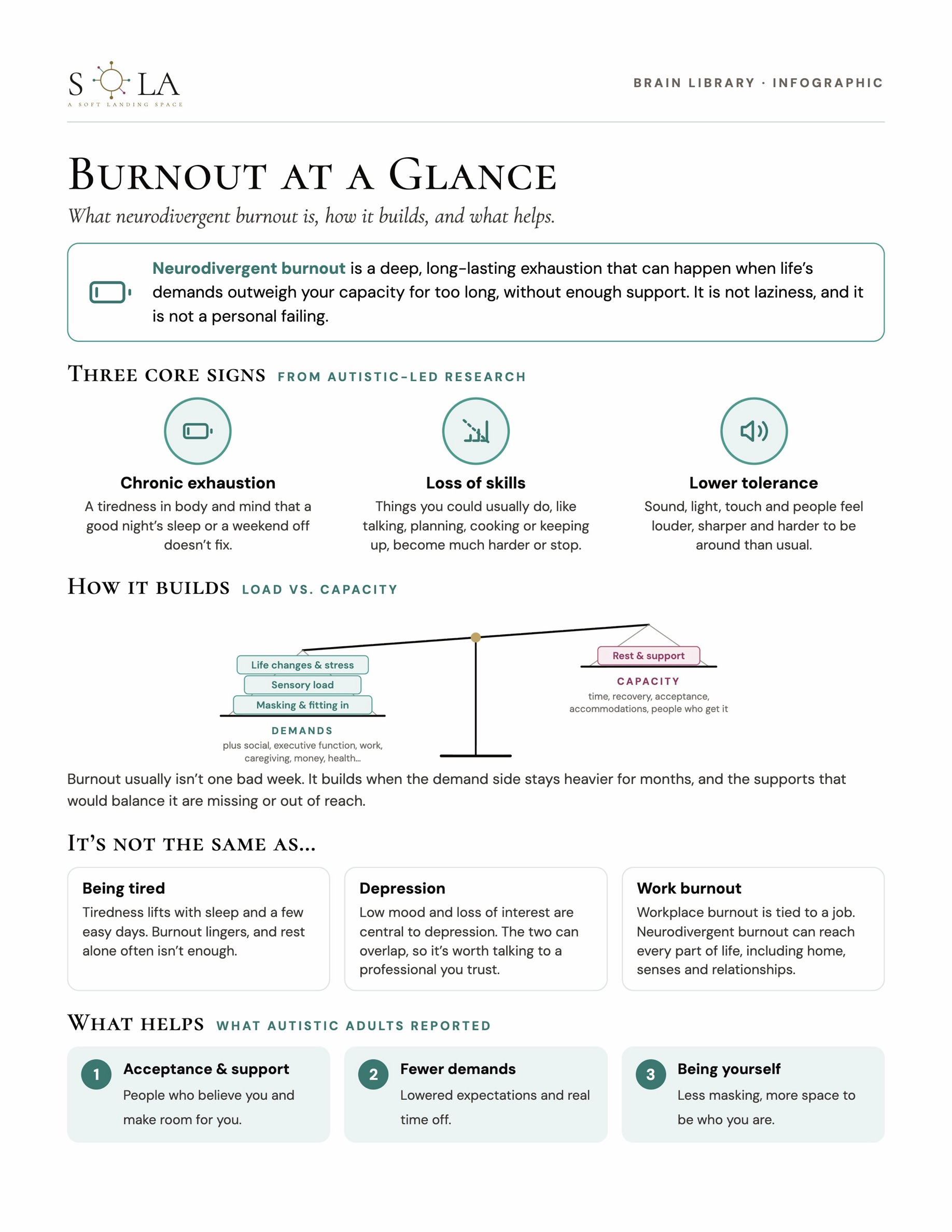
Neurodivergent burnout is a deep, long-lasting exhaustion that can happen when life's demands outweigh your capacity for too long, without enough support. It is not laziness, and it is not a personal failing.
The guide, as designed. The same content is written out below.
See page 2
Three core signs
From autistic-led research
A tiredness in body and mind that a good night's sleep or a weekend off doesn't fix.
Things you could usually do, like talking, planning, cooking or keeping up, become much harder or stop.
Sound, light, touch and people feel louder, sharper and harder to be around than usual.
How it builds
Load vs. capacity
A scale, tipped toward the heavier side.
Demands: Life changes & stress · Sensory load · Masking & fitting in — plus social, executive function, work, caregiving, money, health…
Capacity: Rest & support — time, recovery, acceptance, accommodations, people who get it
Burnout usually isn't one bad week. It builds when the demand side stays heavier for months, and the supports that would balance it are missing or out of reach.
It's not the same as…
Tiredness lifts with sleep and a few easy days. Burnout lingers, and rest alone often isn't enough.
Low mood and loss of interest are central to depression. The two can overlap, so it's worth talking to a professional you trust.
Workplace burnout is tied to a job. Neurodivergent burnout can reach every part of life, including home, senses and relationships.
What helps
What autistic adults reported
People who believe you and make room for you.
Lowered expectations and real time off.
Less masking, more space to be who you are.
Reflect: Burnout & Me
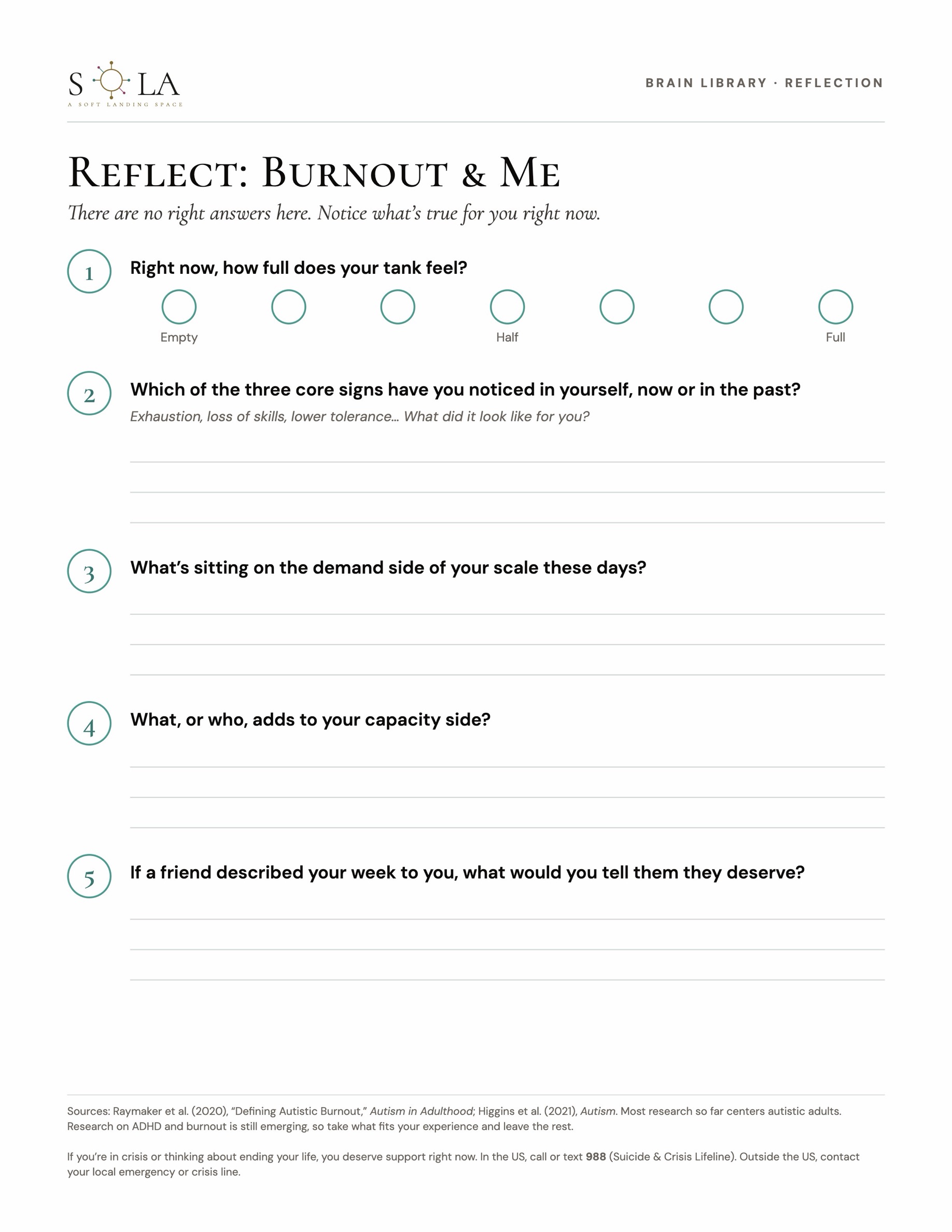
There are no right answers here. Notice what's true for you right now.
Right now, how full does your tank feel?
Empty · Half · FullIf you're in crisis or thinking about ending your life, you deserve support right now. In the US, call or text 988 (Suicide & Crisis Lifeline). Outside the US, contact your local emergency or crisis line.
Sources and credits. Sources: Raymaker et al. (2020), "Defining Autistic Burnout," Autism in Adulthood; Higgins et al. (2021), Autism. Most research so far centers autistic adults. Research on ADHD and burnout is still emerging, so take what fits your experience and leave the rest.