Learn
Behind the mask.
Masking & Unmasking
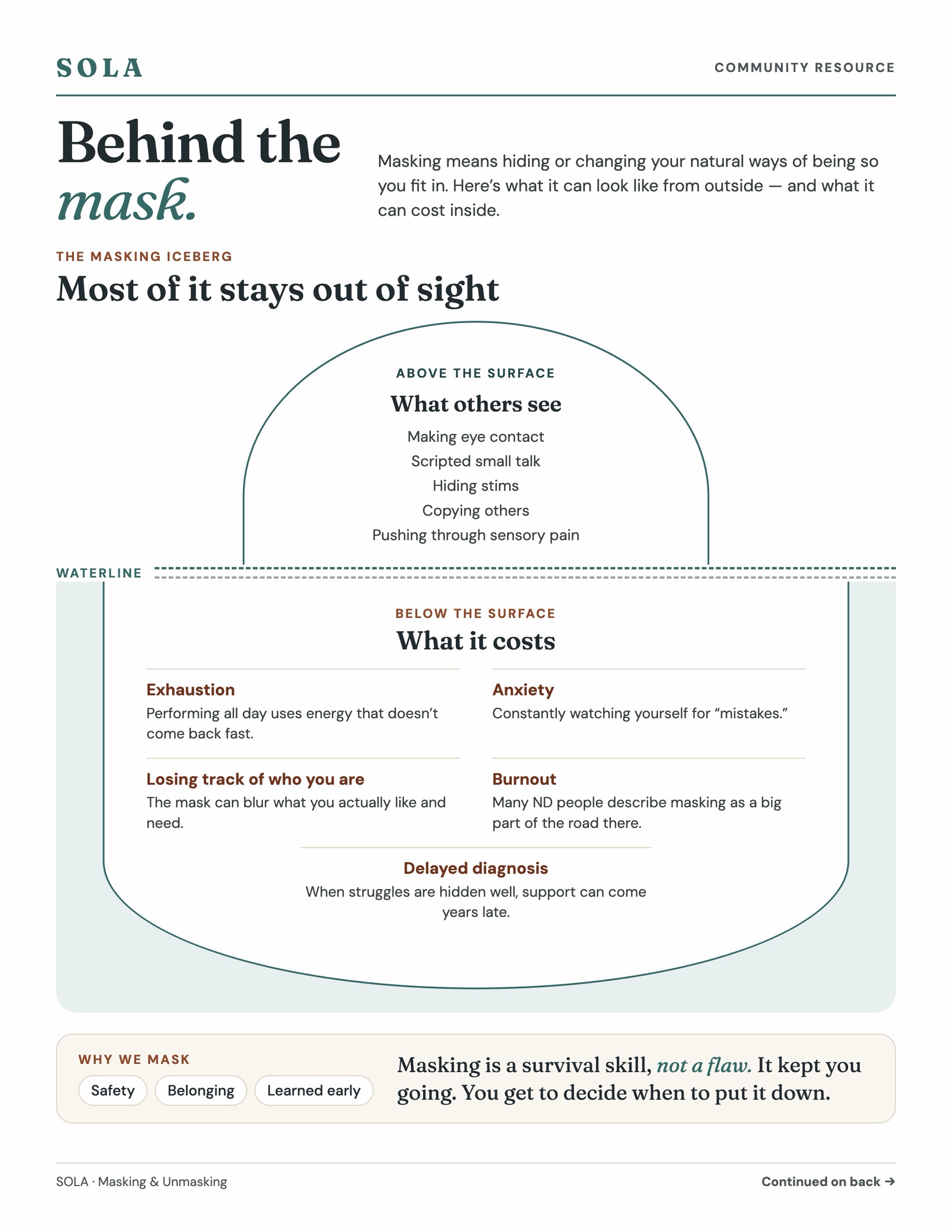
Masking means hiding or changing your natural ways of being so you fit in. Here’s what it can look like from outside — and what it can cost inside.
The guide, as designed. The same content is written out below.
See page 2
Most of it stays out of sight
The masking iceberg
Above the surface · What others see
- Making eye contact
- Scripted small talk
- Hiding stims
- Copying others
- Pushing through sensory pain
Waterline
Performing all day uses energy that doesn’t come back fast.
Constantly watching yourself for “mistakes.”
The mask can blur what you actually like and need.
Many ND people describe masking as a big part of the road there.
When struggles are hidden well, support can come years late.
Why we mask
- Safety
- Belonging
- Learned early
Masking is a survival skill, not a flaw. It kept you going. You get to decide when to put it down.
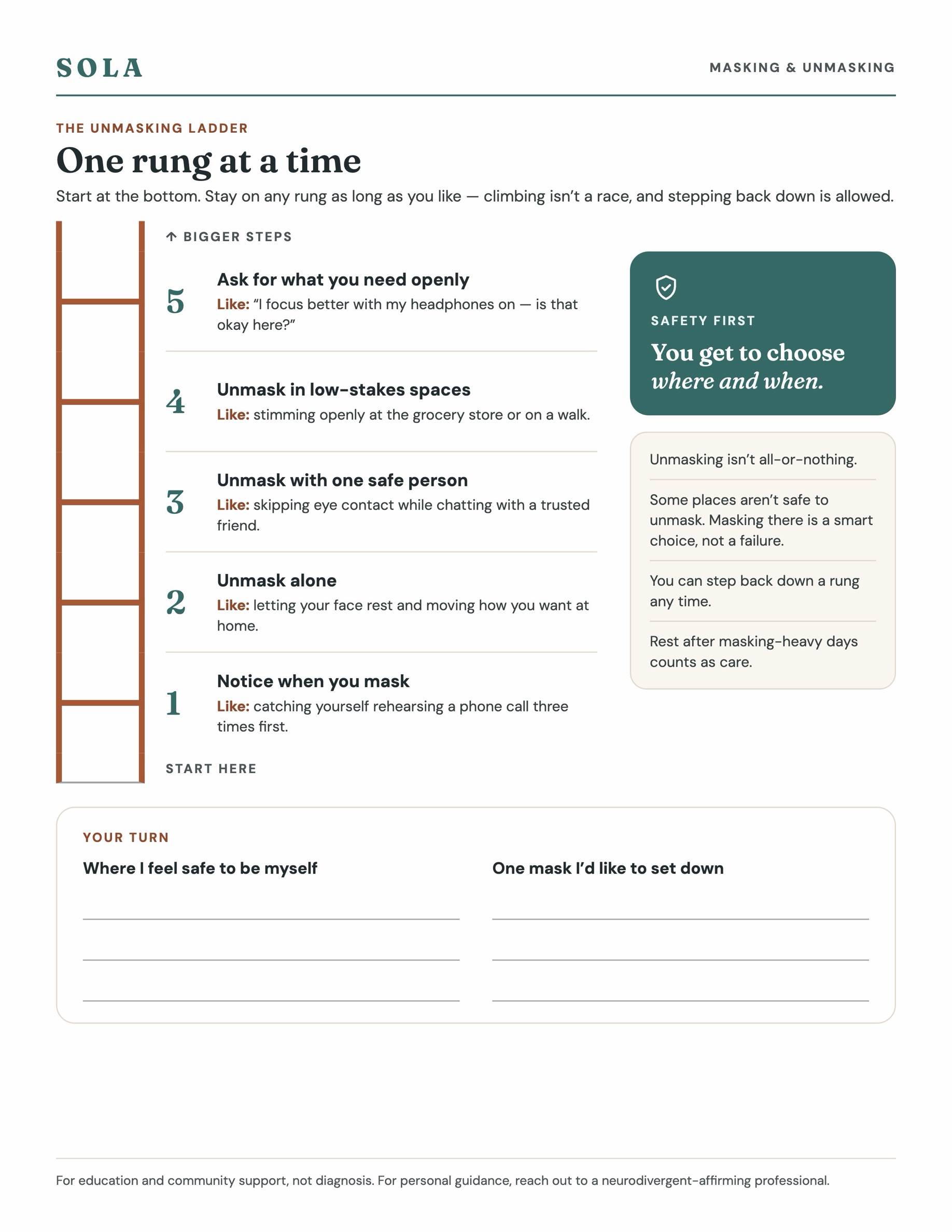
One rung at a time
The unmasking ladder. Start at the bottom. Stay on any rung as long as you like — climbing isn’t a race, and stepping back down is allowed.
Like: catching yourself rehearsing a phone call three times first.
Like: letting your face rest and moving how you want at home.
Like: skipping eye contact while chatting with a trusted friend.
Like: stimming openly at the grocery store or on a walk.
Like: “I focus better with my headphones on — is that okay here?”
You get to choose where and when.
Safety first
- Unmasking isn’t all-or-nothing.
- Some places aren’t safe to unmask. Masking there is a smart choice, not a failure.
- You can step back down a rung any time.
- Rest after masking-heavy days counts as care.
Your turn
For education and community support, not diagnosis. For personal guidance, reach out to a neurodivergent-affirming professional.
Sources and credits. SOLA · Community Resource · Masking & Unmasking