Practice
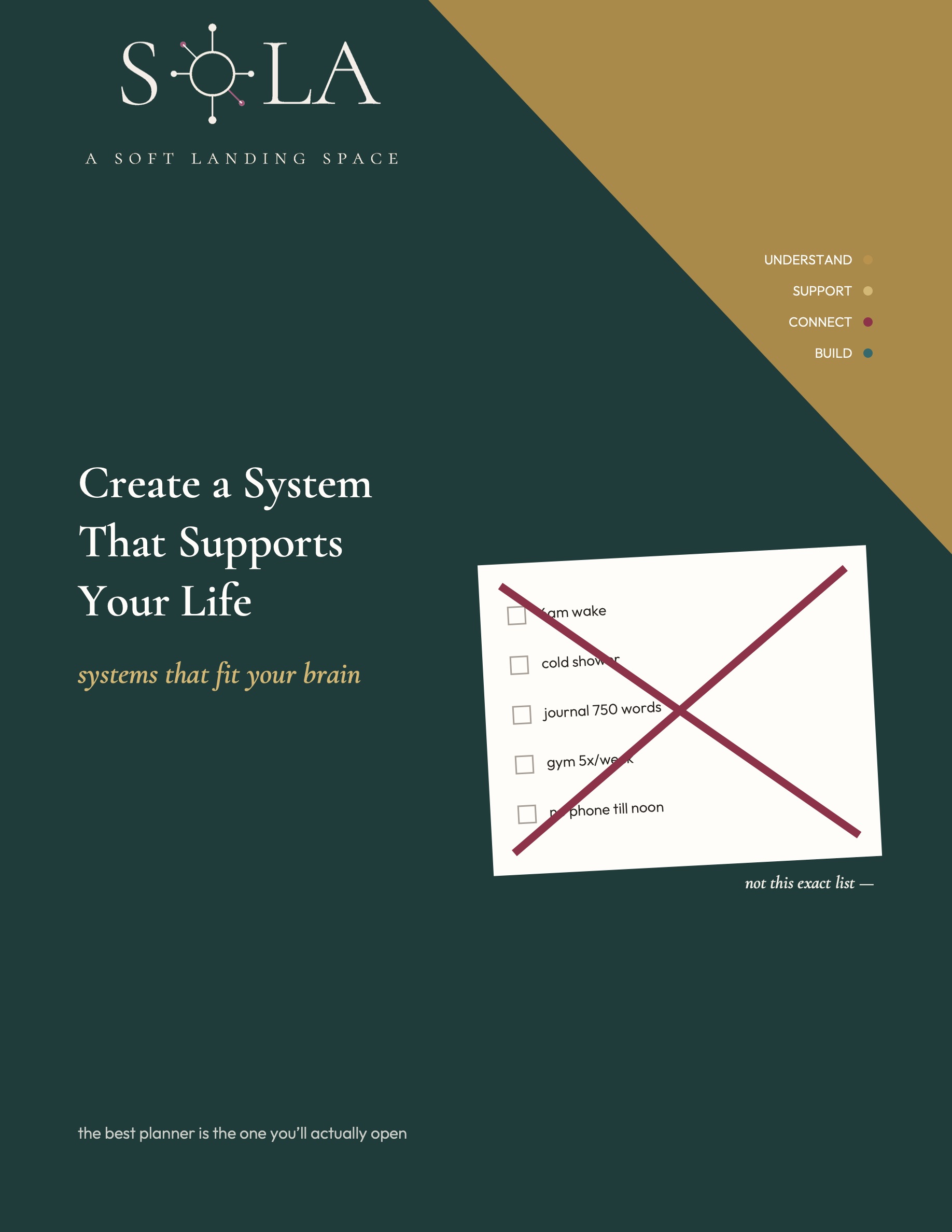
Create a System That Supports Your Life
systems that fit your brain — the best planner is the one you'll actually open
Most productivity advice is written by and for a particular kind of brain: steady energy, low sensory needs, motivation that responds to streaks and deadlines.
If that isn't how your brain works, following the advice exactly can leave you feeling like the problem — when really the fit was never right.
The workbook, as designed. The same content is written out below.
See the other 11 pages
Productivity isn't one-size-fits-all.
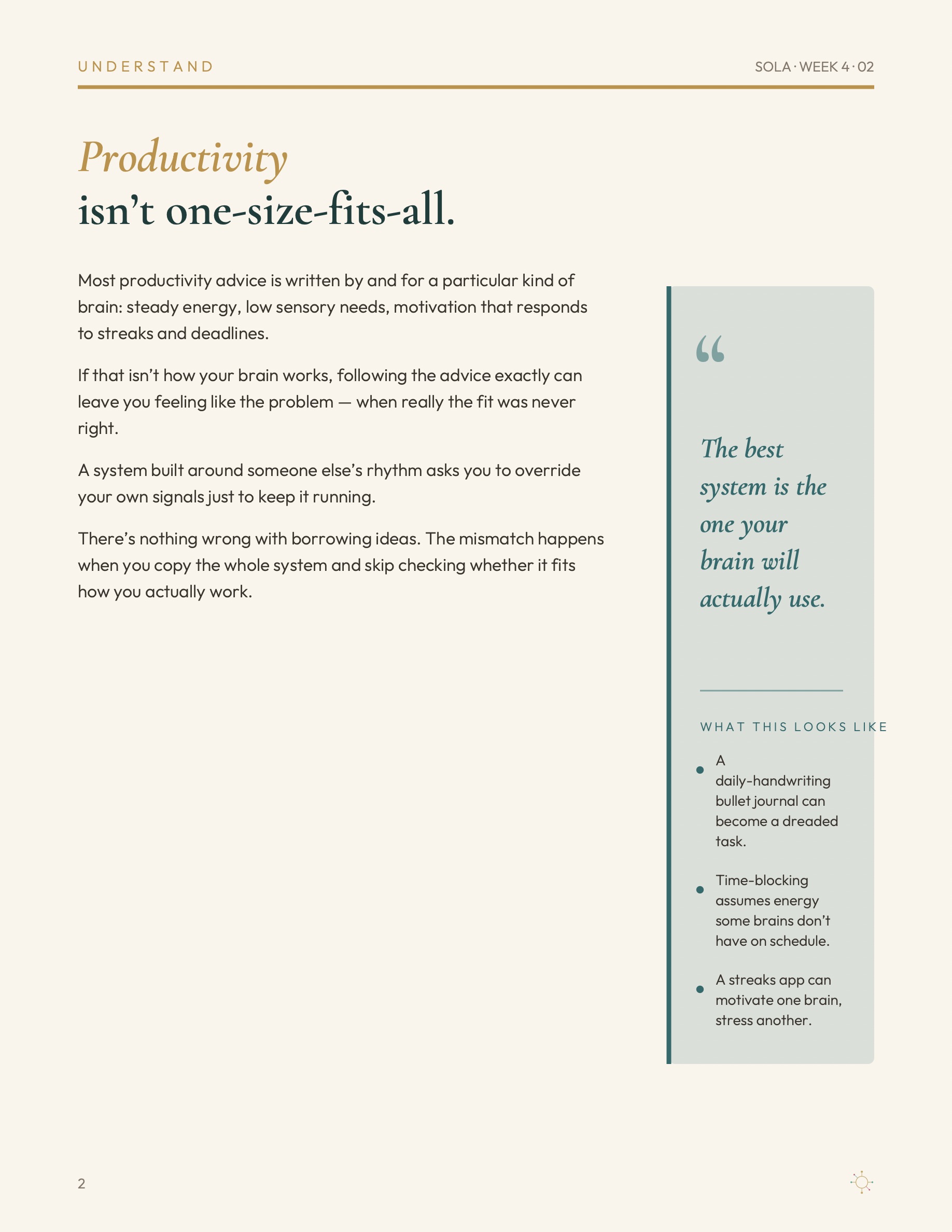
Most productivity advice is written by and for a particular kind of brain: steady energy, low sensory needs, motivation that responds to streaks and deadlines.
If that isn't how your brain works, following the advice exactly can leave you feeling like the problem — when really the fit was never right.
A system built around someone else's rhythm asks you to override your own signals just to keep it running.
There's nothing wrong with borrowing ideas. The mismatch happens when you copy the whole system and skip checking whether it fits how you actually work.
"The best system is the one your brain will actually use."
What this looks like
- A daily-handwriting bullet journal can become a dreaded task.
- Time-blocking assumes energy some brains don't have on schedule.
- A streaks app can motivate one brain, stress another.
Why copying systems fails
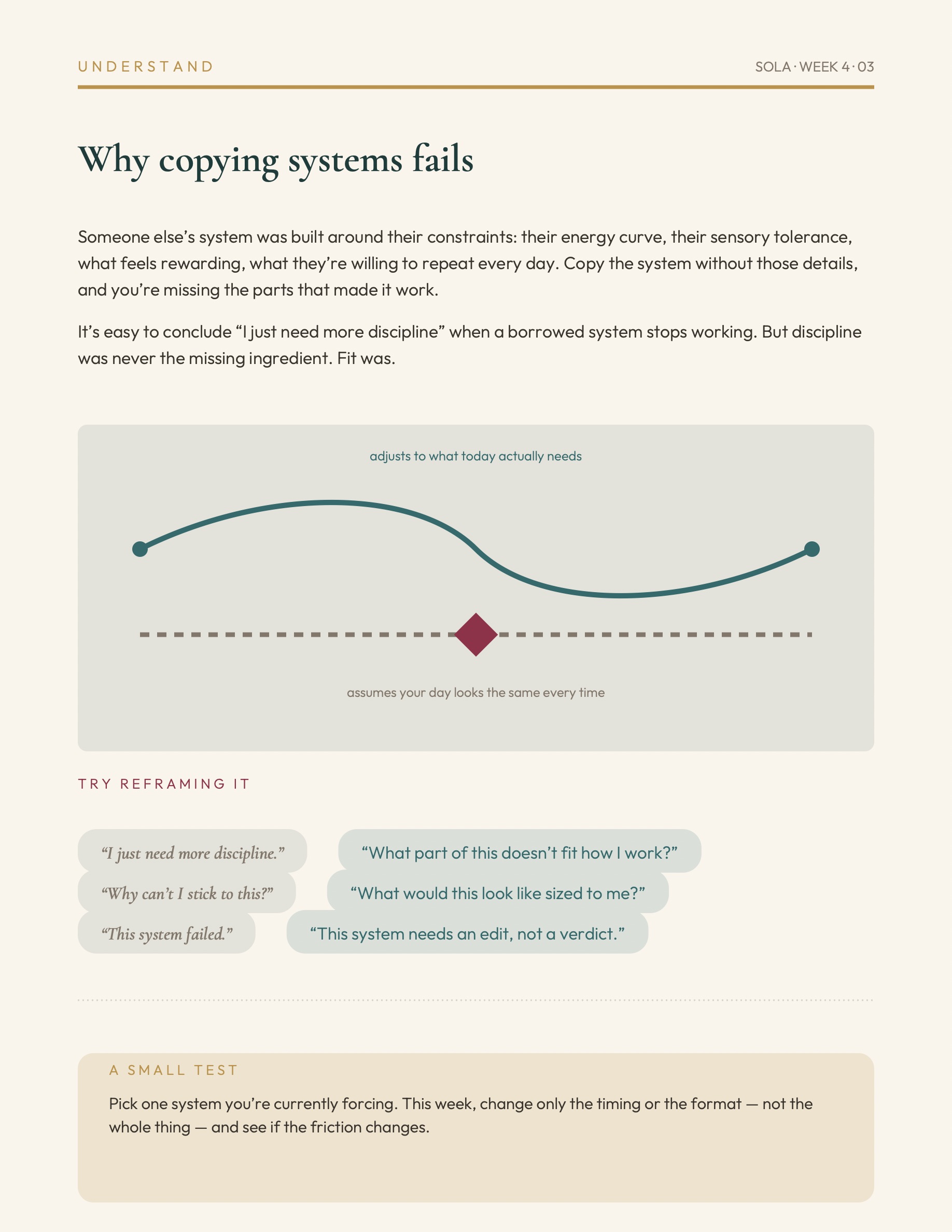
Someone else's system was built around their constraints: their energy curve, their sensory tolerance, what feels rewarding, what they're willing to repeat every day. Copy the system without those details, and you're missing the parts that made it work.
It's easy to conclude "I just need more discipline" when a borrowed system stops working. But discipline was never the missing ingredient. Fit was.
(Two lines: a wavy one that "adjusts to what today actually needs", and a flat dashed one that "assumes your day looks the same every time".)
Try reframing it
- "I just need more discipline." → "What part of this doesn't fit how I work?"
- "Why can't I stick to this?" → "What would this look like sized to me?"
- "This system failed." → "This system needs an edit, not a verdict."
A small test
Pick one system you're currently forcing. This week, change only the timing or the format — not the whole thing — and see if the friction changes.
What makes a system yours.
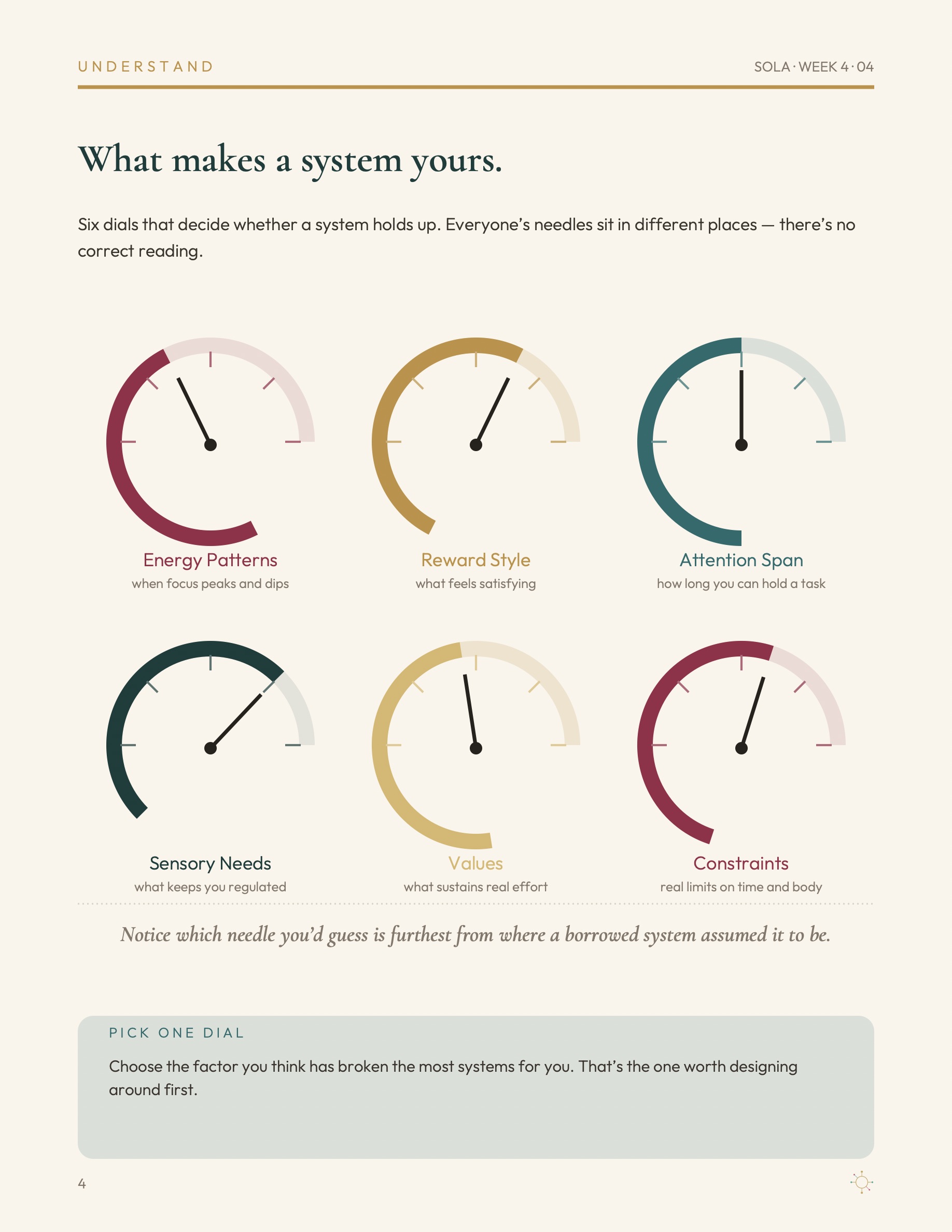
Six dials that decide whether a system holds up. Everyone's needles sit in different places — there's no correct reading.
Six dials:
- Energy Patterns — when focus peaks and dips
- Reward Style — what feels satisfying
- Attention Span — how long you can hold a task
- Sensory Needs — what keeps you regulated
- Values — what sustains real effort
- Constraints — real limits on time and body
Notice which needle you'd guess is furthest from where a borrowed system assumed it to be.
Pick one dial Pick one
Choose the factor you think has broken the most systems for you. That's the one worth designing around first.- Energy Patterns
- Reward Style
- Attention Span
- Sensory Needs
- Values
- Constraints
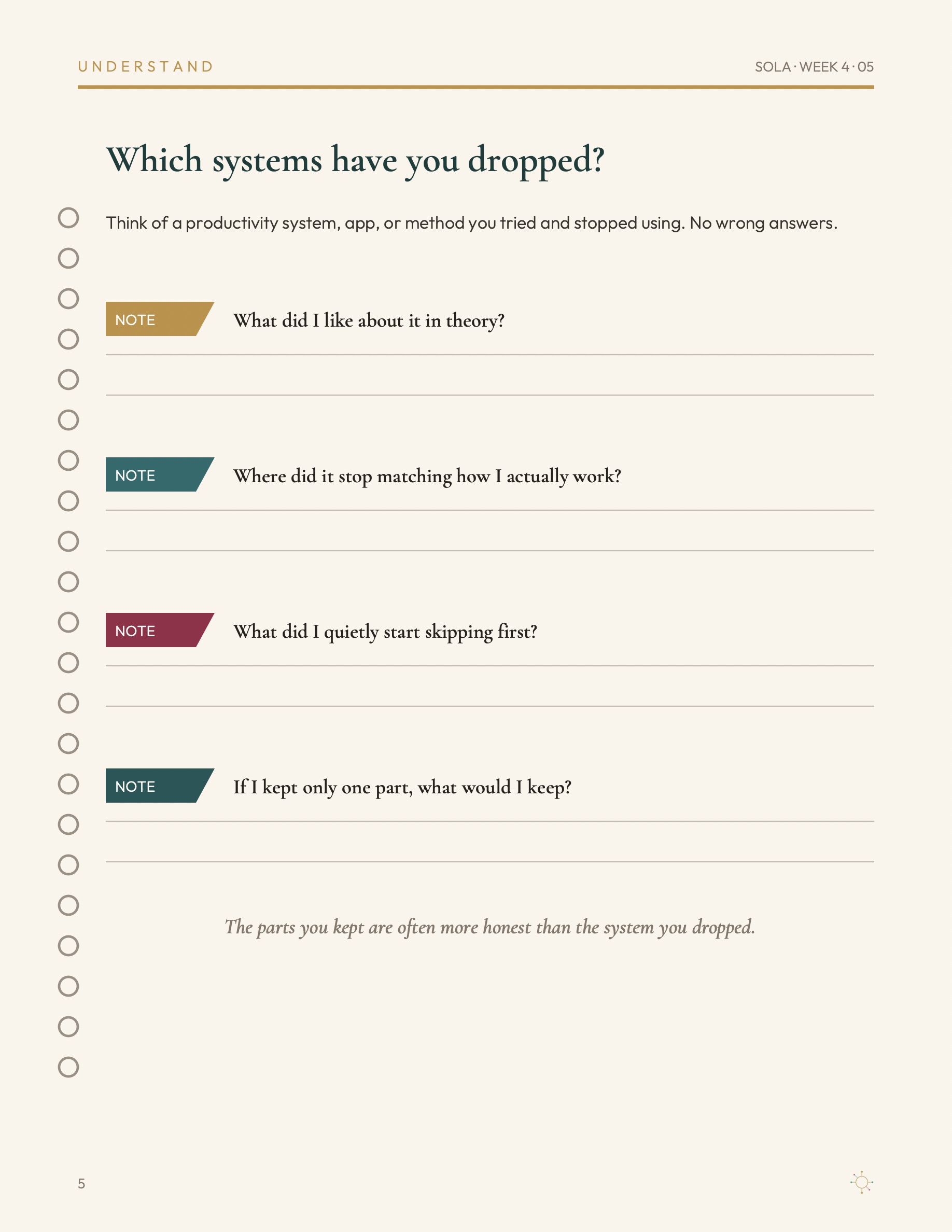
Which systems have you dropped?
Think of a productivity system, app, or method you tried and stopped using. No wrong answers.
The parts you kept are often more honest than the system you dropped.
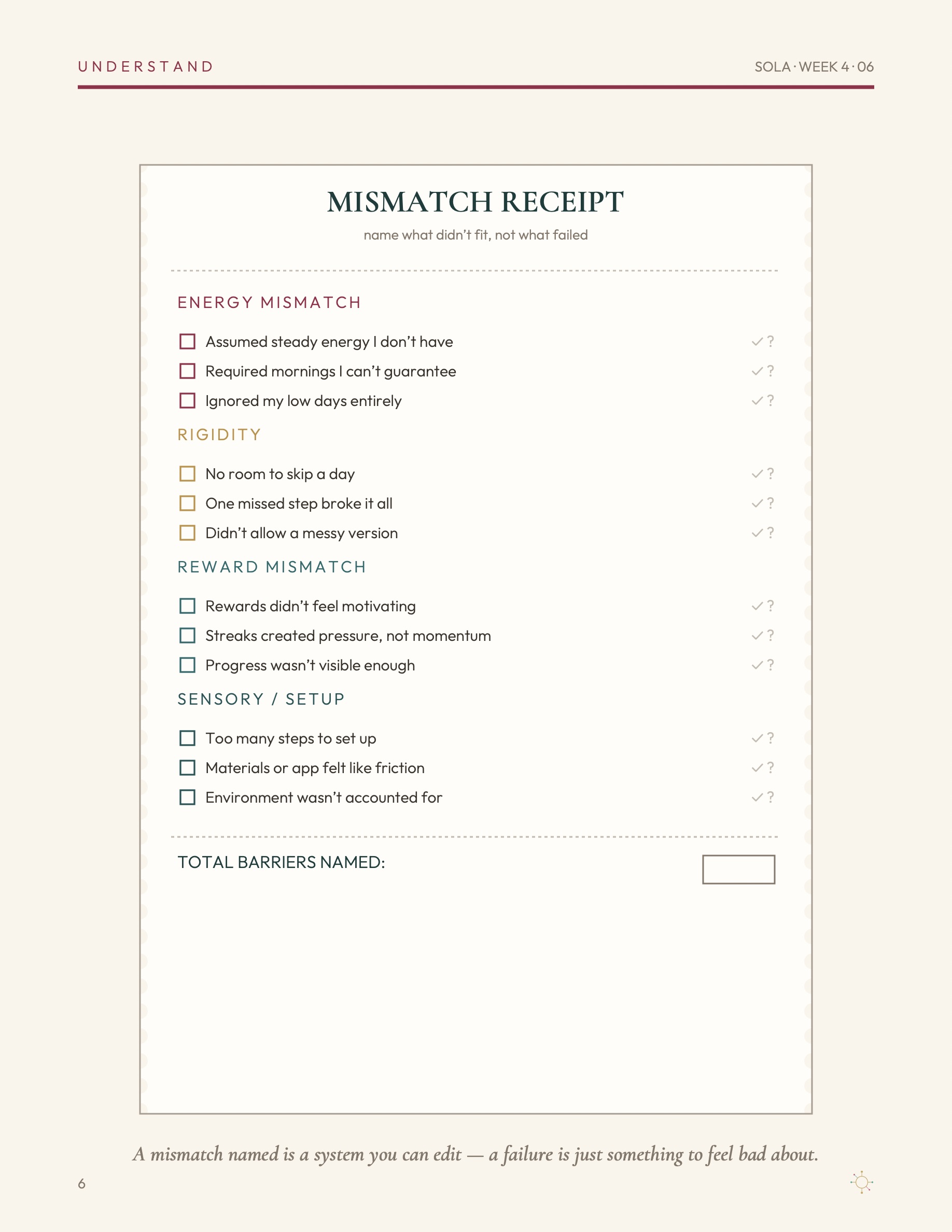
Mismatch Receipt
name what didn't fit, not what failed
Energy mismatch Tick all that apply
- Assumed steady energy I don't have
- Required mornings I can't guarantee
- Ignored my low days entirely
Rigidity Tick all that apply
- No room to skip a day
- One missed step broke it all
- Didn't allow a messy version
Reward mismatch Tick all that apply
- Rewards didn't feel motivating
- Streaks created pressure, not momentum
- Progress wasn't visible enough
Sensory / setup Tick all that apply
- Too many steps to set up
- Materials or app felt like friction
- Environment wasn't accounted for
A mismatch named is a system you can edit — a failure is just something to feel bad about.
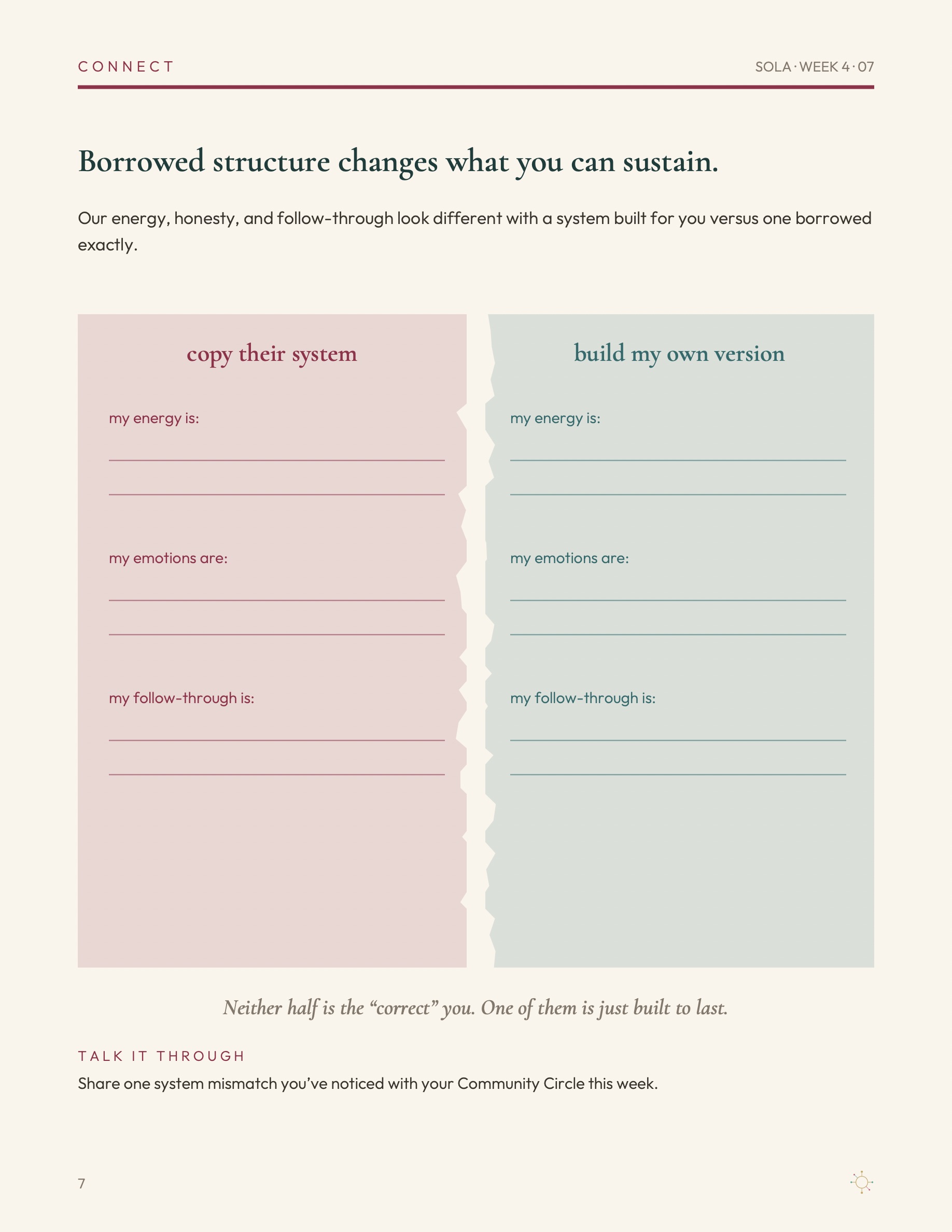
Borrowed structure changes what you can sustain.
Our energy, honesty, and follow-through look different with a system built for you versus one borrowed exactly.
| copy their system | build my own version | |
|---|---|---|
| my energy is: | ||
| my emotions are: | ||
| my follow-through is: |
Neither half is the "correct" you. One of them is just built to last.
Talk it through
Share one system mismatch you've noticed with your Community Circle this week.
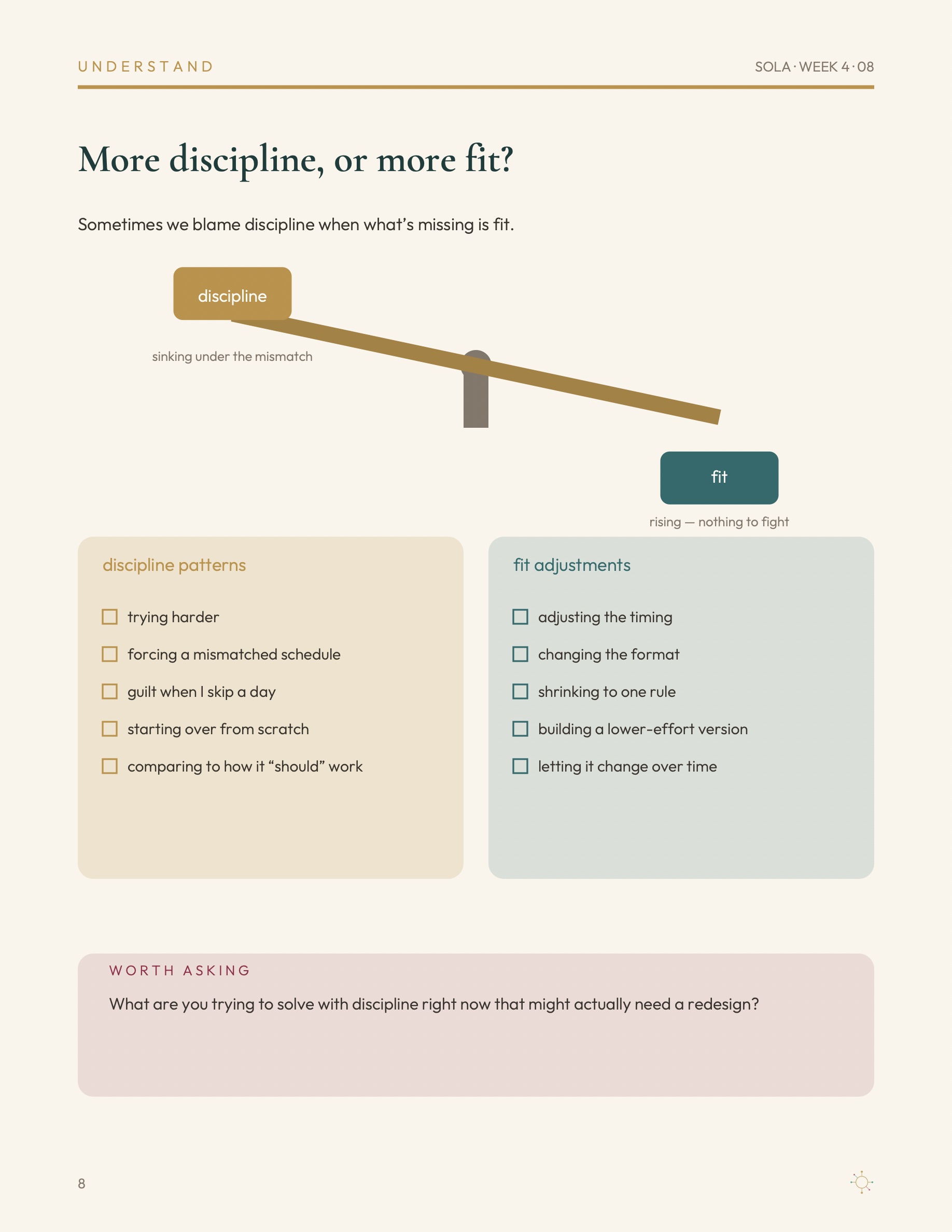
More discipline, or more fit?
Sometimes we blame discipline when what's missing is fit.
A seesaw: discipline — sinking under the mismatch. fit — rising — nothing to fight.
discipline patterns Tick all that apply
- trying harder
- forcing a mismatched schedule
- guilt when I skip a day
- starting over from scratch
- comparing to how it "should" work
fit adjustments Tick all that apply
- adjusting the timing
- changing the format
- shrinking to one rule
- building a lower-effort version
- letting it change over time
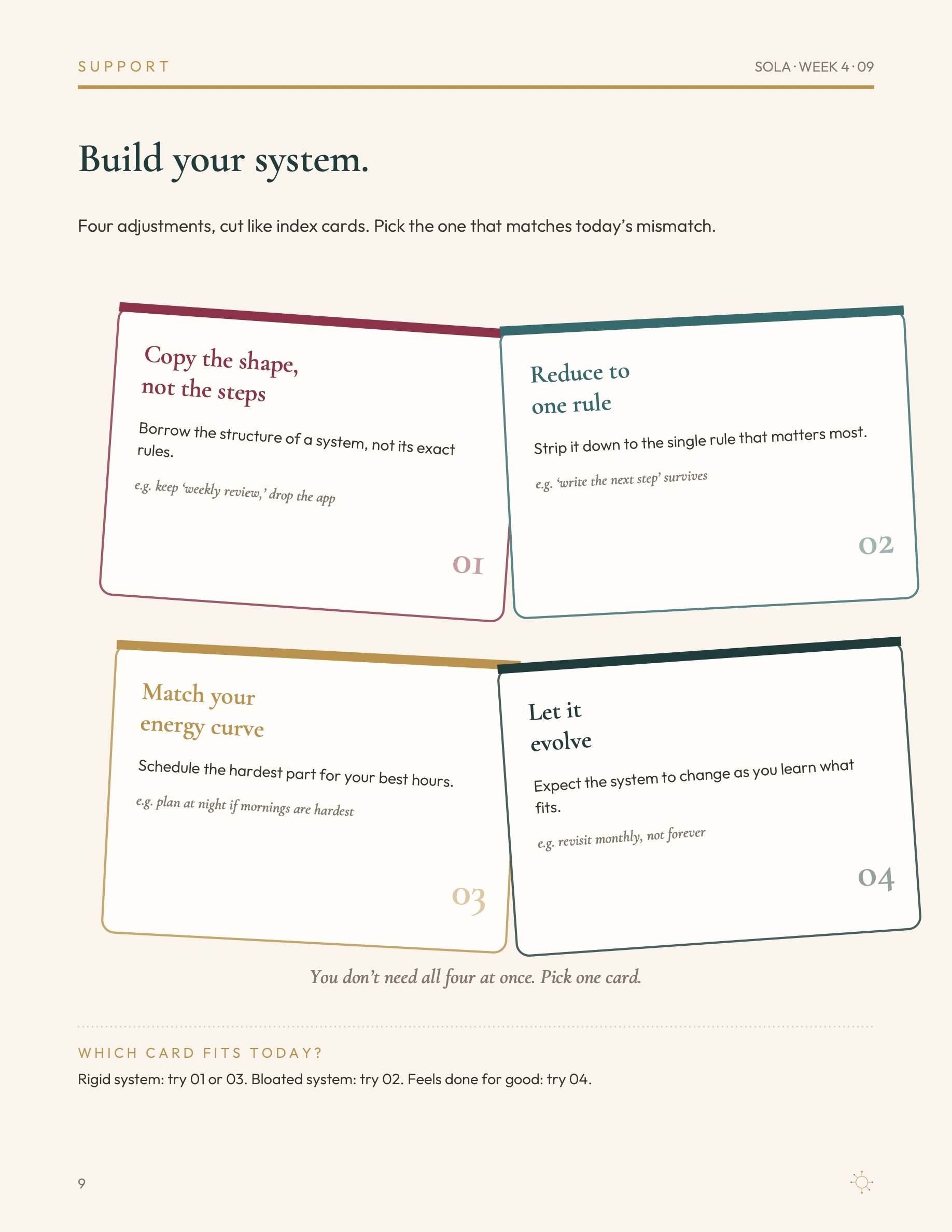
Build your system.
Four adjustments, cut like index cards. Pick the one that matches today's mismatch.
01 · Copy the shape, not the steps
Borrow the structure of a system, not its exact rules.
e.g. keep 'weekly review,' drop the app
02 · Reduce to one rule
Strip it down to the single rule that matters most.
e.g. 'write the next step' survives
03 · Match your energy curve
Schedule the hardest part for your best hours.
e.g. plan at night if mornings are hardest
04 · Let it evolve
Expect the system to change as you learn what fits.
e.g. revisit monthly, not forever
You don't need all four at once. Pick one card.
Which card fits today?
Rigid system: try 01 or 03. Bloated system: try 02. Feels done for good: try 04.
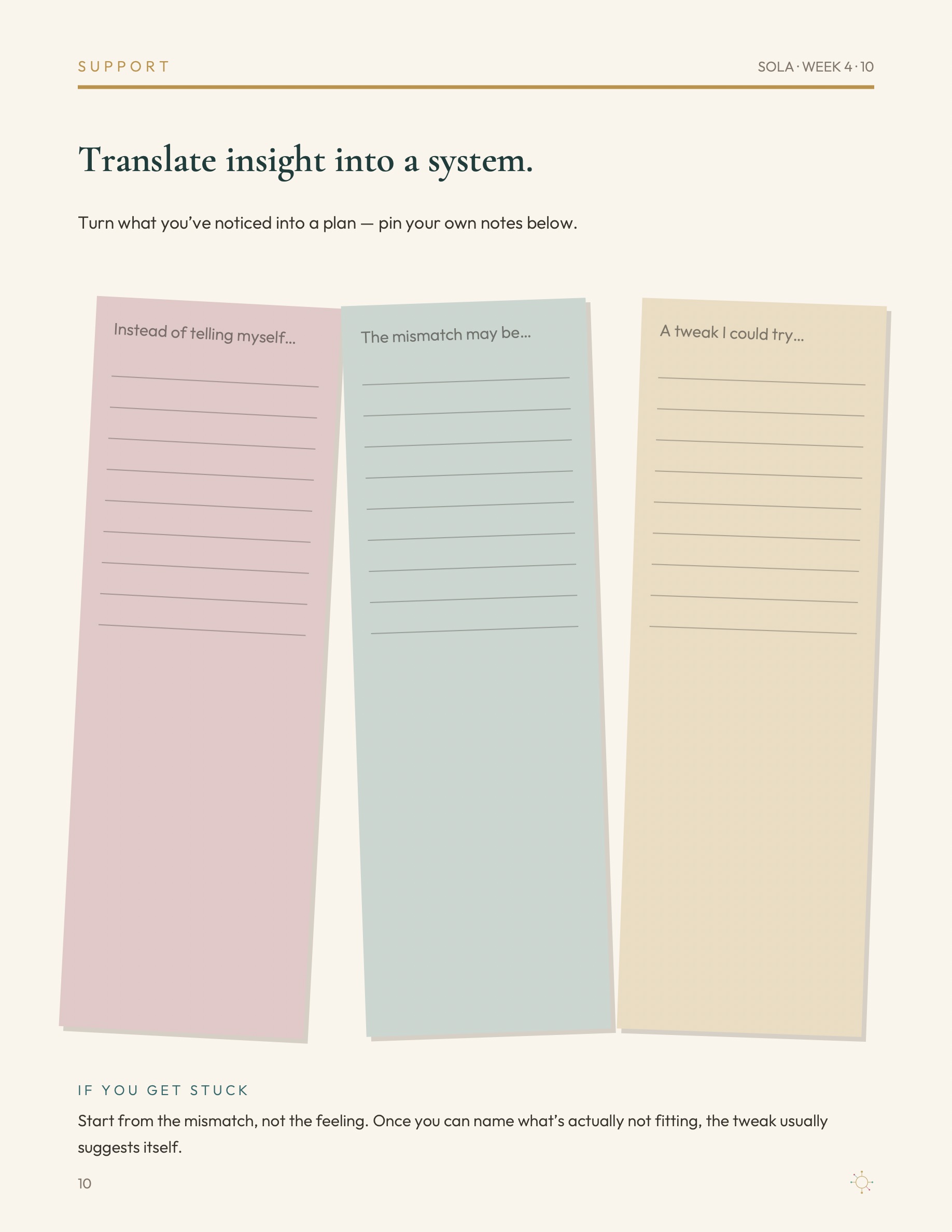
Translate insight into a system.
Turn what you've noticed into a plan — pin your own notes below.
| Instead of telling myself… | The mismatch may be… | A tweak I could try… |
|---|---|---|
If you get stuck
Start from the mismatch, not the feeling. Once you can name what's actually not fitting, the tweak usually suggests itself.
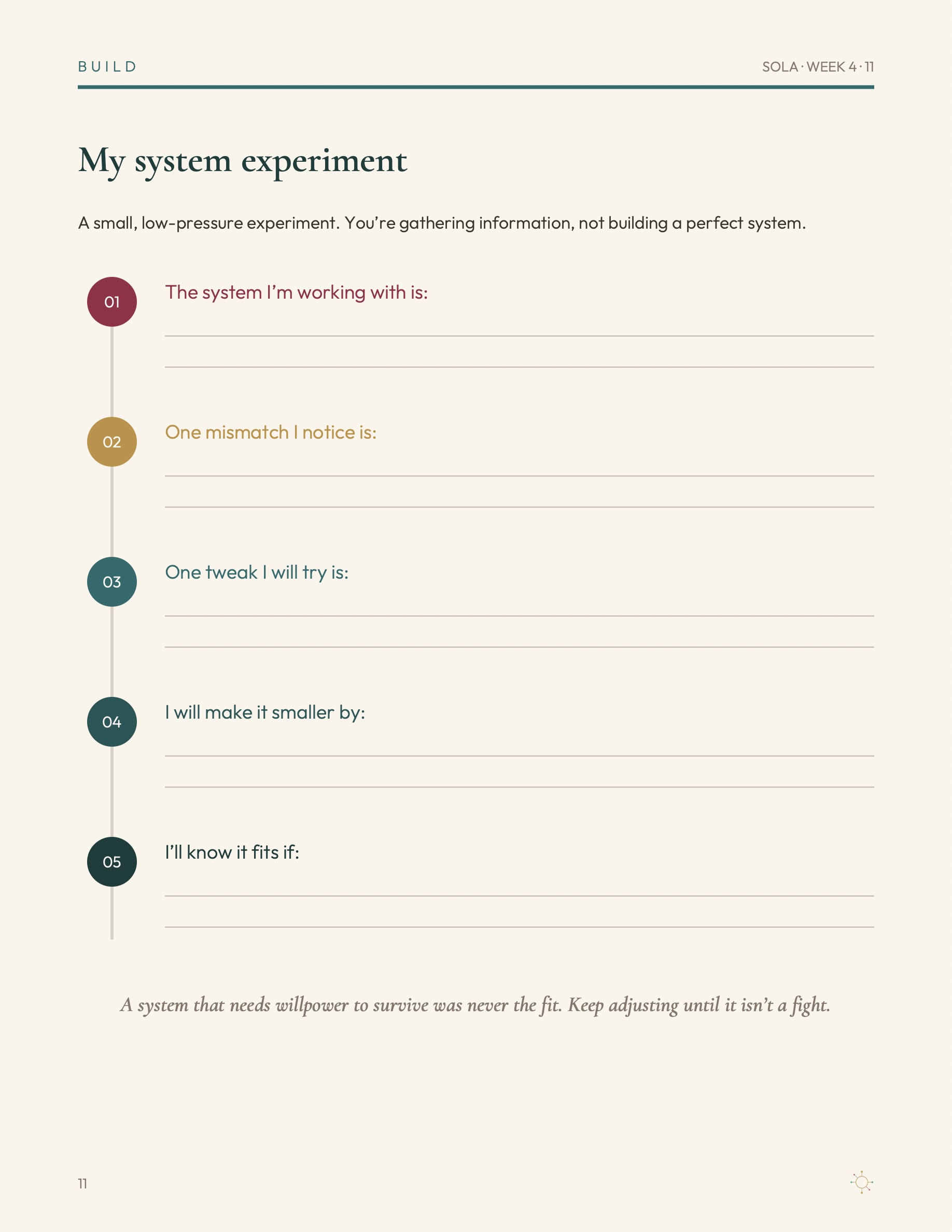
My system experiment
A small, low-pressure experiment. You're gathering information, not building a perfect system.
A system that needs willpower to survive was never the fit. Keep adjusting until it isn't a fight.
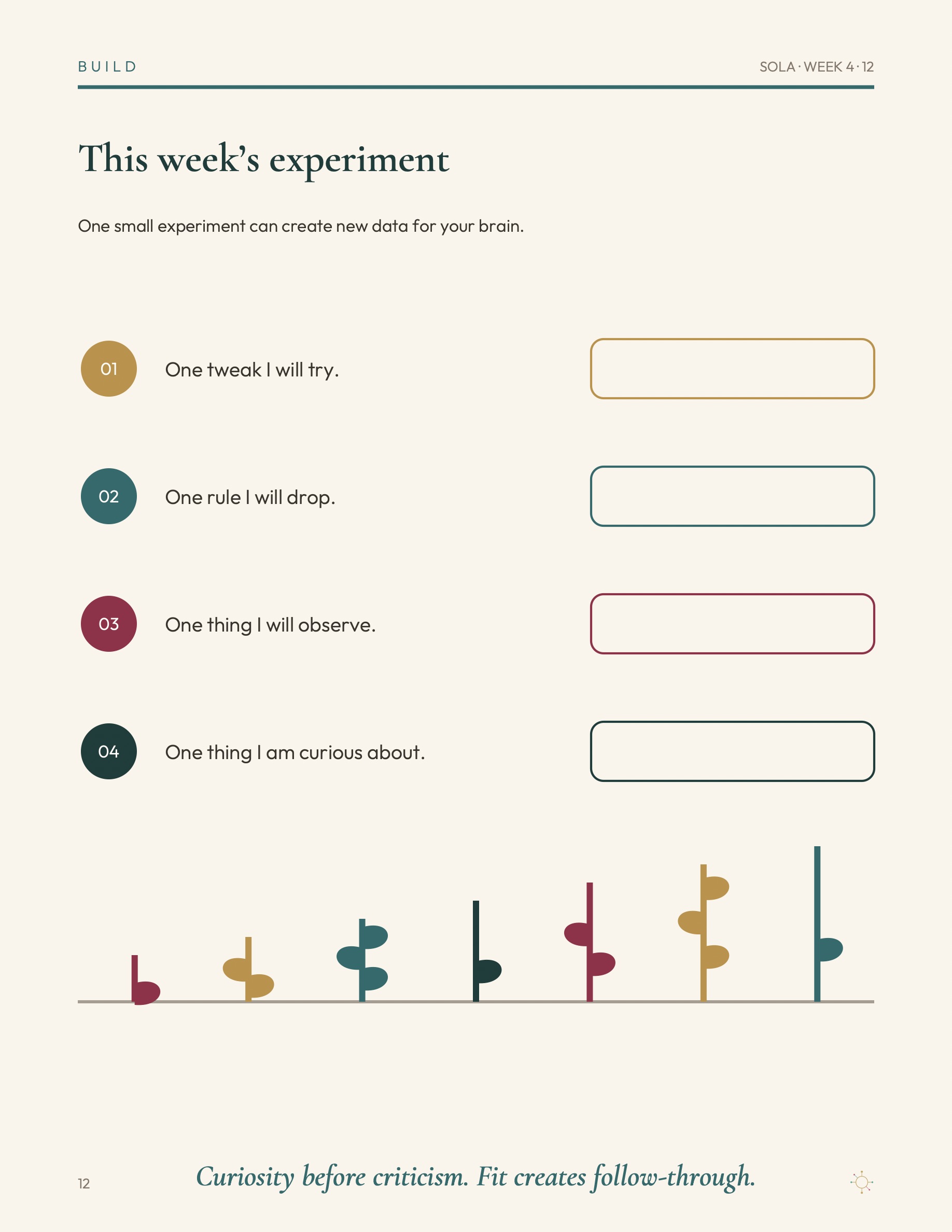
This week's experiment
One small experiment can create new data for your brain.
Curiosity before criticism. Fit creates follow-through.