Practice
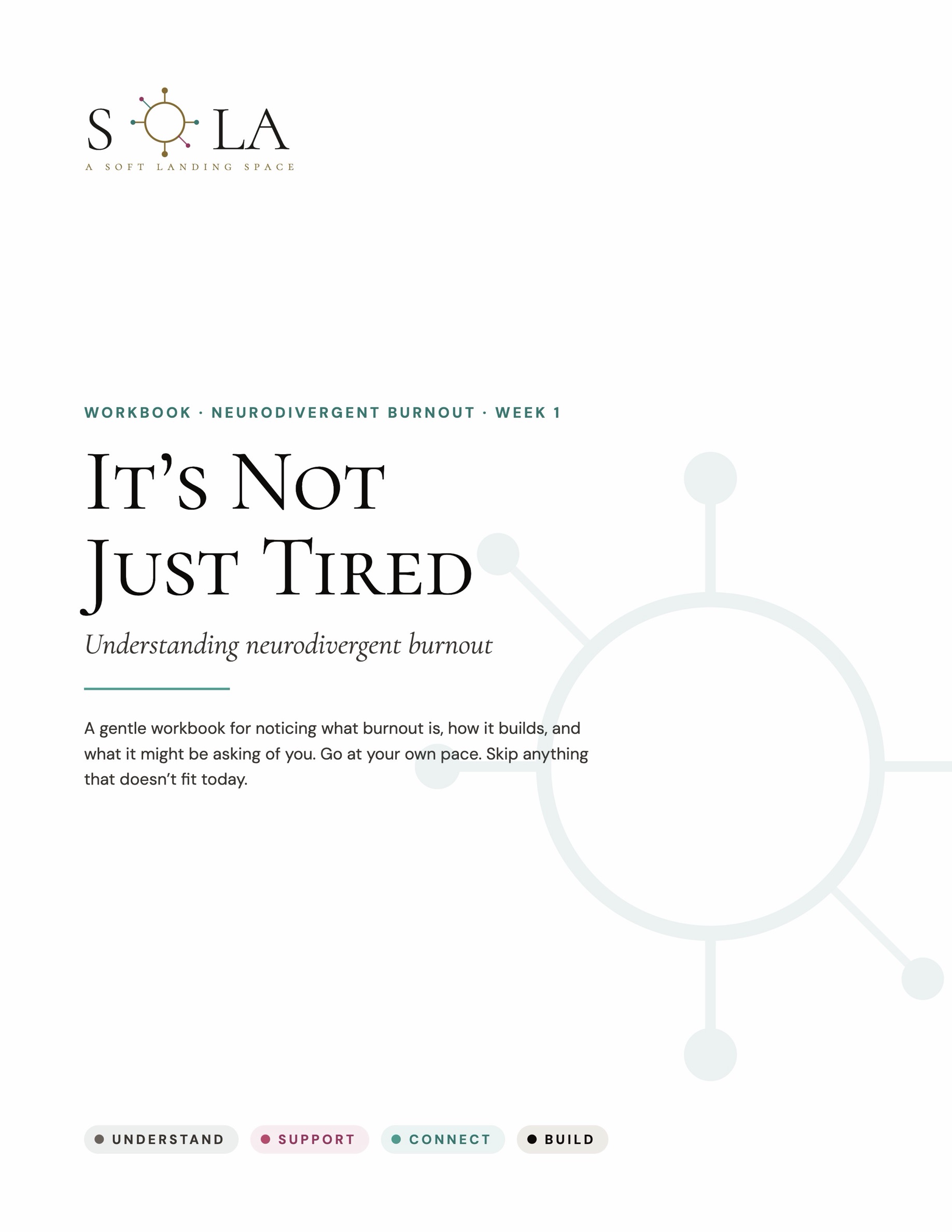
It's Not Just Tired
Understanding neurodivergent burnout
A gentle workbook for noticing what burnout is, how it builds, and what it might be asking of you. Go at your own pace. Skip anything that doesn't fit today.
The workbook, as designed. The same content is written out below.
See the other 10 pages
Welcome to October.
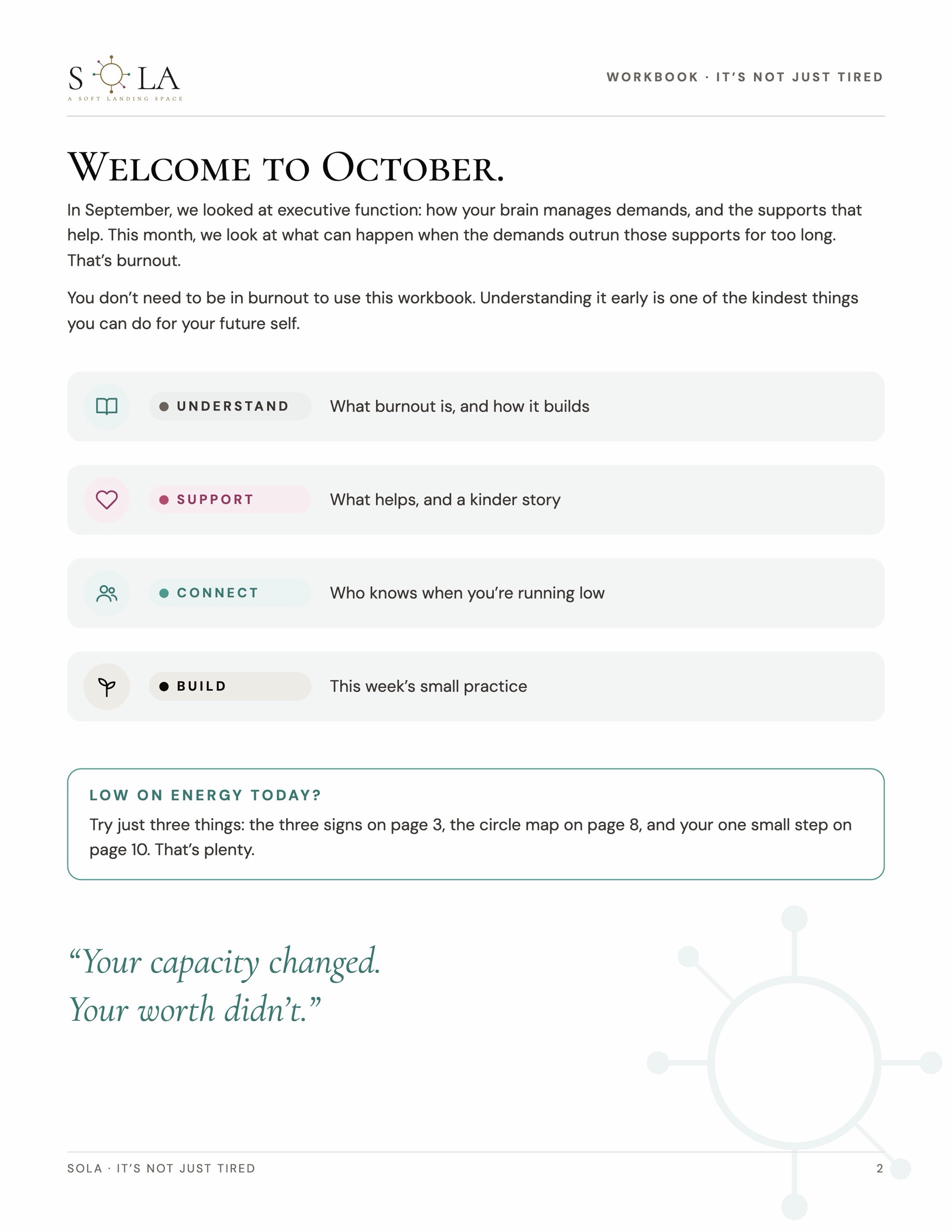
In September, we looked at executive function: how your brain manages demands, and the supports that help. This month, we look at what can happen when the demands outrun those supports for too long. That's burnout.
You don't need to be in burnout to use this workbook. Understanding it early is one of the kindest things you can do for your future self.
- UNDERSTAND — What burnout is, and how it builds
- SUPPORT — What helps, and a kinder story
- CONNECT — Who knows when you're running low
- BUILD — This week's small practice
Low on energy today?
Try just three things: the three signs on page 3, the circle map on page 8, and your one small step on page 10. That's plenty.
"Your capacity changed. Your worth didn't."
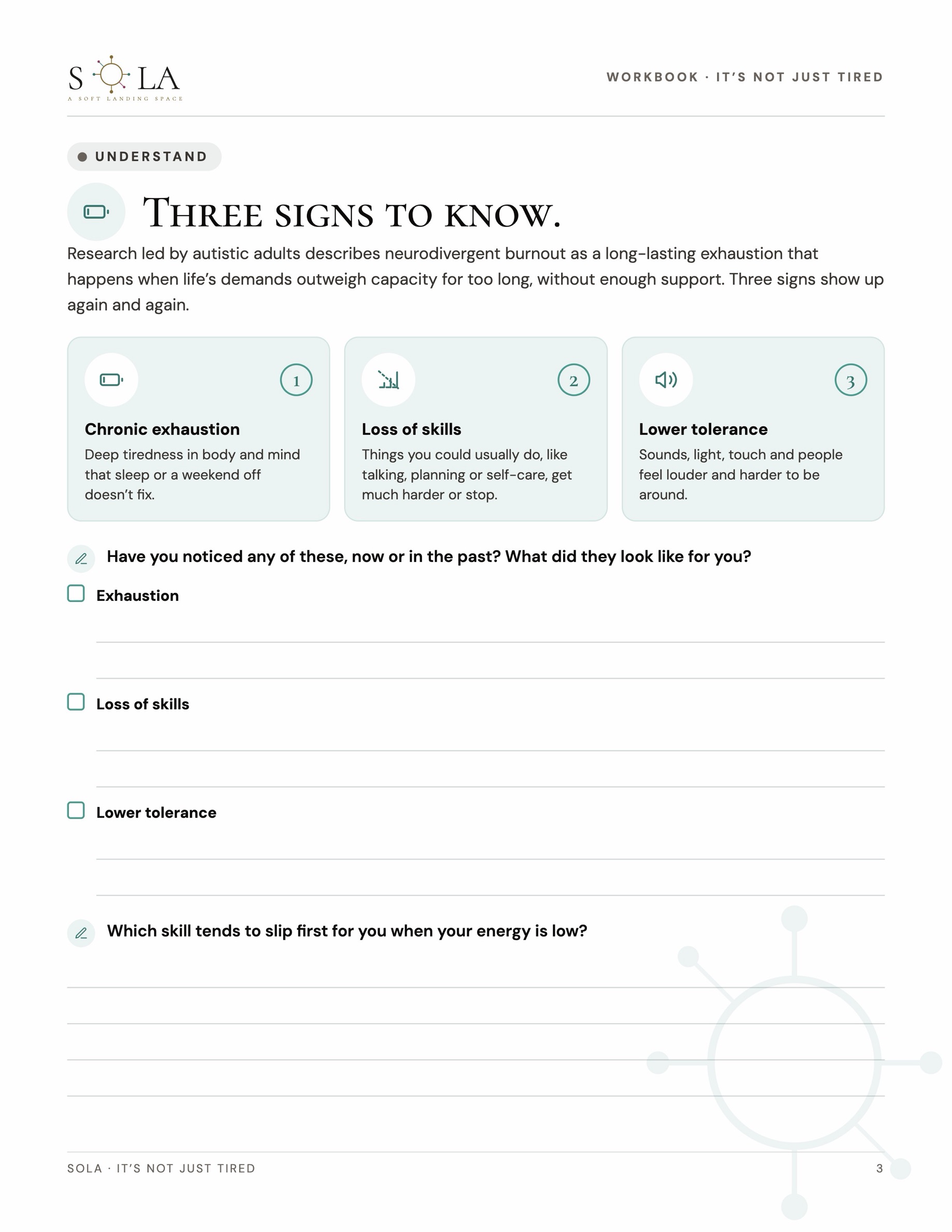
Three signs to know.
Research led by autistic adults describes neurodivergent burnout as a long-lasting exhaustion that happens when life's demands outweigh capacity for too long, without enough support. Three signs show up again and again.
- 1 · Chronic exhaustion — Deep tiredness in body and mind that sleep or a weekend off doesn't fix.
- 2 · Loss of skills — Things you could usually do, like talking, planning or self-care, get much harder or stop.
- 3 · Lower tolerance — Sounds, light, touch and people feel louder and harder to be around.
Have you noticed any of these, now or in the past? What did they look like for you? Tick all that apply
- Exhaustion
- Loss of skills
- Lower tolerance
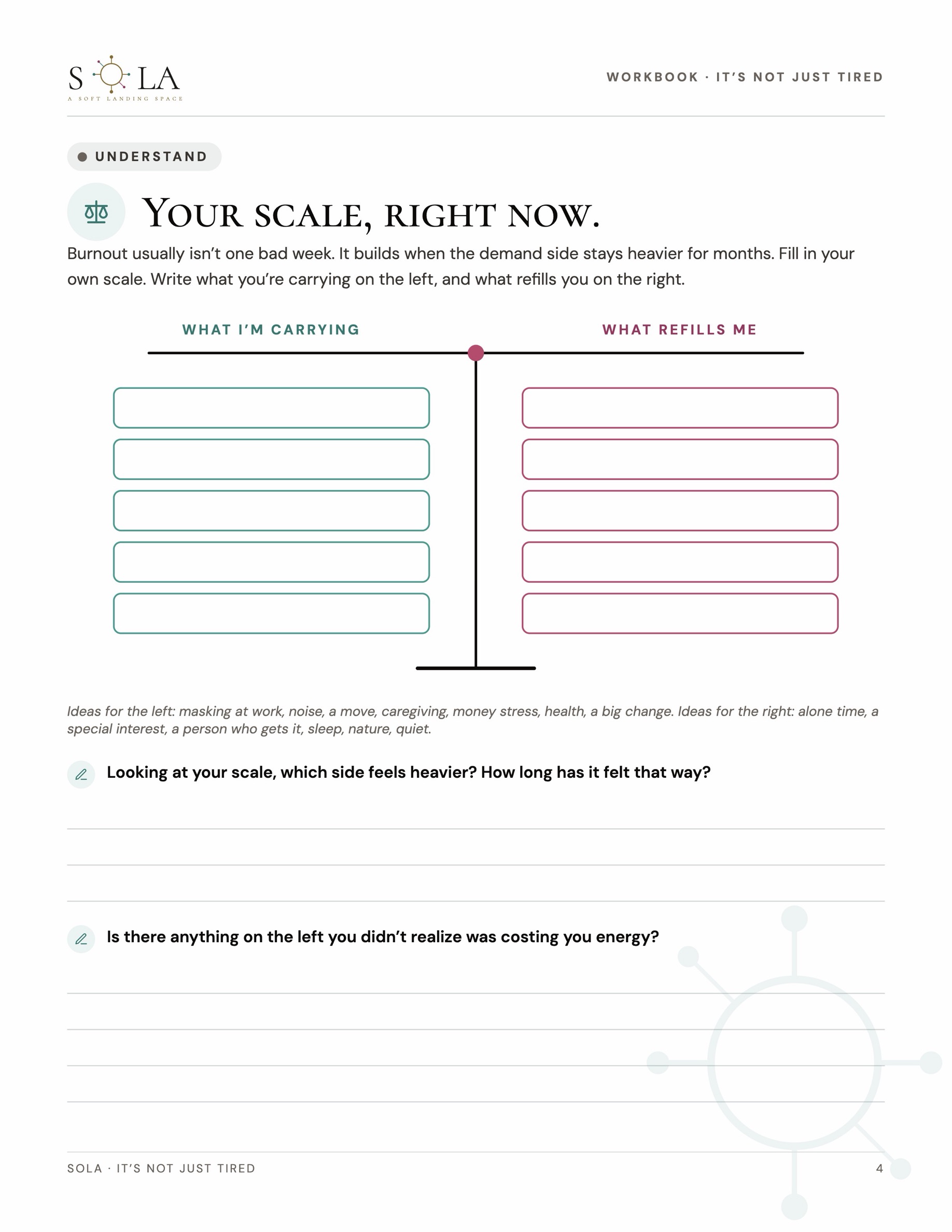
Your scale, right now.
Burnout usually isn't one bad week. It builds when the demand side stays heavier for months. Fill in your own scale. Write what you're carrying on the left, and what refills you on the right.
| What I'm carrying | What refills me |
|---|---|
Ideas for the left: masking at work, noise, a move, caregiving, money stress, health, a big change. Ideas for the right: alone time, a special interest, a person who gets it, sleep, nature, quiet.
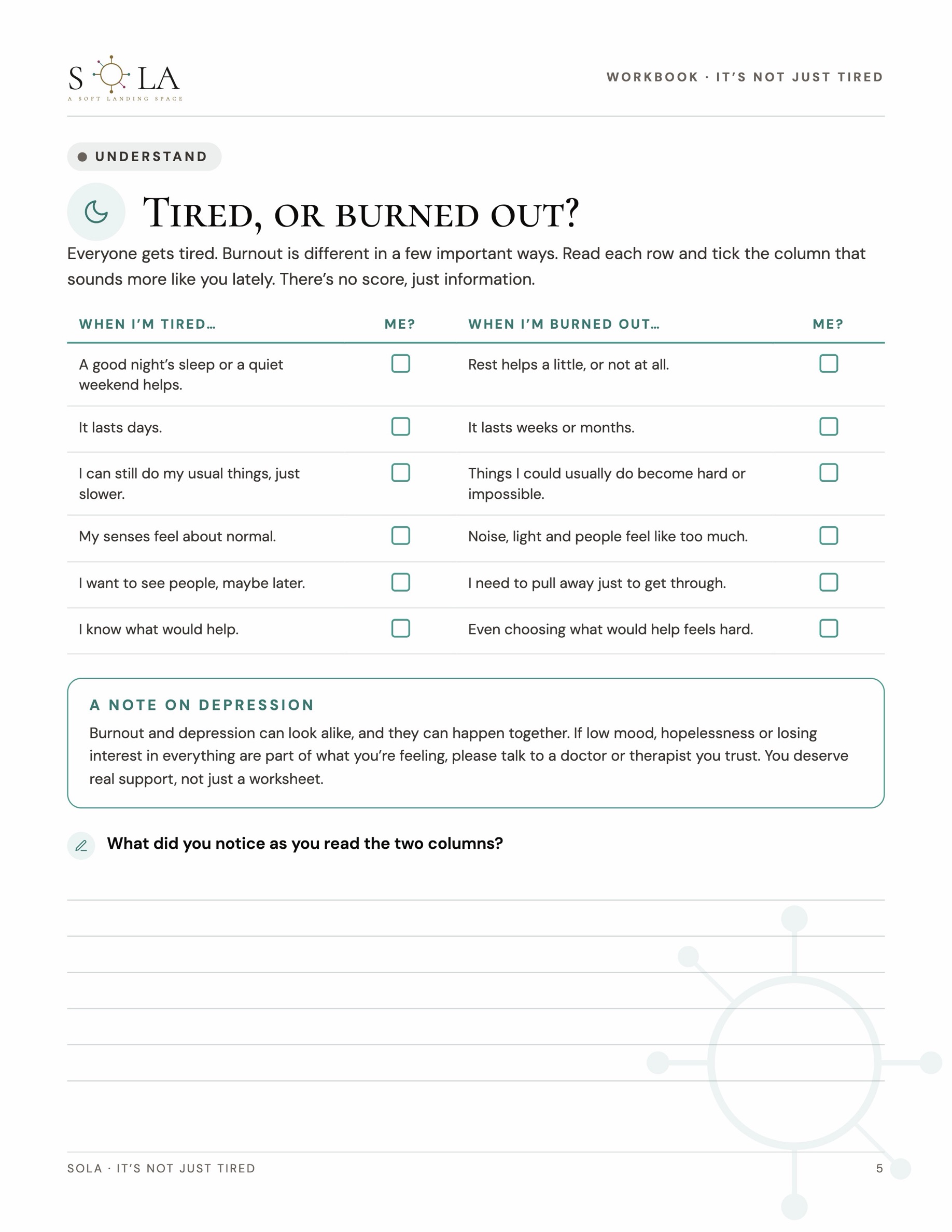
Tired, or burned out?
Everyone gets tired. Burnout is different in a few important ways. Read each row and tick the column that sounds more like you lately. There's no score, just information.
When I'm tired… Tick all that apply
Me?- A good night's sleep or a quiet weekend helps.
- It lasts days.
- I can still do my usual things, just slower.
- My senses feel about normal.
- I want to see people, maybe later.
- I know what would help.
When I'm burned out… Tick all that apply
Me?- Rest helps a little, or not at all.
- It lasts weeks or months.
- Things I could usually do become hard or impossible.
- Noise, light and people feel like too much.
- I need to pull away just to get through.
- Even choosing what would help feels hard.
A note on depression
Burnout and depression can look alike, and they can happen together. If low mood, hopelessness or losing interest in everything are part of what you're feeling, please talk to a doctor or therapist you trust. You deserve real support, not just a worksheet.
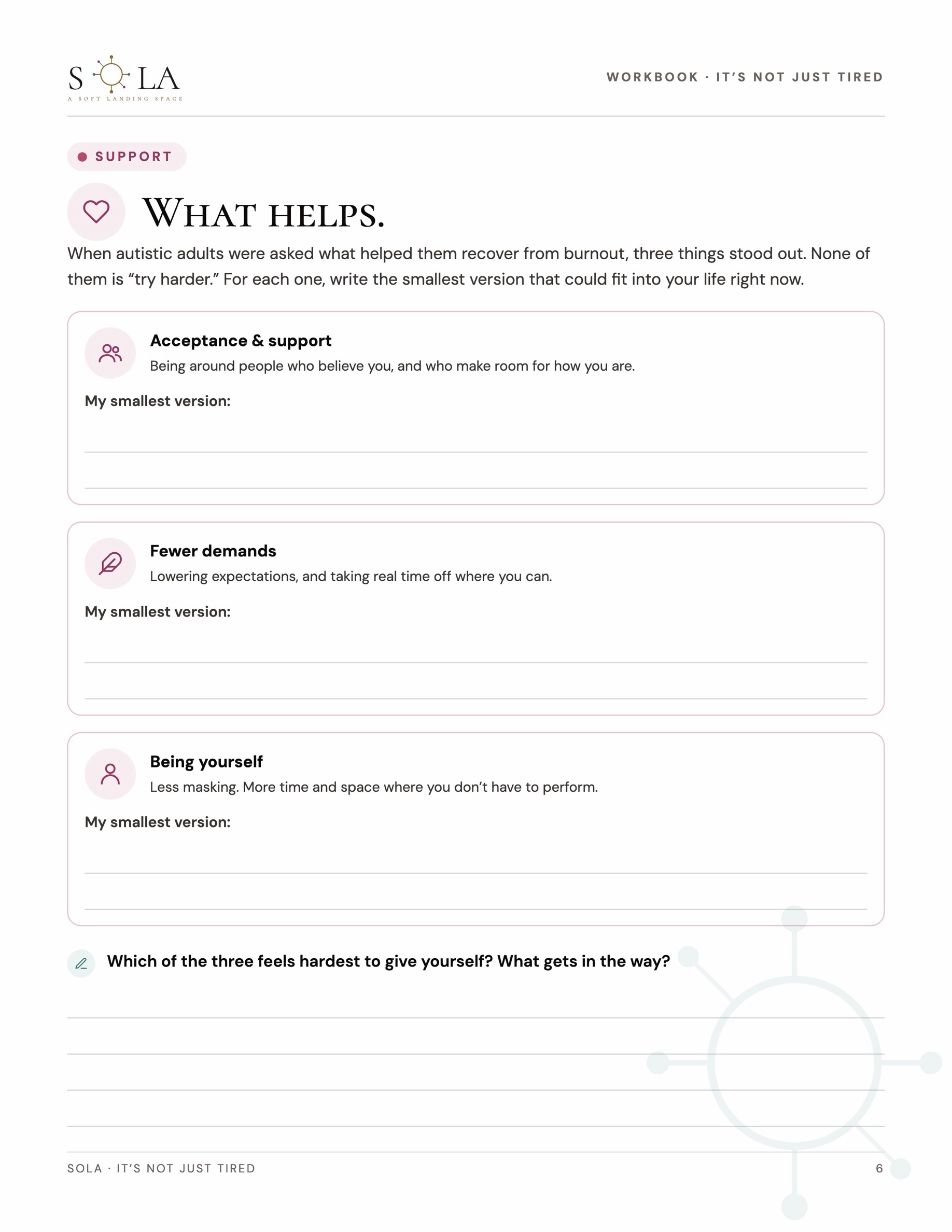
What helps.
When autistic adults were asked what helped them recover from burnout, three things stood out. None of them is "try harder." For each one, write the smallest version that could fit into your life right now.
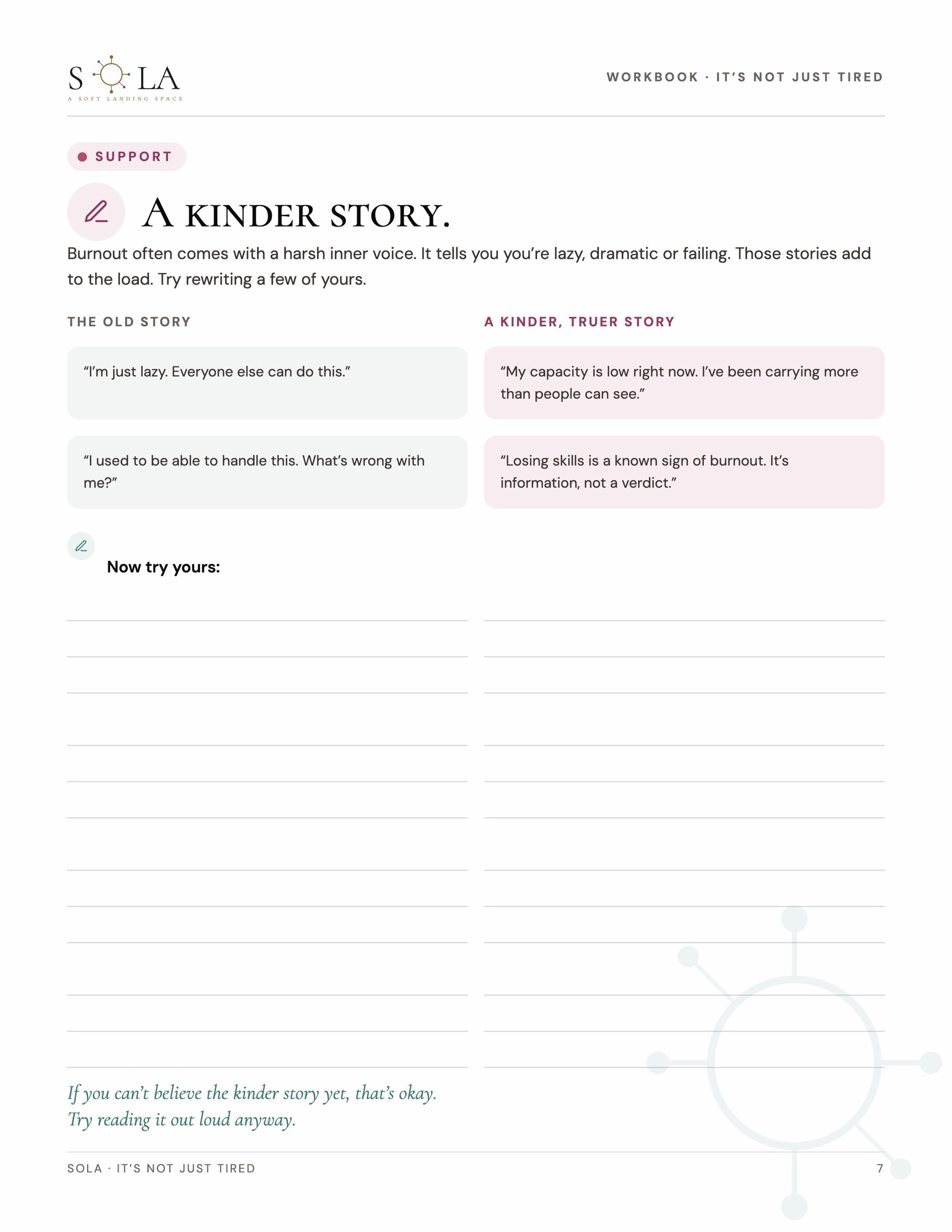
A kinder story.
Burnout often comes with a harsh inner voice. It tells you you're lazy, dramatic or failing. Those stories add to the load. Try rewriting a few of yours.
The old story → A kinder, truer story
- "I'm just lazy. Everyone else can do this." → "My capacity is low right now. I've been carrying more than people can see."
- "I used to be able to handle this. What's wrong with me?" → "Losing skills is a known sign of burnout. It's information, not a verdict."
Now try yours:
| The old story | A kinder, truer story |
|---|---|
If you can't believe the kinder story yet, that's okay. Try reading it out loud anyway.
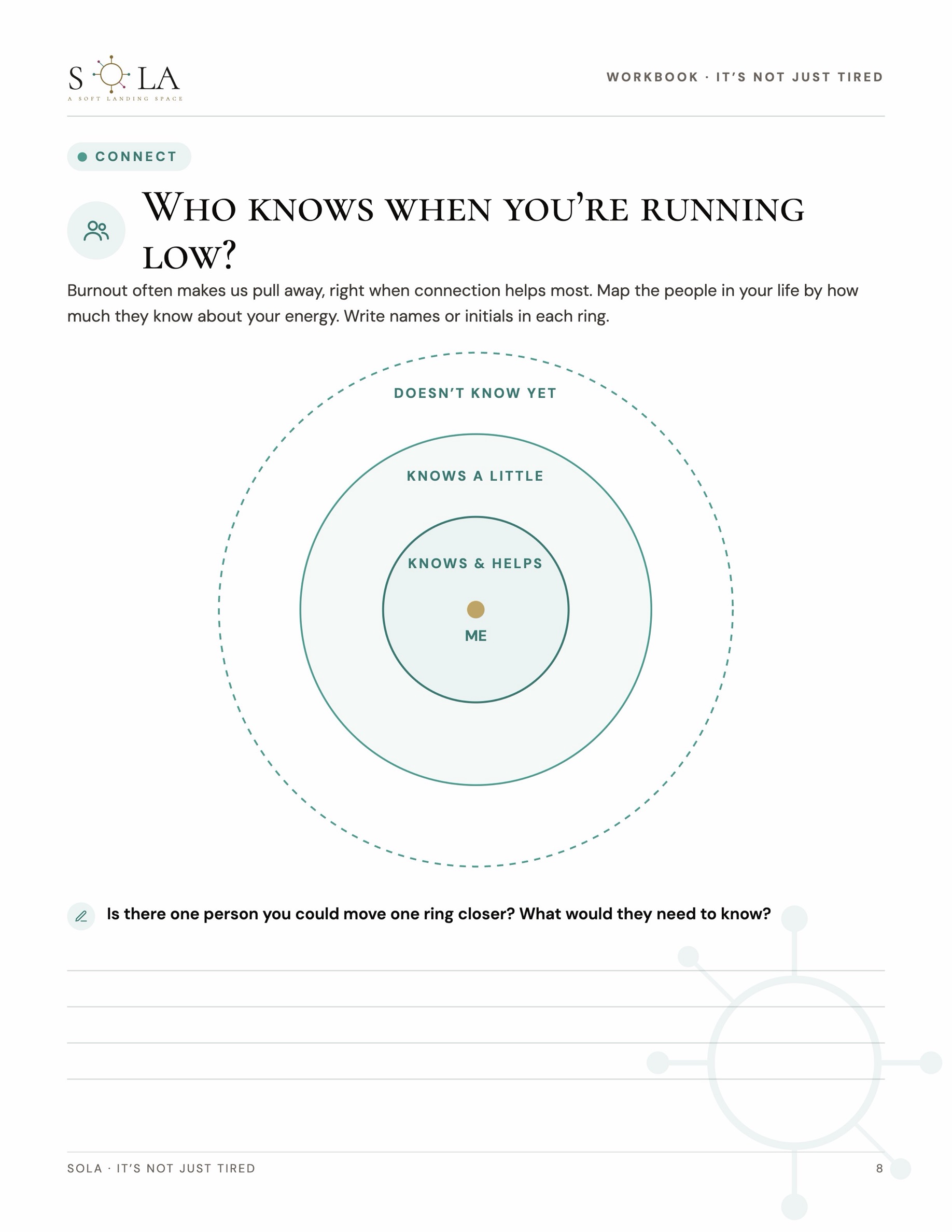
Who knows when you're running low?
Burnout often makes us pull away, right when connection helps most. Map the people in your life by how much they know about your energy. Write names or initials in each ring.
A circle map: three rings around ME. The innermost ring is Knows & helps, the middle ring is Knows a little, and the outer ring is Doesn't know yet.
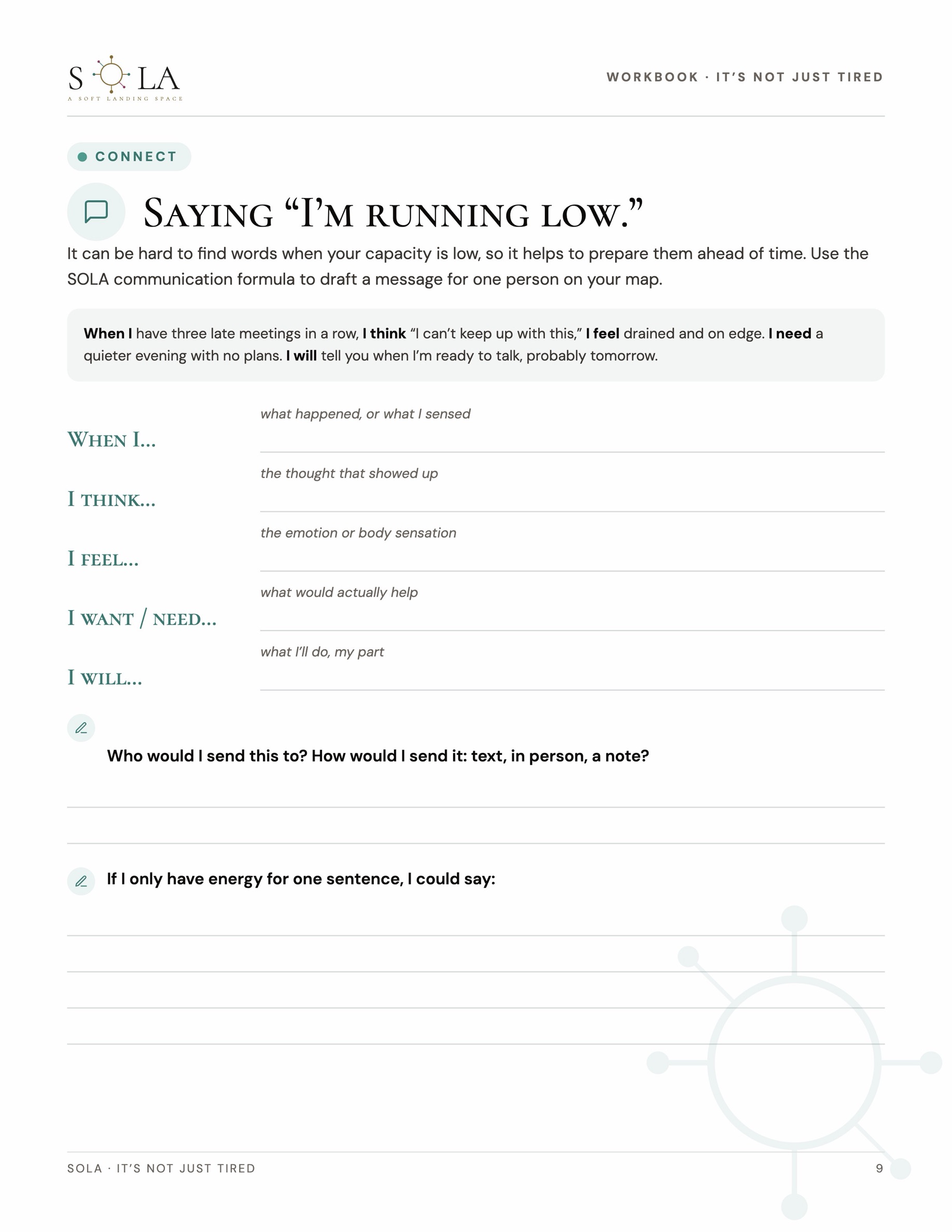
Saying "I'm running low."
It can be hard to find words when your capacity is low, so it helps to prepare them ahead of time. Use the SOLA communication formula to draft a message for one person on your map.
Example: When I have three late meetings in a row, I think "I can't keep up with this," I feel drained and on edge. I need a quieter evening with no plans. I will tell you when I'm ready to talk, probably tomorrow.
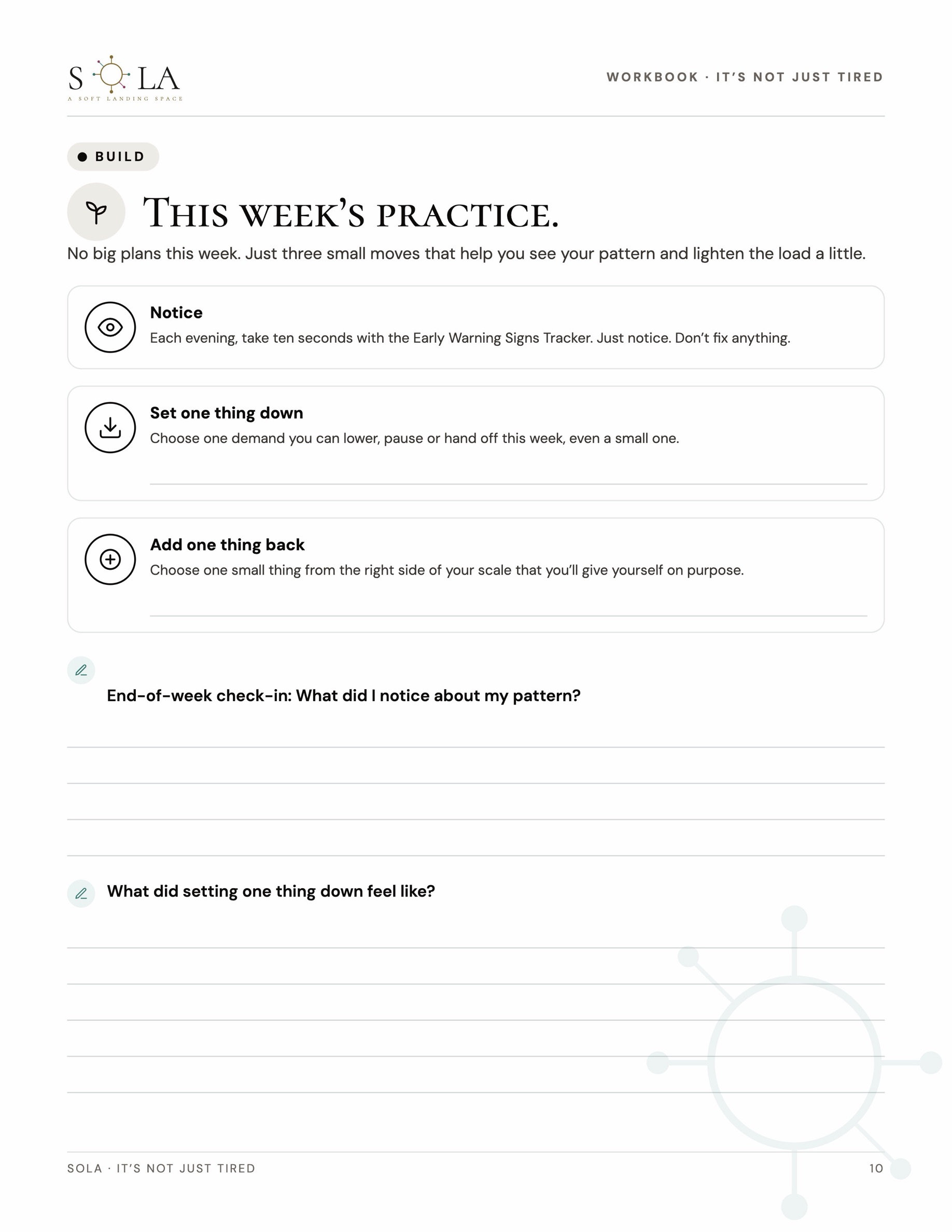
This week's practice.
No big plans this week. Just three small moves that help you see your pattern and lighten the load a little.
Notice
Each evening, take ten seconds with the Early Warning Signs Tracker. Just notice. Don't fix anything.
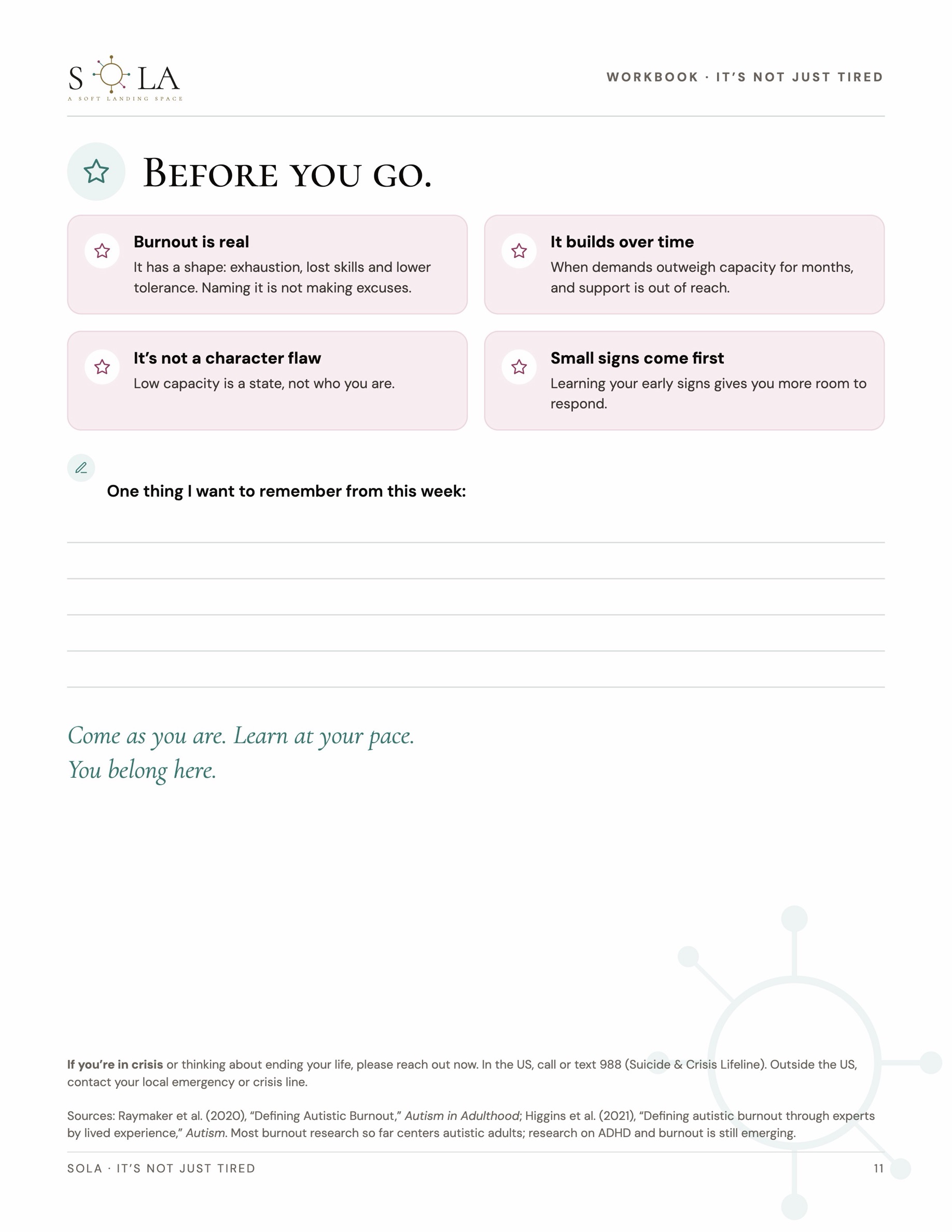
Before you go.
- Burnout is real — It has a shape: exhaustion, lost skills and lower tolerance. Naming it is not making excuses.
- It builds over time — When demands outweigh capacity for months, and support is out of reach.
- It's not a character flaw — Low capacity is a state, not who you are.
- Small signs come first — Learning your early signs gives you more room to respond.
Come as you are. Learn at your pace. You belong here.
If you're in crisis or thinking about ending your life, please reach out now. In the US, call or text 988 (Suicide & Crisis Lifeline). Outside the US, contact your local emergency or crisis line.
Sources and credits. Sources: Raymaker et al. (2020), "Defining Autistic Burnout," Autism in Adulthood; Higgins et al. (2021), "Defining autistic burnout through experts by lived experience," Autism. Most burnout research so far centers autistic adults; research on ADHD and burnout is still emerging.