Before we get started
Are There More Ways to Be Neurodivergent?
More ways to be neurodivergent.
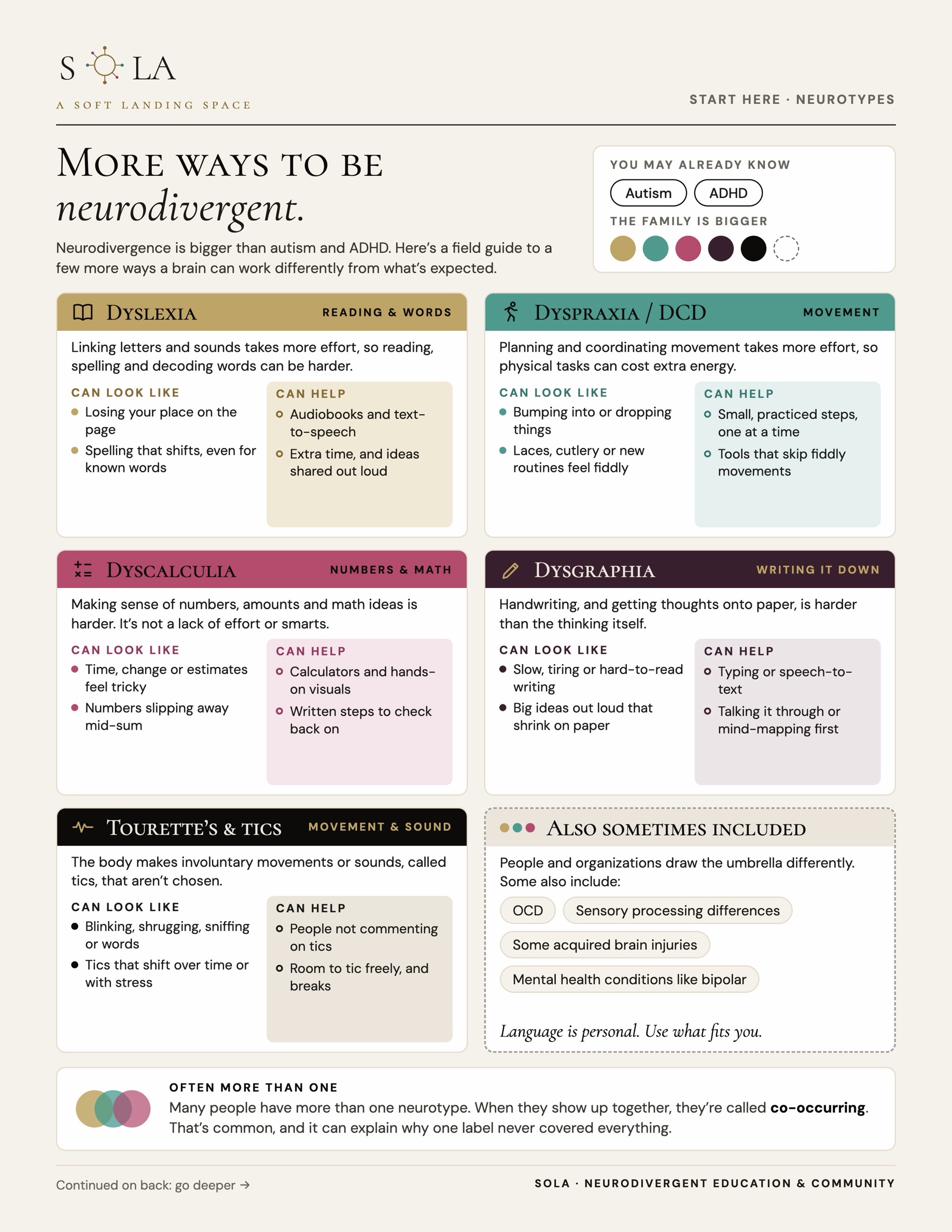
Neurodivergence is bigger than autism and ADHD. Here's a field guide to a few more ways a brain can work differently from what's expected.
The guide, as designed. The same content is written out below.
See page 2
You may already know: Autism · ADHD
The family is bigger.
Dyslexia
Reading & words
Linking letters and sounds takes more effort, so reading, spelling and decoding words can be harder.
- Losing your place on the page
- Spelling that shifts, even for known words
- Audiobooks and text-to-speech
- Extra time, and ideas shared out loud
Dyspraxia / DCD
Movement
Planning and coordinating movement takes more effort, so physical tasks can cost extra energy.
- Bumping into or dropping things
- Laces, cutlery or new routines feel fiddly
- Small, practiced steps, one at a time
- Tools that skip fiddly movements
Dyscalculia
Numbers & math
Making sense of numbers, amounts and math ideas is harder. It's not a lack of effort or smarts.
- Time, change or estimates feel tricky
- Numbers slipping away mid-sum
- Calculators and hands-on visuals
- Written steps to check back on
Dysgraphia
Writing it down
Handwriting, and getting thoughts onto paper, is harder than the thinking itself.
- Slow, tiring or hard-to-read writing
- Big ideas out loud that shrink on paper
- Typing or speech-to-text
- Talking it through or mind-mapping first
Tourette's & tics
Movement & sound
The body makes involuntary movements or sounds, called tics, that aren't chosen.
- Blinking, shrugging, sniffing or words
- Tics that shift over time or with stress
- People not commenting on tics
- Room to tic freely, and breaks
Also sometimes included
People and organizations draw the umbrella differently. Some also include:
- OCD
- Sensory processing differences
- Some acquired brain injuries
- Mental health conditions like bipolar
Language is personal. Use what fits you.
Often more than one
Many people have more than one neurotype. When they show up together, they're called co-occurring. That's common, and it can explain why one label never covered everything.
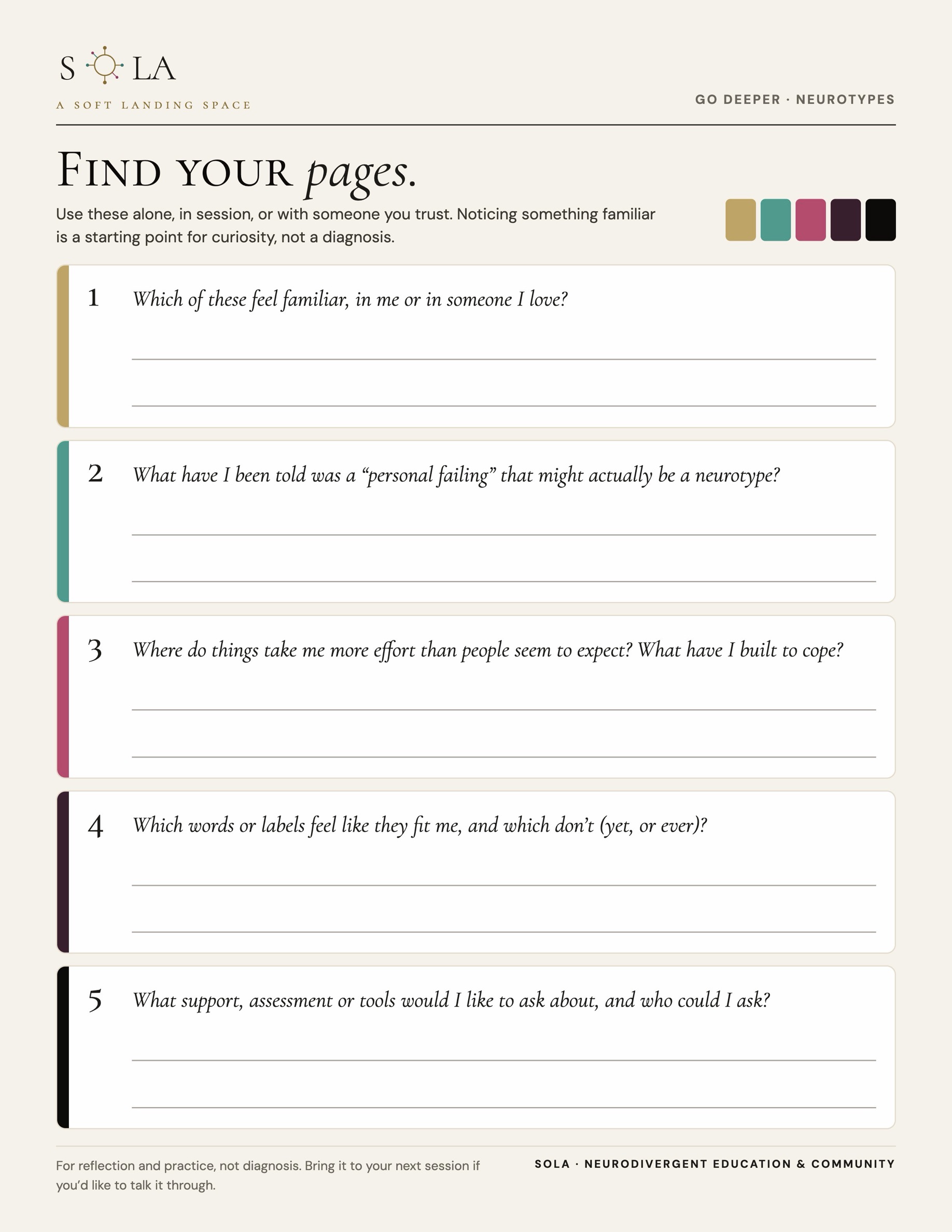
Find your pages.
Use these alone, in session, or with someone you trust. Noticing something familiar is a starting point for curiosity, not a diagnosis.
For reflection and practice, not diagnosis. Bring it to your next session if you'd like to talk it through.