Before we get started
What is Neurodivergence?
Different brains, all welcome.
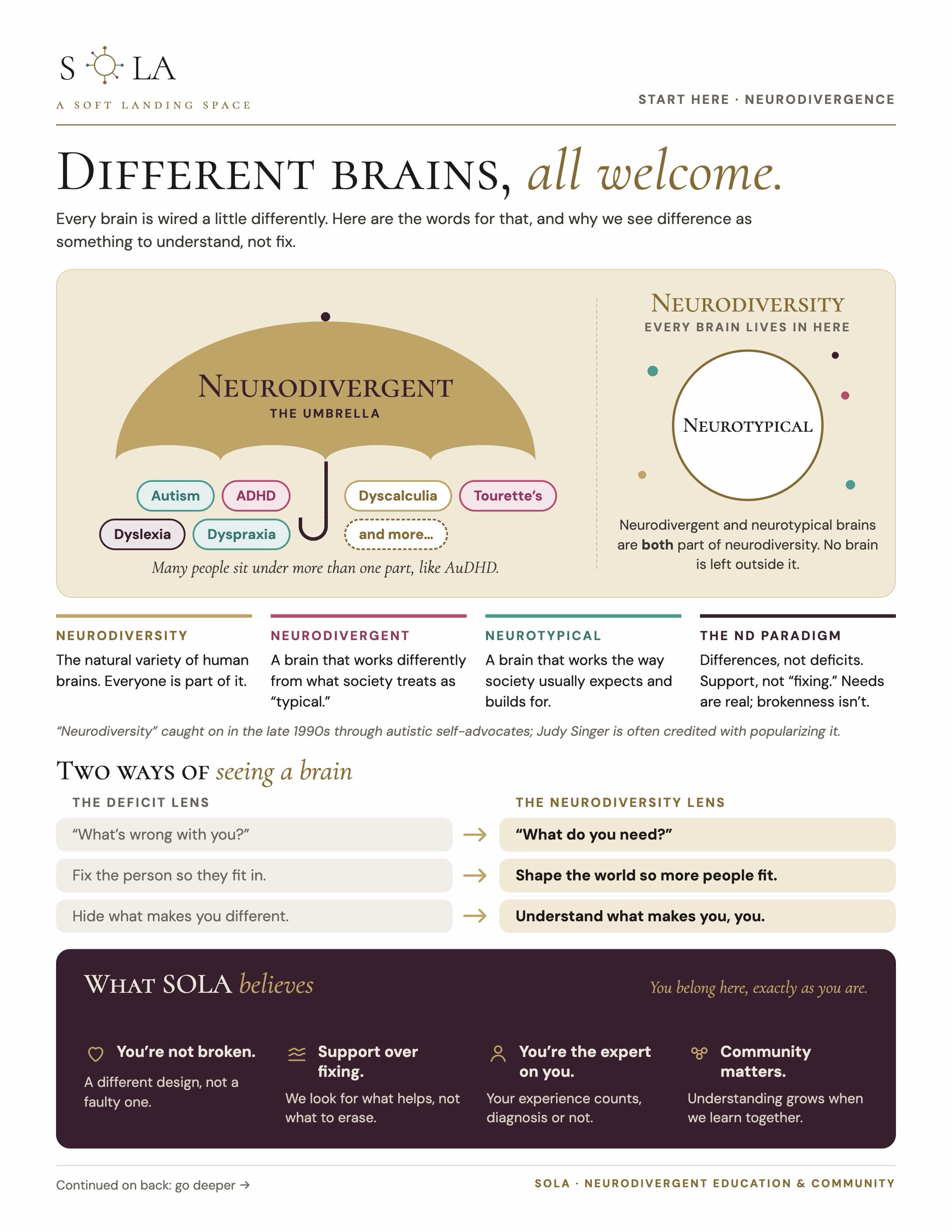
Every brain is wired a little differently. Here are the words for that, and why we see difference as something to understand, not fix.
The guide, as designed. The same content is written out below.
See page 2
Under it: Autism · ADHD · Dyscalculia · Tourette's · Dyslexia · Dyspraxia · and more…
Many people sit under more than one part, like AuDHD.
Neurotypical sits inside it too. Neurodivergent and neurotypical brains are both part of neurodiversity. No brain is left outside it.
The natural variety of human brains. Everyone is part of it.
A brain that works differently from what society treats as "typical."
A brain that works the way society usually expects and builds for.
Differences, not deficits. Support, not "fixing." Needs are real; brokenness isn't.
"Neurodiversity" caught on in the late 1990s through autistic self-advocates; Judy Singer is often credited with popularizing it.
Two ways of seeing a brain
The deficit lens → The neurodiversity lens
"What's wrong with you?" → "What do you need?"
Fix the person so they fit in. → Shape the world so more people fit.
Hide what makes you different. → Understand what makes you, you.
What SOLA believes
You belong here, exactly as you are.
A different design, not a faulty one.
We look for what helps, not what to erase.
Your experience counts, diagnosis or not.
Understanding grows when we learn together.
Finding your place in it.
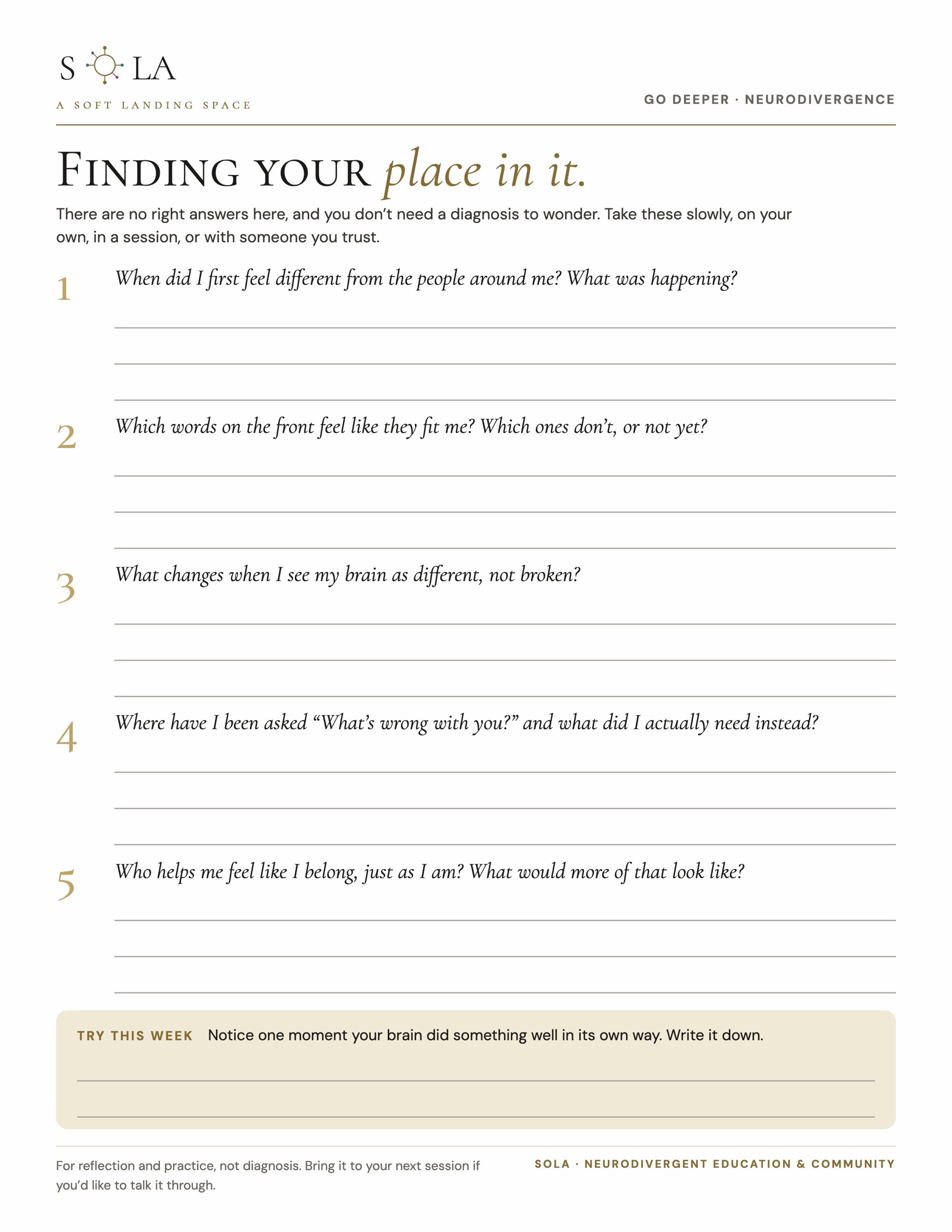
There are no right answers here, and you don't need a diagnosis to wonder. Take these slowly, on your own, in a session, or with someone you trust.
Try this week
For reflection and practice, not diagnosis. Bring it to your next session if you'd like to talk it through.