Learn
Fuel for different brains.
Fuel for Different Brains
A neurodivergent guide to telling needs from wants — and making room for both, without apology.
The guide, as designed. The same content is written out below.
See page 2
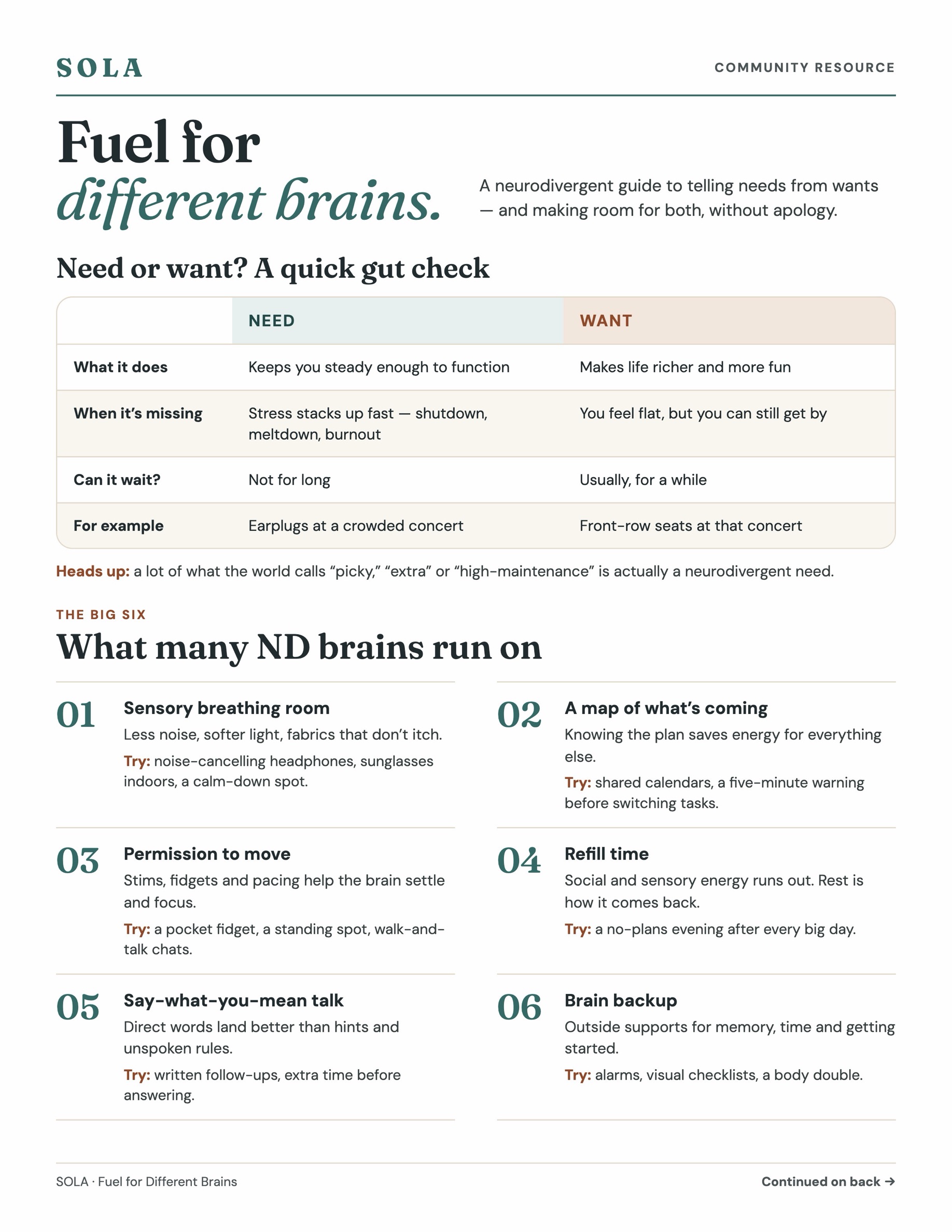
Need or want? A quick gut check
- Need: Keeps you steady enough to function
- Want: Makes life richer and more fun
- Need: Stress stacks up fast — shutdown, meltdown, burnout
- Want: You feel flat, but you can still get by
- Need: Not for long
- Want: Usually, for a while
- Need: Earplugs at a crowded concert
- Want: Front-row seats at that concert
a lot of what the world calls “picky,” “extra” or “high-maintenance” is actually a neurodivergent need.
What many ND brains run on
The big six
Less noise, softer light, fabrics that don’t itch.
Try: noise-cancelling headphones, sunglasses indoors, a calm-down spot.
Knowing the plan saves energy for everything else.
Try: shared calendars, a five-minute warning before switching tasks.
Stims, fidgets and pacing help the brain settle and focus.
Try: a pocket fidget, a standing spot, walk-and-talk chats.
Social and sensory energy runs out. Rest is how it comes back.
Try: a no-plans evening after every big day.
Direct words land better than hints and unspoken rules.
Try: written follow-ups, extra time before answering.
Outside supports for memory, time and getting started.
Try: alarms, visual checklists, a body double.
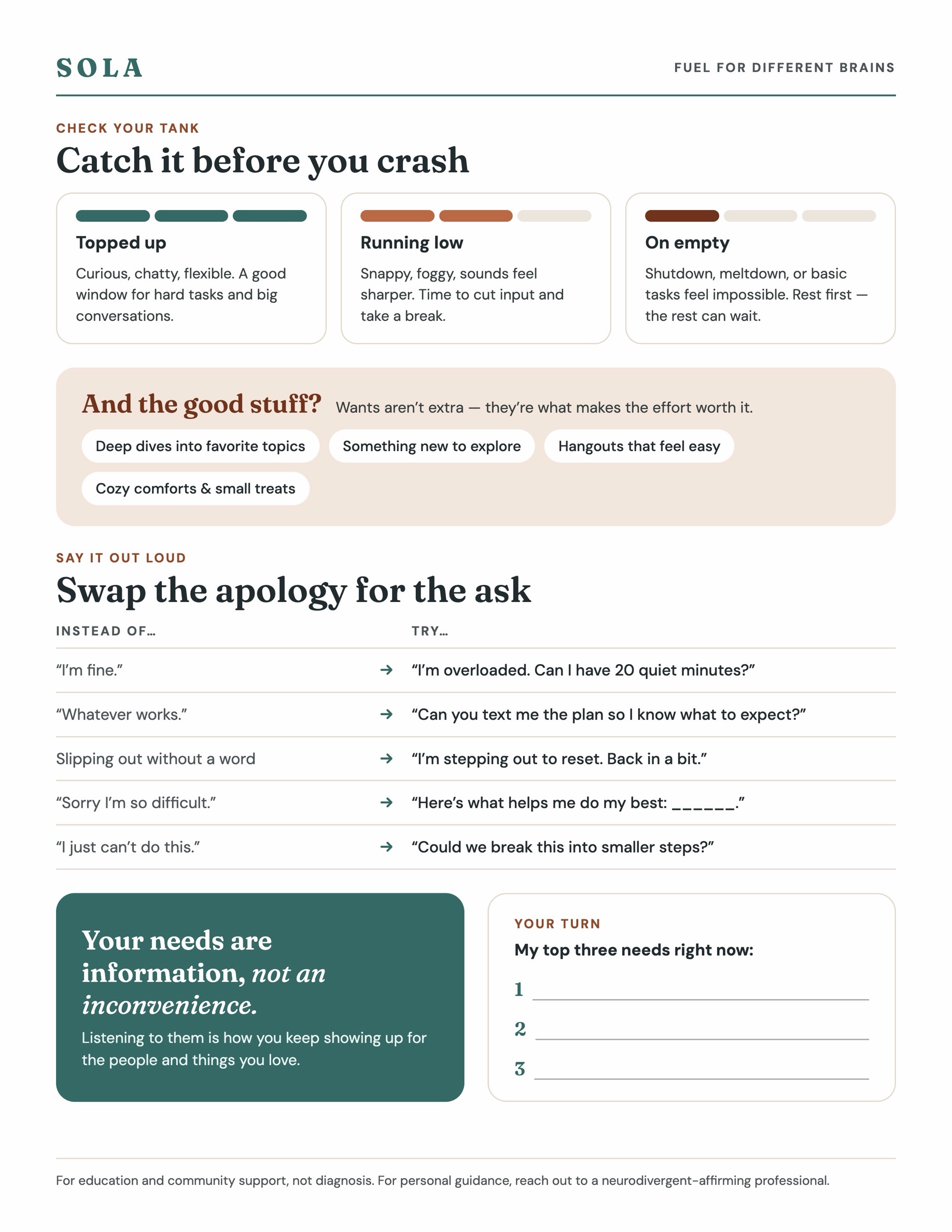
Catch it before you crash
Check your tank
Curious, chatty, flexible. A good window for hard tasks and big conversations.
Snappy, foggy, sounds feel sharper. Time to cut input and take a break.
Shutdown, meltdown, or basic tasks feel impossible. Rest first — the rest can wait.
Wants aren’t extra — they’re what makes the effort worth it.
- Deep dives into favorite topics
- Something new to explore
- Hangouts that feel easy
- Cozy comforts & small treats
Swap the apology for the ask
Say it out loud. Instead of… → try…
“I’m fine.” → “I’m overloaded. Can I have 20 quiet minutes?”
“Whatever works.” → “Can you text me the plan so I know what to expect?”
Slipping out without a word → “I’m stepping out to reset. Back in a bit.”
“Sorry I’m so difficult.” → “Here’s what helps me do my best: ______.”
“I just can’t do this.” → “Could we break this into smaller steps?”
Your needs are information, not an inconvenience. Listening to them is how you keep showing up for the people and things you love.
Your turn
My top three needs right now:
For education and community support, not diagnosis. For personal guidance, reach out to a neurodivergent-affirming professional.
Sources and credits. SOLA · Community Resource · Fuel for Different Brains