Learn
Asking for what helps.
Community Resource
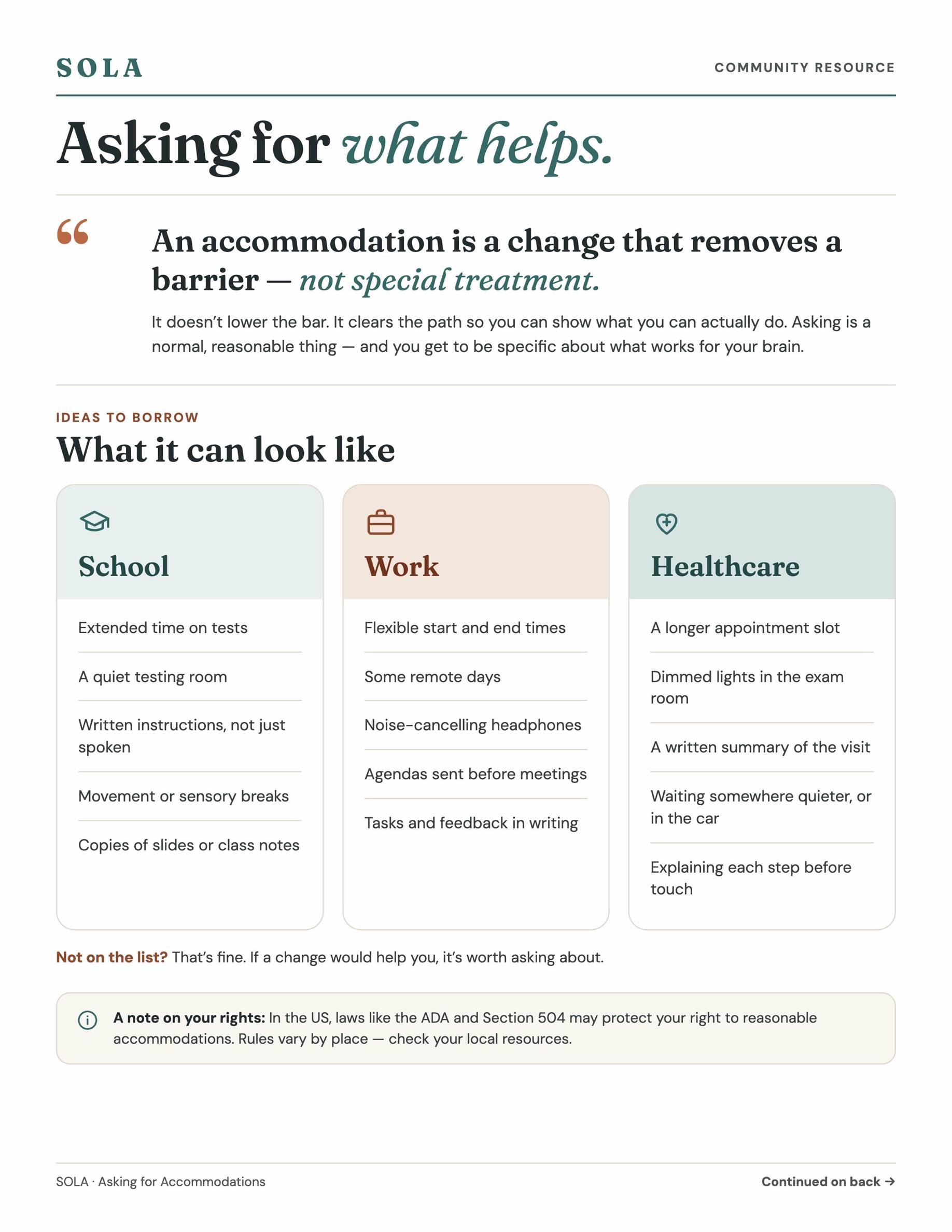
An accommodation is a change that removes a barrier — not special treatment.
It doesn’t lower the bar. It clears the path so you can show what you can actually do. Asking is a normal, reasonable thing — and you get to be specific about what works for your brain.
The guide, as designed. The same content is written out below.
See page 2
What it can look like
Ideas to borrow
- Extended time on tests
- A quiet testing room
- Written instructions, not just spoken
- Movement or sensory breaks
- Copies of slides or class notes
- Flexible start and end times
- Some remote days
- Noise-cancelling headphones
- Agendas sent before meetings
- Tasks and feedback in writing
- A longer appointment slot
- Dimmed lights in the exam room
- A written summary of the visit
- Waiting somewhere quieter, or in the car
- Explaining each step before touch
That’s fine. If a change would help you, it’s worth asking about.
In the US, laws like the ADA and Section 504 may protect your right to reasonable accommodations. Rules vary by place — check your local resources.
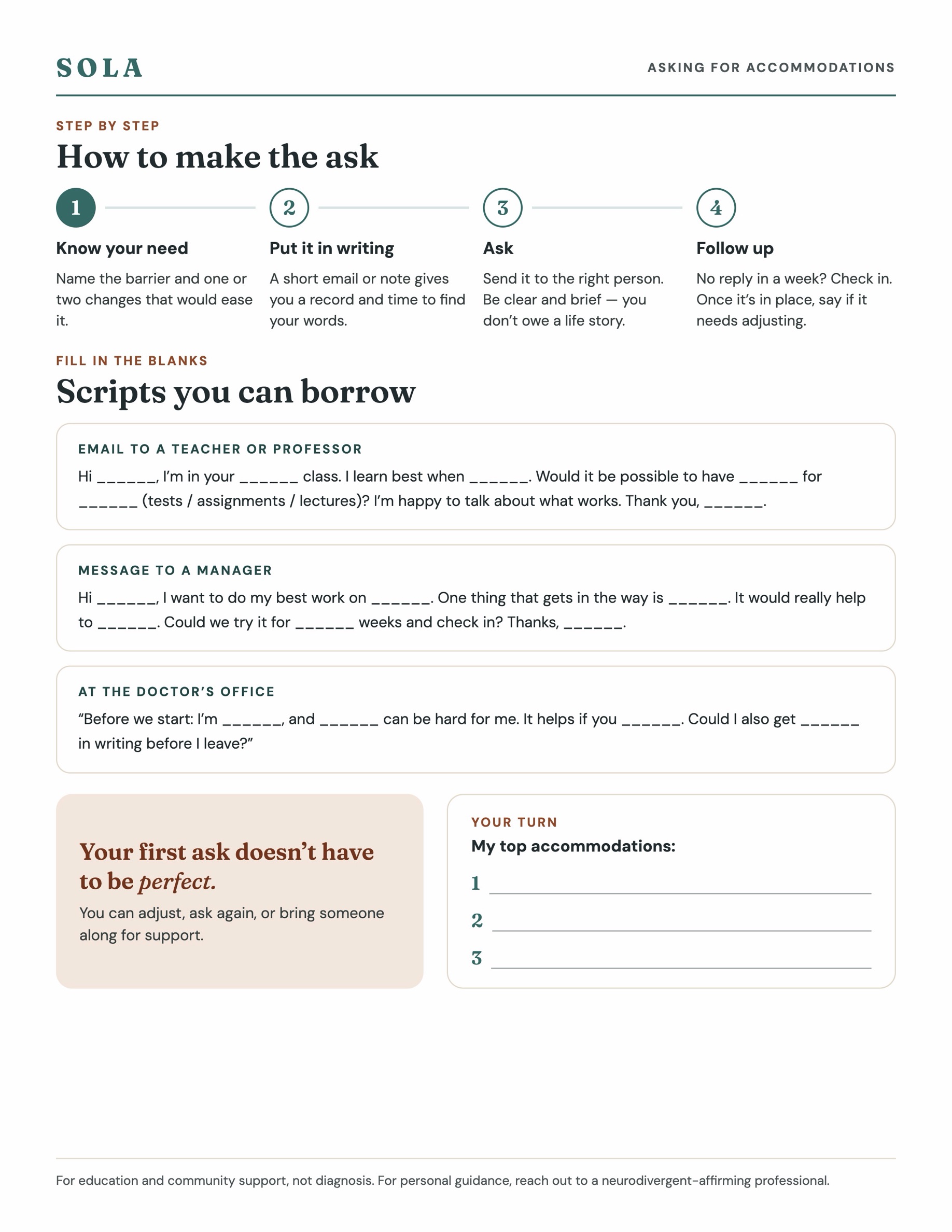
How to make the ask
Step by step
Name the barrier and one or two changes that would ease it.
A short email or note gives you a record and time to find your words.
Send it to the right person. Be clear and brief — you don’t owe a life story.
No reply in a week? Check in. Once it’s in place, say if it needs adjusting.
Scripts you can borrow
Fill in the blanks
Your turn
Your first ask doesn’t have to be perfect. You can adjust, ask again, or bring someone along for support.
My top accommodations:
For education and community support, not diagnosis. For personal guidance, reach out to a neurodivergent-affirming professional.