Learn
Loving a different brain.
Supporting an ND Loved One
For family, partners and friends of neurodivergent people — small, everyday shifts that help the people you love feel understood.
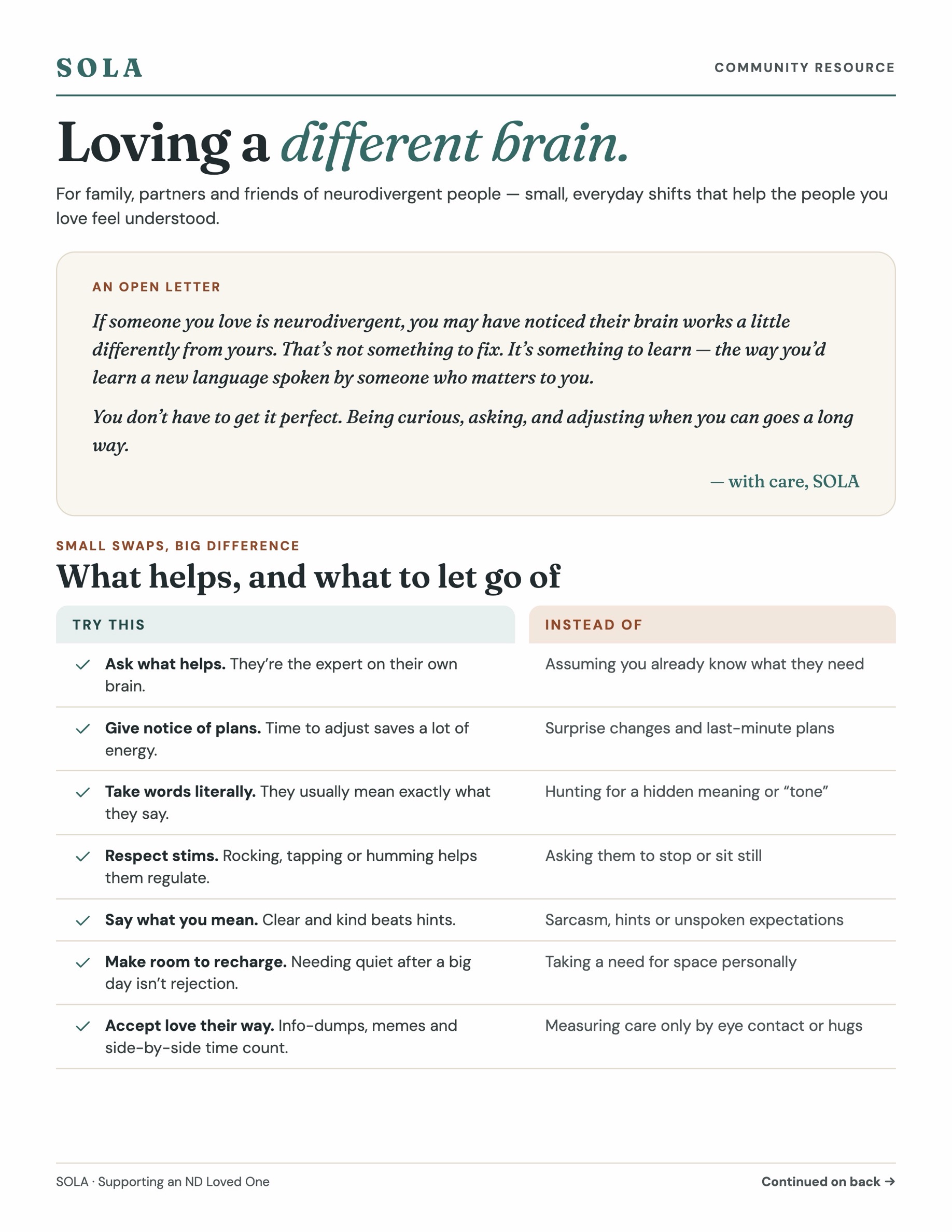
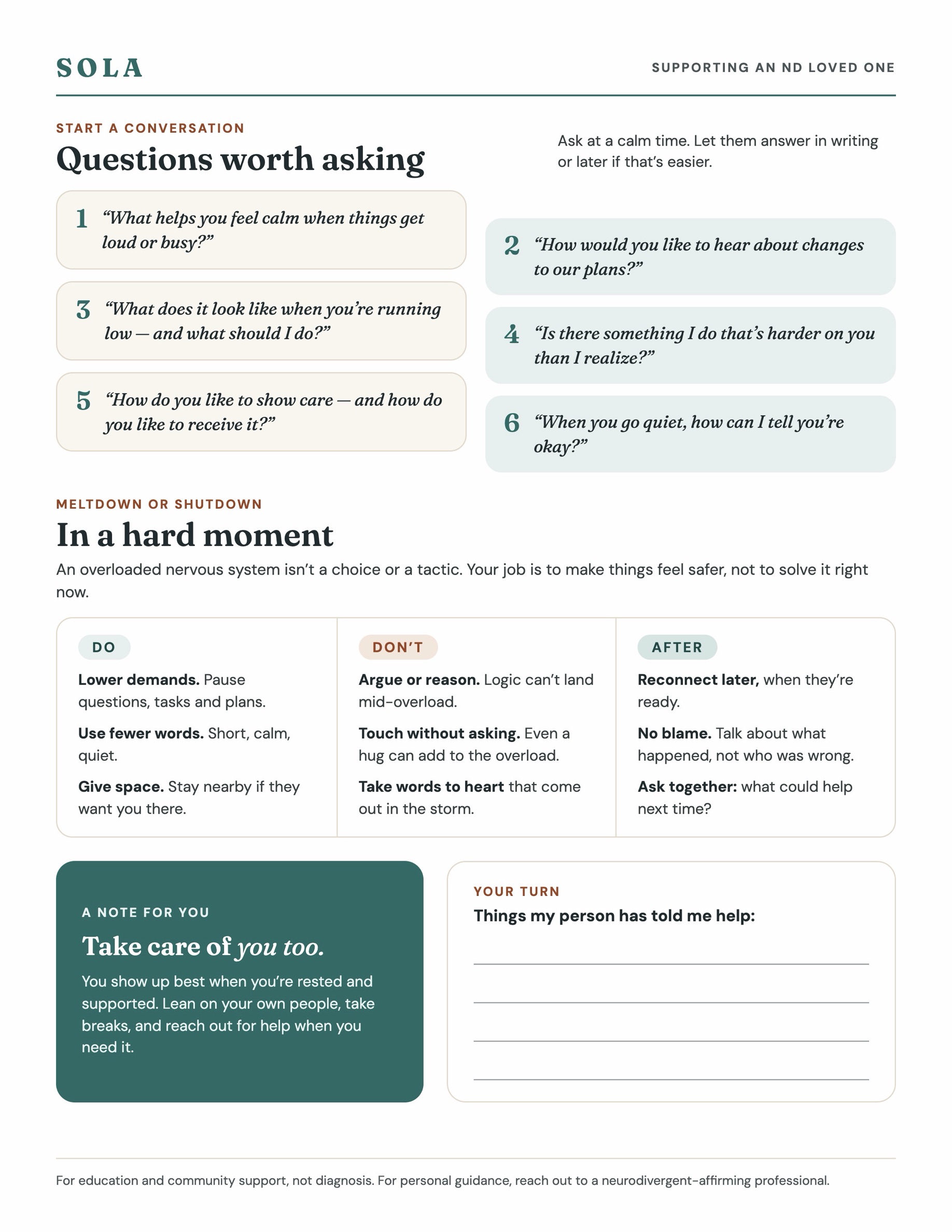
The guide, as designed. The same content is written out below.
See page 2
An open letter
If someone you love is neurodivergent, you may have noticed their brain works a little differently from yours. That’s not something to fix. It’s something to learn — the way you’d learn a new language spoken by someone who matters to you.
You don’t have to get it perfect. Being curious, asking, and adjusting when you can goes a long way.
— with care, SOLA
What helps, and what to let go of
Small swaps, big difference
/ Instead of
They’re the expert on their own brain.
Instead of: Assuming you already know what they need
Time to adjust saves a lot of energy.
Instead of: Surprise changes and last-minute plans
They usually mean exactly what they say.
Instead of: Hunting for a hidden meaning or “tone”
Rocking, tapping or humming helps them regulate.
Instead of: Asking them to stop or sit still
Clear and kind beats hints.
Instead of: Sarcasm, hints or unspoken expectations
Needing quiet after a big day isn’t rejection.
Instead of: Taking a need for space personally
Info-dumps, memes and side-by-side time count.
Instead of: Measuring care only by eye contact or hugs
Questions worth asking
Start a conversation. Ask at a calm time. Let them answer in writing or later if that’s easier.
- 1 “What helps you feel calm when things get loud or busy?”
- 2 “How would you like to hear about changes to our plans?”
- 3 “What does it look like when you’re running low — and what should I do?”
- 4 “Is there something I do that’s harder on you than I realize?”
- 5 “How do you like to show care — and how do you like to receive it?”
- 6 “When you go quiet, how can I tell you’re okay?”
In a hard moment
Meltdown or shutdown. An overloaded nervous system isn’t a choice or a tactic. Your job is to make things feel safer, not to solve it right now.
- Lower demands. Pause questions, tasks and plans.
- Use fewer words. Short, calm, quiet.
- Give space. Stay nearby if they want you there.
- Argue or reason. Logic can’t land mid-overload.
- Touch without asking. Even a hug can add to the overload.
- Take words to heart that come out in the storm.
- Reconnect later, when they’re ready.
- No blame. Talk about what happened, not who was wrong.
- Ask together: what could help next time?
Take care of you too.
A note for you
You show up best when you’re rested and supported. Lean on your own people, take breaks, and reach out for help when you need it.
Your turn
For education and community support, not diagnosis. For personal guidance, reach out to a neurodivergent-affirming professional.
Sources and credits. SOLA · Community Resource · Supporting an ND Loved One