Learn
When rejection hits hard.
Rejection Sensitivity
Many neurodivergent people — especially people with ADHD — describe a sudden, intense emotional pain when they sense rejection or criticism. It can arrive in seconds and feel much bigger than the moment that set it off.
Sometimes the rejection is real. Sometimes it’s a guess — a short text, a neutral face, a delayed reply. Either way, the hurt is real, and it isn’t a sign that you’re “too sensitive.”
The guide, as designed. The same content is written out below.
See page 2
About the name
You may hear “rejection sensitivity” or “RSD” (rejection sensitive dysphoria). It’s a commonly used term, not a formal diagnosis — a helpful way to name an experience many people share.
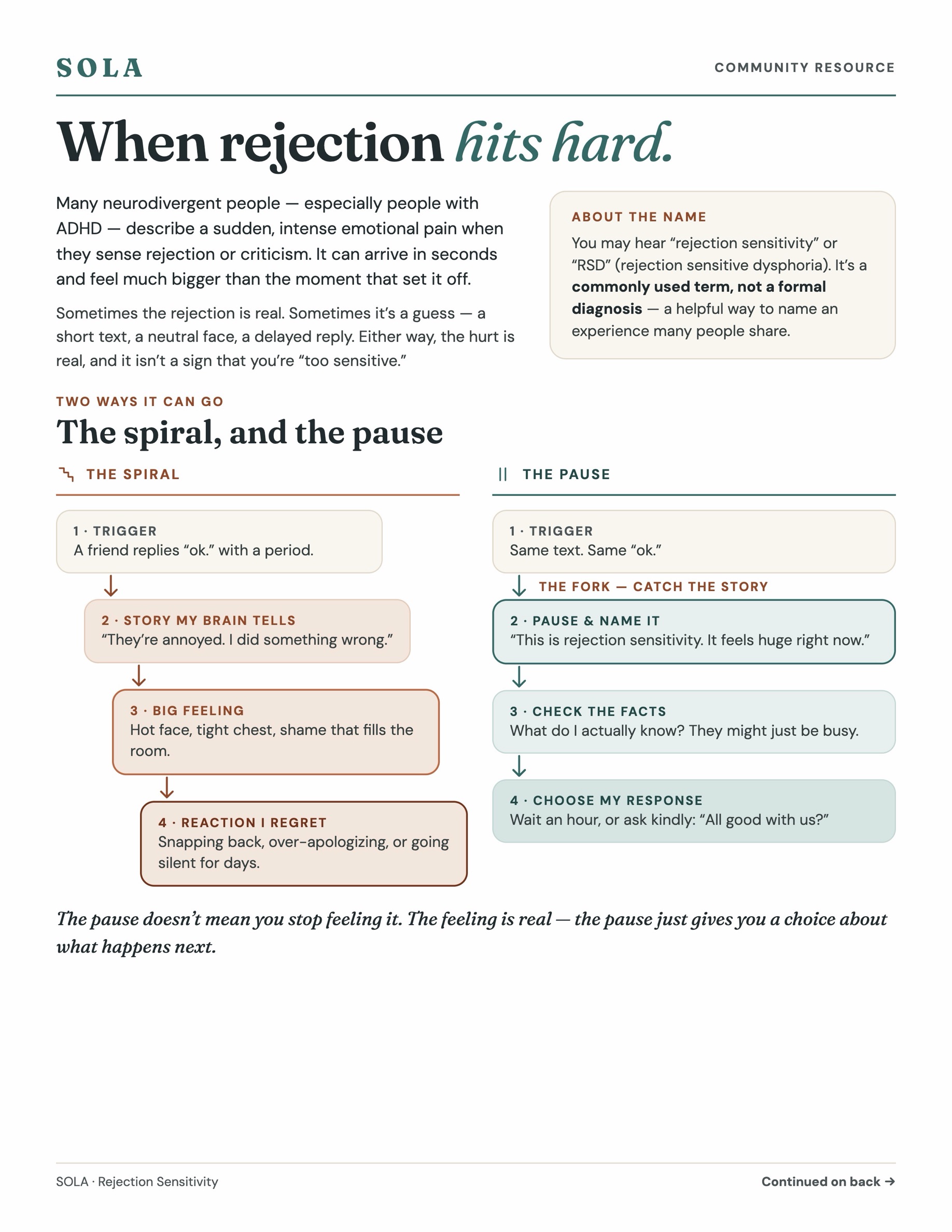
The spiral, and the pause
Two ways it can go
- 1 · Trigger A friend replies “ok.” with a period.
- 2 · Story my brain tells “They’re annoyed. I did something wrong.”
- 3 · Big feeling Hot face, tight chest, shame that fills the room.
- 4 · Reaction I regret Snapping back, over-apologizing, or going silent for days.
- 1 · Trigger Same text. Same “ok.”
- The fork — catch the story
- 2 · Pause & name it “This is rejection sensitivity. It feels huge right now.”
- 3 · Check the facts What do I actually know? They might just be busy.
- 4 · Choose my response Wait an hour, or ask kindly: “All good with us?”
The pause doesn’t mean you stop feeling it. The feeling is real — the pause just gives you a choice about what happens next.
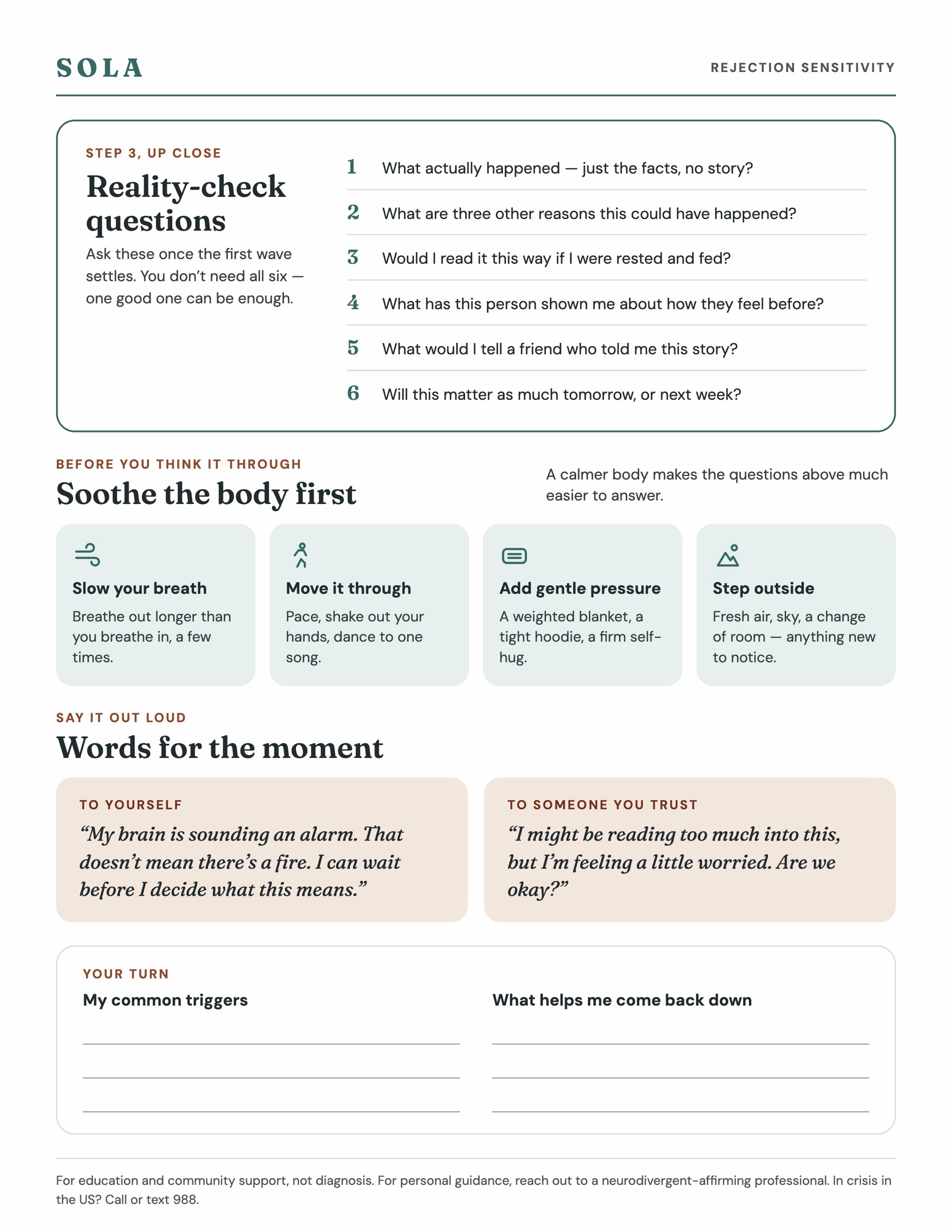
Reality-check questions
Step 3, up close. Ask these once the first wave settles. You don’t need all six — one good one can be enough.
- 1 What actually happened — just the facts, no story?
- 2 What are three other reasons this could have happened?
- 3 Would I read it this way if I were rested and fed?
- 4 What has this person shown me about how they feel before?
- 5 What would I tell a friend who told me this story?
- 6 Will this matter as much tomorrow, or next week?
Soothe the body first
Before you think it through. A calmer body makes the questions above much easier to answer.
Breathe out longer than you breathe in, a few times.
Pace, shake out your hands, dance to one song.
A weighted blanket, a tight hoodie, a firm self-hug.
Fresh air, sky, a change of room — anything new to notice.
Words for the moment
Say it out loud
“My brain is sounding an alarm. That doesn’t mean there’s a fire. I can wait before I decide what this means.”
“I might be reading too much into this, but I’m feeling a little worried. Are we okay?”
Your turn
For education and community support, not diagnosis. For personal guidance, reach out to a neurodivergent-affirming professional. In crisis in the US? Call or text 988.
Sources and credits. SOLA · Community Resource · Rejection Sensitivity