Understand
The Hormone Connection
Estrogen, dopamine and neurodivergent brains across life stages
The guide, as designed. The same content is written out below.
See page 2
How estrogen and focus connect
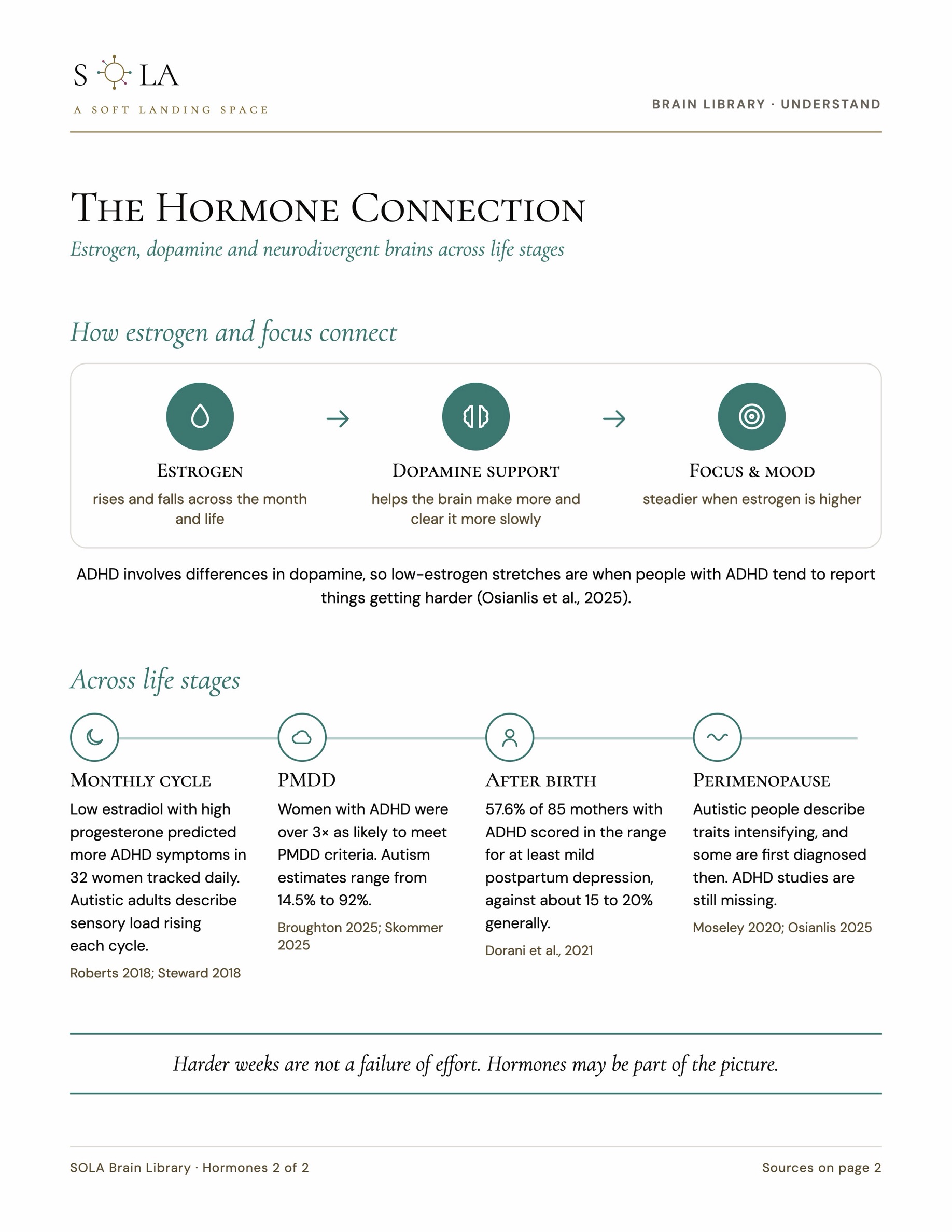
Estrogen rises and falls across the month and life → Dopamine support helps the brain make more and clear it more slowly → Focus & mood steadier when estrogen is higher
ADHD involves differences in dopamine, so low-estrogen stretches are when people with ADHD tend to report things getting harder (Osianlis et al., 2025).
Across life stages
Low estradiol with high progesterone predicted more ADHD symptoms in 32 women tracked daily. Autistic adults describe sensory load rising each cycle. Roberts 2018; Steward 2018
Women with ADHD were over 3× as likely to meet PMDD criteria. Autism estimates range from 14.5% to 92%. Broughton 2025; Skommer 2025
57.6% of 85 mothers with ADHD scored in the range for at least mild postpartum depression, against about 15 to 20% generally. Dorani et al., 2021
Autistic people describe traits intensifying, and some are first diagnosed then. ADHD studies are still missing. Moseley 2020; Osianlis 2025
Harder weeks are not a failure of effort. Hormones may be part of the picture.
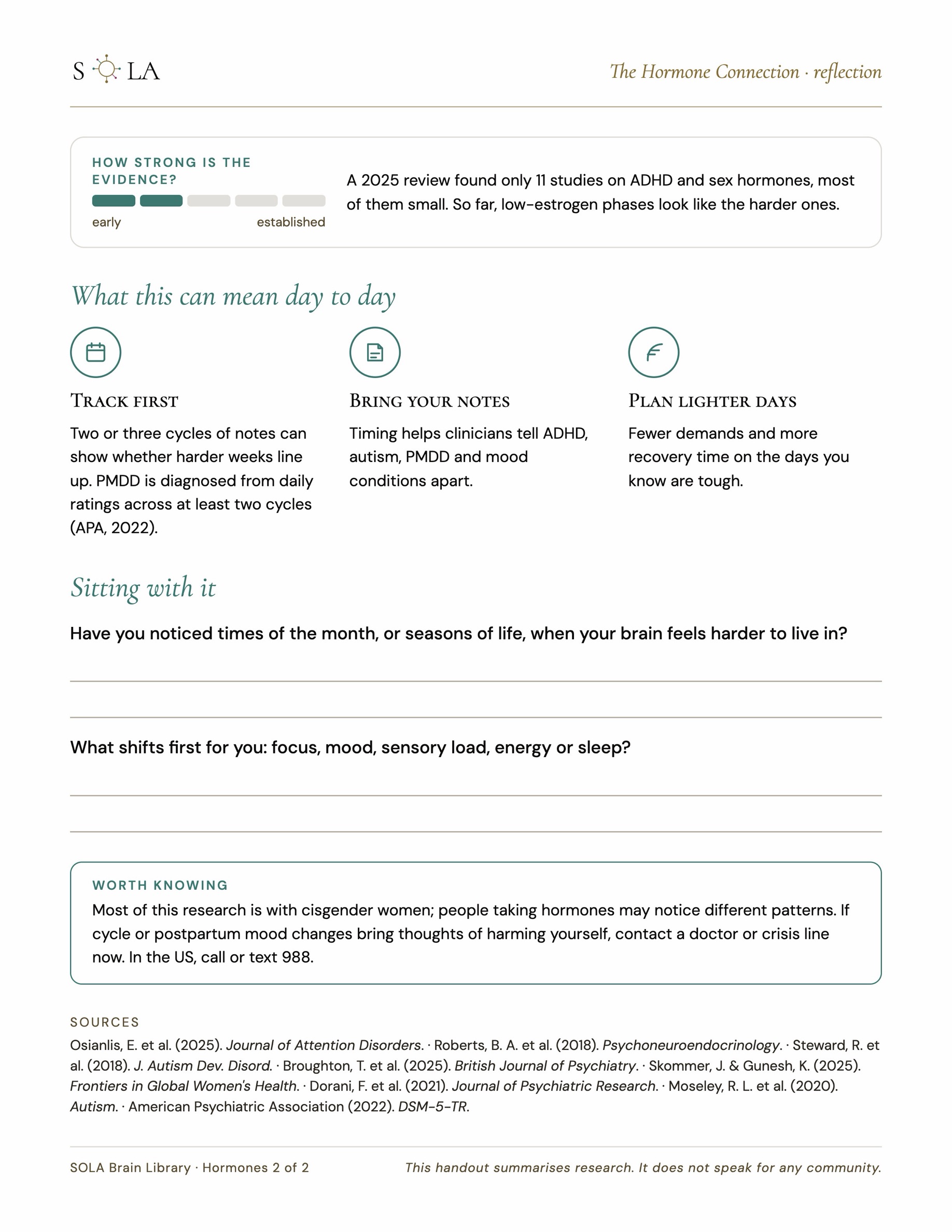
How strong is the evidence?
Early → established: 2 of 5 bars filled (early).
A 2025 review found only 11 studies on ADHD and sex hormones, most of them small. So far, low-estrogen phases look like the harder ones.
What this can mean day to day
Two or three cycles of notes can show whether harder weeks line up. PMDD is diagnosed from daily ratings across at least two cycles (APA, 2022).
Timing helps clinicians tell ADHD, autism, PMDD and mood conditions apart.
Fewer demands and more recovery time on the days you know are tough.
Sitting with it
Worth knowing
Most of this research is with cisgender women; people taking hormones may notice different patterns. If cycle or postpartum mood changes bring thoughts of harming yourself, contact a doctor or crisis line now. In the US, call or text 988.
Worth knowing. Most of this research is with cisgender women; people taking hormones may notice different patterns. If cycle or postpartum mood changes bring thoughts of harming yourself, contact a doctor or crisis line now. In the US, call or text 988.
Sources and credits. SOLA Brain Library · Hormones 2 of 2. This handout summarises research. It does not speak for any community. Sources: Osianlis, E. et al. (2025). Journal of Attention Disorders. · Roberts, B. A. et al. (2018). Psychoneuroendocrinology. · Steward, R. et al. (2018). J. Autism Dev. Disord. · Broughton, T. et al. (2025). British Journal of Psychiatry. · Skommer, J. & Gunesh, K. (2025). Frontiers in Global Women's Health. · Dorani, F. et al. (2021). Journal of Psychiatric Research. · Moseley, R. L. et al. (2020). Autism. · American Psychiatric Association (2022). DSM-5-TR.