Learn
When two brains share one head.
Brain Library · AuDHD
“AuDHD” is a community term for being both autistic and ADHD. The traits can blend together, hide each other, or pull you in opposite directions, and every person’s mix is their own.
The guide, as designed. The same content is written out below.
See page 2
Two circles, one you
Traits many AuDHD people describe
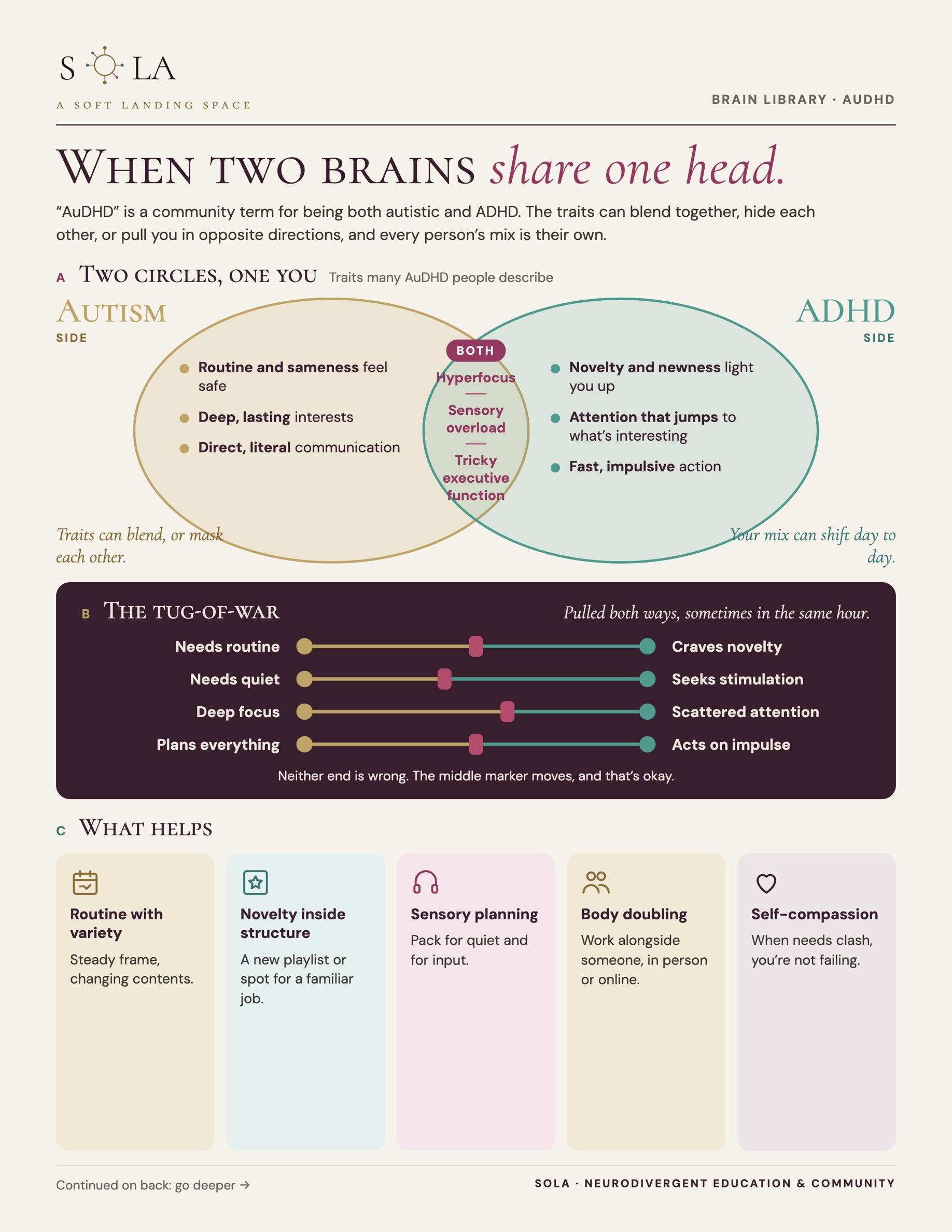
Two overlapping circles: an Autism side, an ADHD side, and a shared middle marked “Both”.
- Routine and sameness feel safe
- Deep, lasting interests
- Direct, literal communication
- Hyperfocus
- Sensory overload
- Tricky executive function
- Novelty and newness light you up
- Attention that jumps to what’s interesting
- Fast, impulsive action
Traits can blend, or mask each other. Your mix can shift day to day.
The tug-of-war
Pulled both ways, sometimes in the same hour.
Four sliders, each with a marker somewhere in the middle:
- Needs routine ↔ Craves novelty
- Needs quiet ↔ Seeks stimulation
- Deep focus ↔ Scattered attention
- Plans everything ↔ Acts on impulse
Neither end is wrong. The middle marker moves, and that’s okay.
What helps
Steady frame, changing contents.
A new playlist or spot for a familiar job.
Pack for quiet and for input.
Work alongside someone, in person or online.
When needs clash, you’re not failing.
Map your own mix.
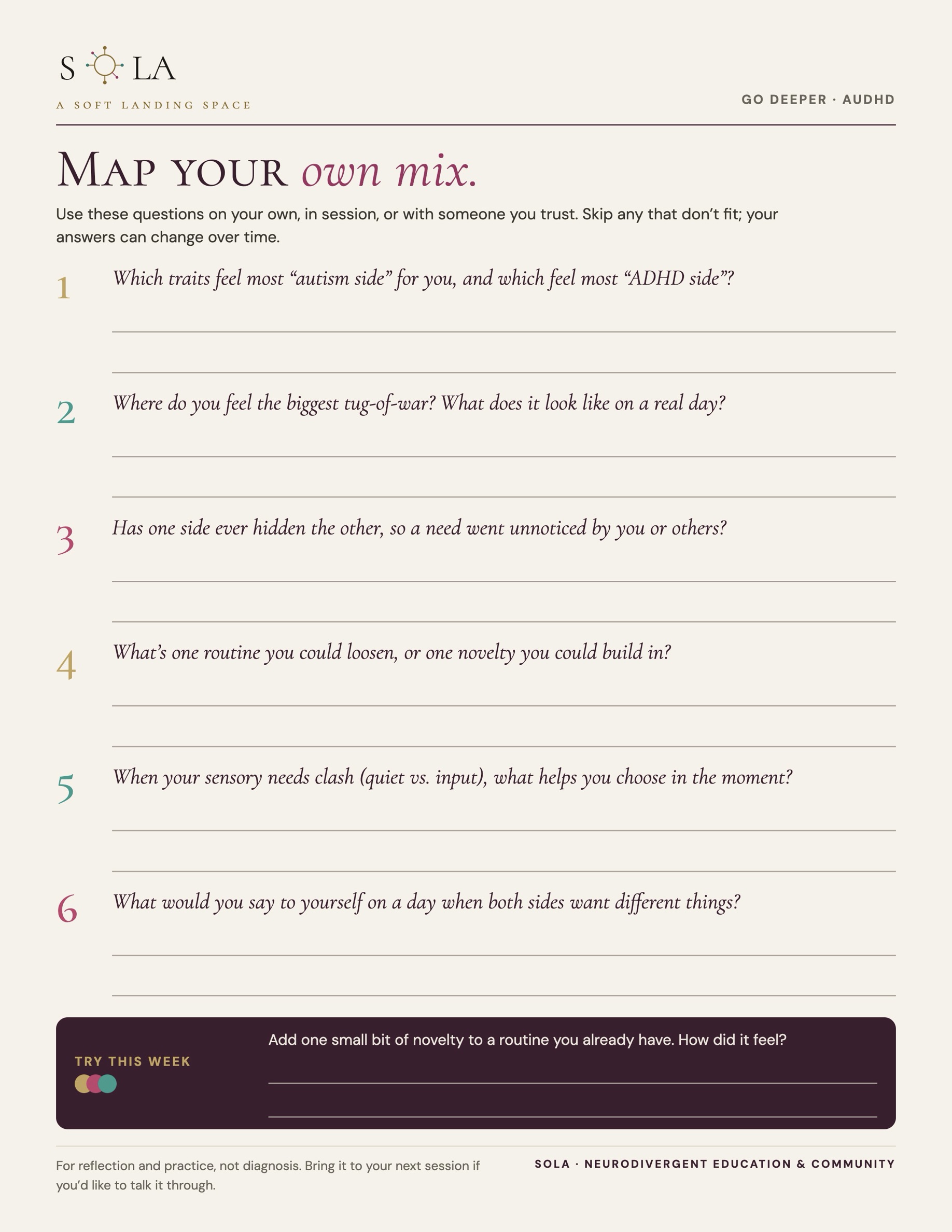
Use these questions on your own, in session, or with someone you trust. Skip any that don’t fit; your answers can change over time.
Try this week
For reflection and practice, not diagnosis. Bring it to your next session if you’d like to talk it through.