Understand
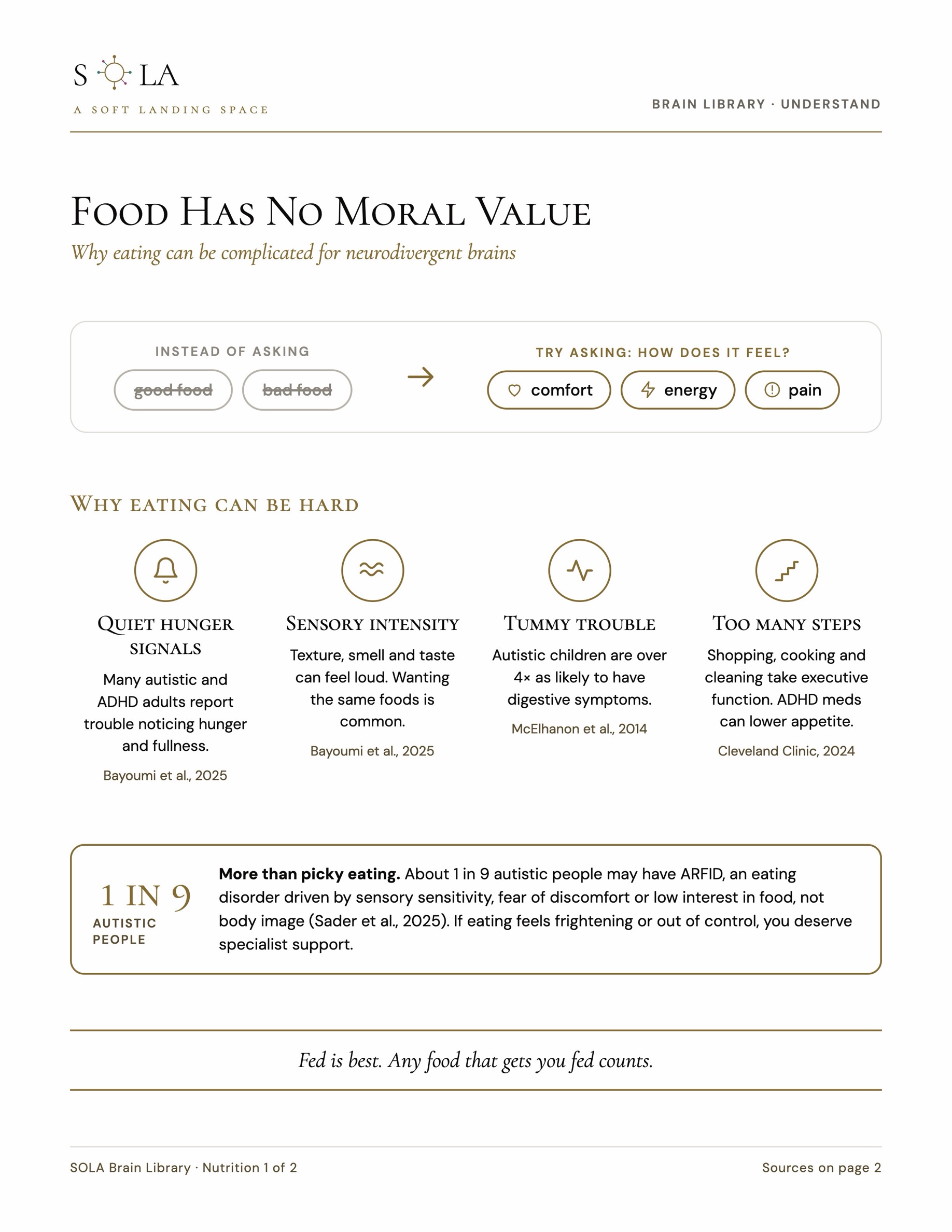
Food Has No Moral Value
Why eating can be complicated for neurodivergent brains
The guide, as designed. The same content is written out below.
See page 2
Instead of asking: good food · bad food
Try asking: how does it feel? comfort · energy · pain
Why eating can be hard
Many autistic and ADHD adults report trouble noticing hunger and fullness. Bayoumi et al., 2025
Texture, smell and taste can feel loud. Wanting the same foods is common. Bayoumi et al., 2025
Autistic children are over 4× as likely to have digestive symptoms. McElhanon et al., 2014
Shopping, cooking and cleaning take executive function. ADHD meds can lower appetite. Cleveland Clinic, 2024
More than picky eating. About 1 in 9 autistic people may have ARFID, an eating disorder driven by sensory sensitivity, fear of discomfort or low interest in food, not body image (Sader et al., 2025). If eating feels frightening or out of control, you deserve specialist support.
Fed is best. Any food that gets you fed counts.
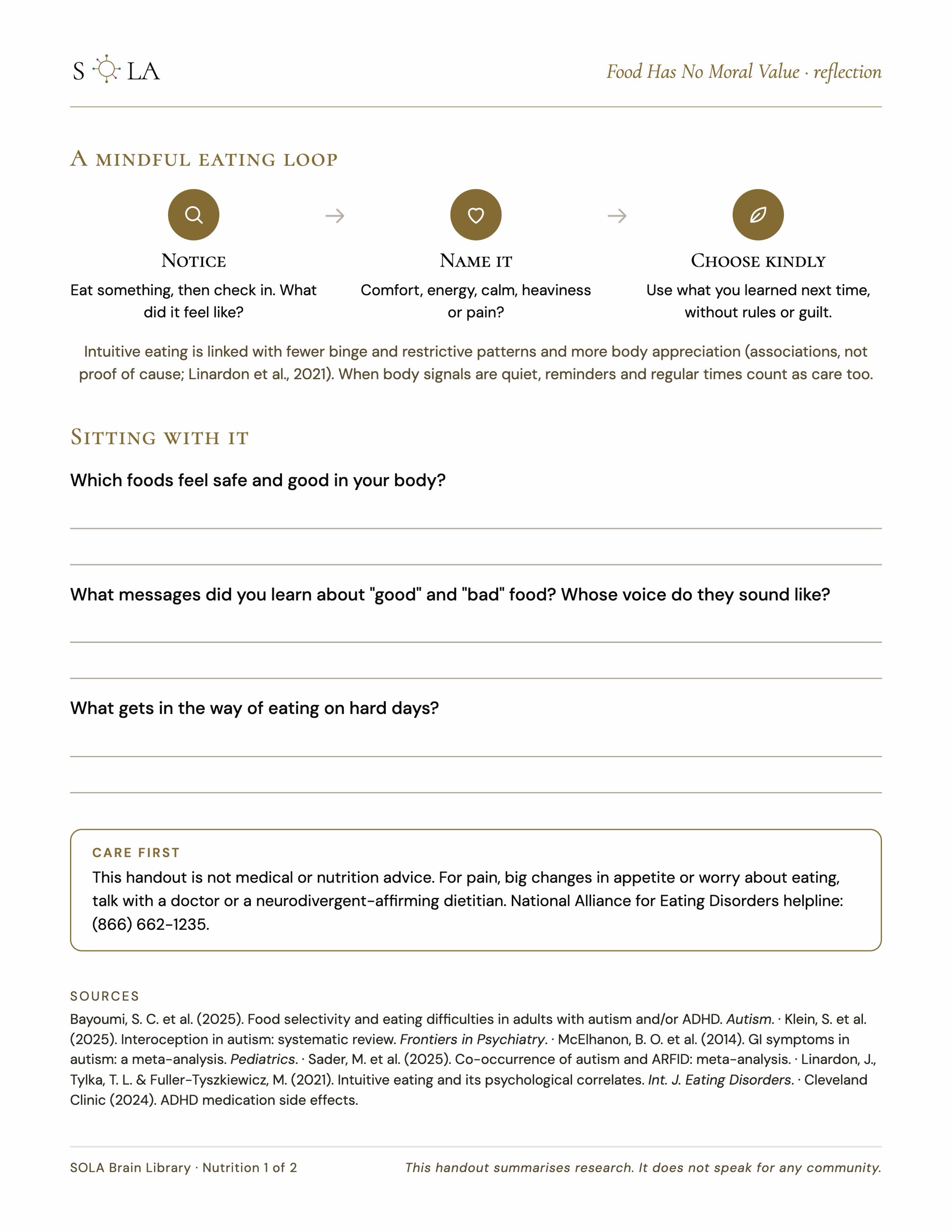
A mindful eating loop
Notice. Eat something, then check in. What did it feel like?
Name it. Comfort, energy, calm, heaviness or pain?
Choose kindly. Use what you learned next time, without rules or guilt.
Intuitive eating is linked with fewer binge and restrictive patterns and more body appreciation (associations, not proof of cause; Linardon et al., 2021). When body signals are quiet, reminders and regular times count as care too.
Sitting with it
Care first
This handout is not medical or nutrition advice. For pain, big changes in appetite or worry about eating, talk with a doctor or a neurodivergent-affirming dietitian. National Alliance for Eating Disorders helpline: (866) 662-1235.
Care first. This handout is not medical or nutrition advice. For pain, big changes in appetite or worry about eating, talk with a doctor or a neurodivergent-affirming dietitian. National Alliance for Eating Disorders helpline: (866) 662-1235.
Sources and credits. SOLA Brain Library · Nutrition 1 of 2. This handout summarises research. It does not speak for any community. Sources: Bayoumi, S. C. et al. (2025). Food selectivity and eating difficulties in adults with autism and/or ADHD. Autism. · Klein, S. et al. (2025). Interoception in autism: systematic review. Frontiers in Psychiatry. · McElhanon, B. O. et al. (2014). GI symptoms in autism: a meta-analysis. Pediatrics. · Sader, M. et al. (2025). Co-occurrence of autism and ARFID: meta-analysis. · Linardon, J., Tylka, T. L. & Fuller-Tyszkiewicz, M. (2021). Intuitive eating and its psychological correlates. Int. J. Eating Disorders. · Cleveland Clinic (2024). ADHD medication side effects.