Learn
When demands feel like threats.
Brain Library · Demand Avoidance
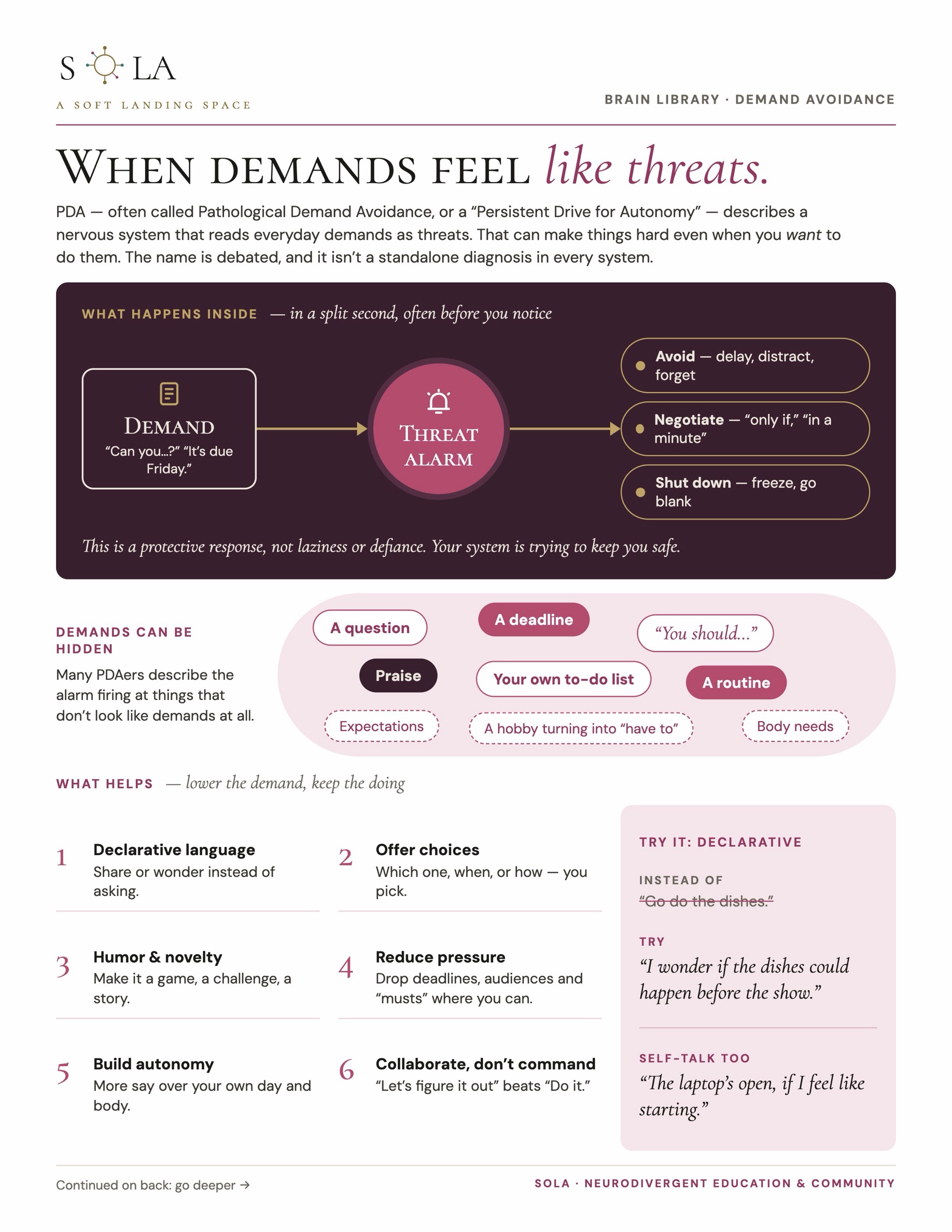
PDA — often called Pathological Demand Avoidance, or a “Persistent Drive for Autonomy” — describes a nervous system that reads everyday demands as threats. That can make things hard even when you want to do them. The name is debated, and it isn’t a standalone diagnosis in every system.
The guide, as designed. The same content is written out below.
See page 2
What happens inside
— in a split second, often before you notice
Demand “Can you…?” “It’s due Friday.” → Threat alarm → one of three responses:
- Avoid — delay, distract, forget
- Negotiate — “only if,” “in a minute”
- Shut down — freeze, go blank
This is a protective response, not laziness or defiance. Your system is trying to keep you safe.
Demands can be hidden
Many PDAers describe the alarm firing at things that don’t look like demands at all.
- A question
- A deadline
- “You should…”
- Praise
- Your own to-do list
- A routine
- Expectations
- A hobby turning into “have to”
- Body needs
What helps
— lower the demand, keep the doing
Share or wonder instead of asking.
Which one, when, or how — you pick.
Make it a game, a challenge, a story.
Drop deadlines, audiences and “musts” where you can.
More say over your own day and body.
“Let’s figure it out” beats “Do it.”
Instead of “Go do the dishes.”
Try “I wonder if the dishes could happen before the show.”
Self-talk too “The laptop’s open, if I feel like starting.”
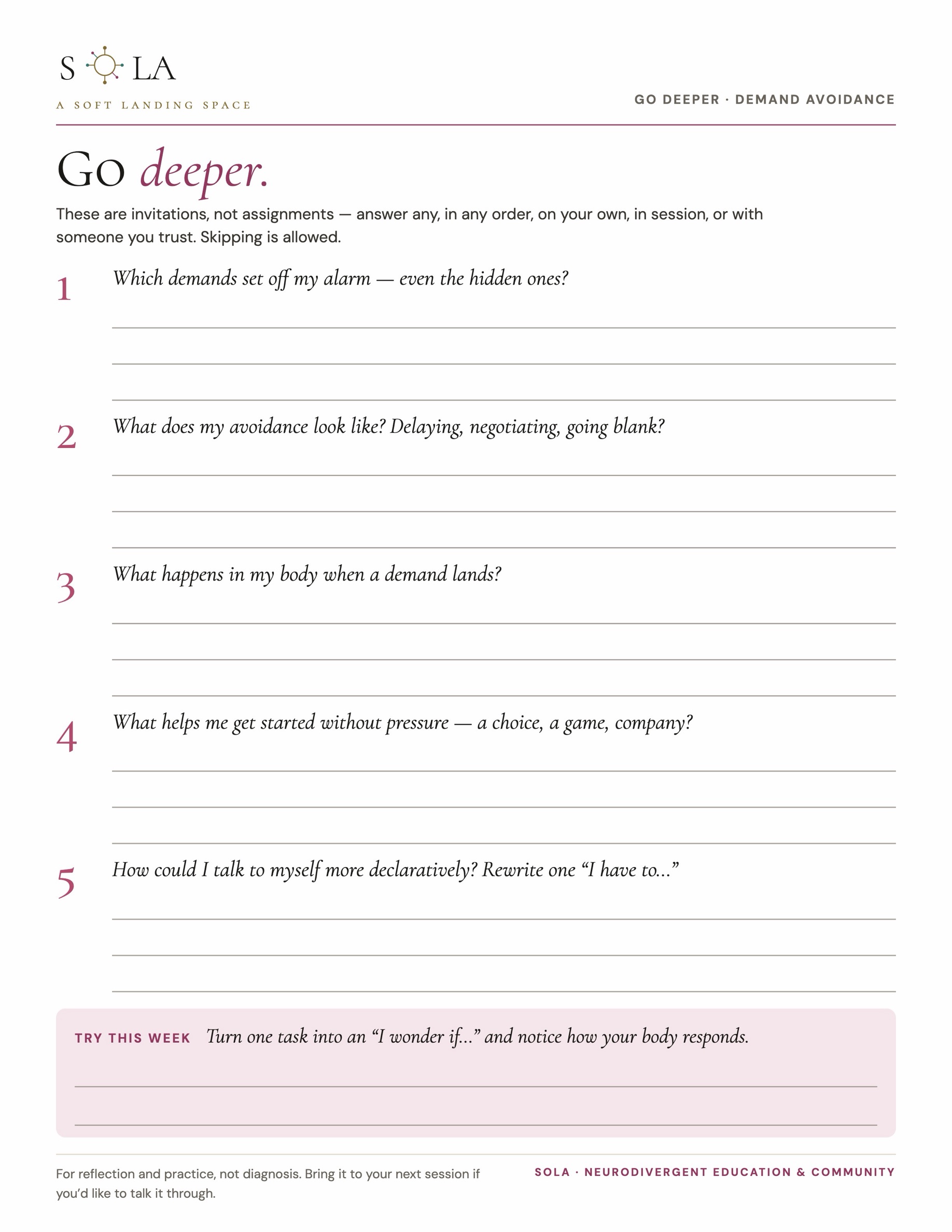
Go deeper.
These are invitations, not assignments — answer any, in any order, on your own, in session, or with someone you trust. Skipping is allowed.
Try this week
For reflection and practice, not diagnosis. Bring it to your next session if you’d like to talk it through.