Understand
Feelings & Sensations Scale
How Big Is This Feeling? · Where Do I Feel It?
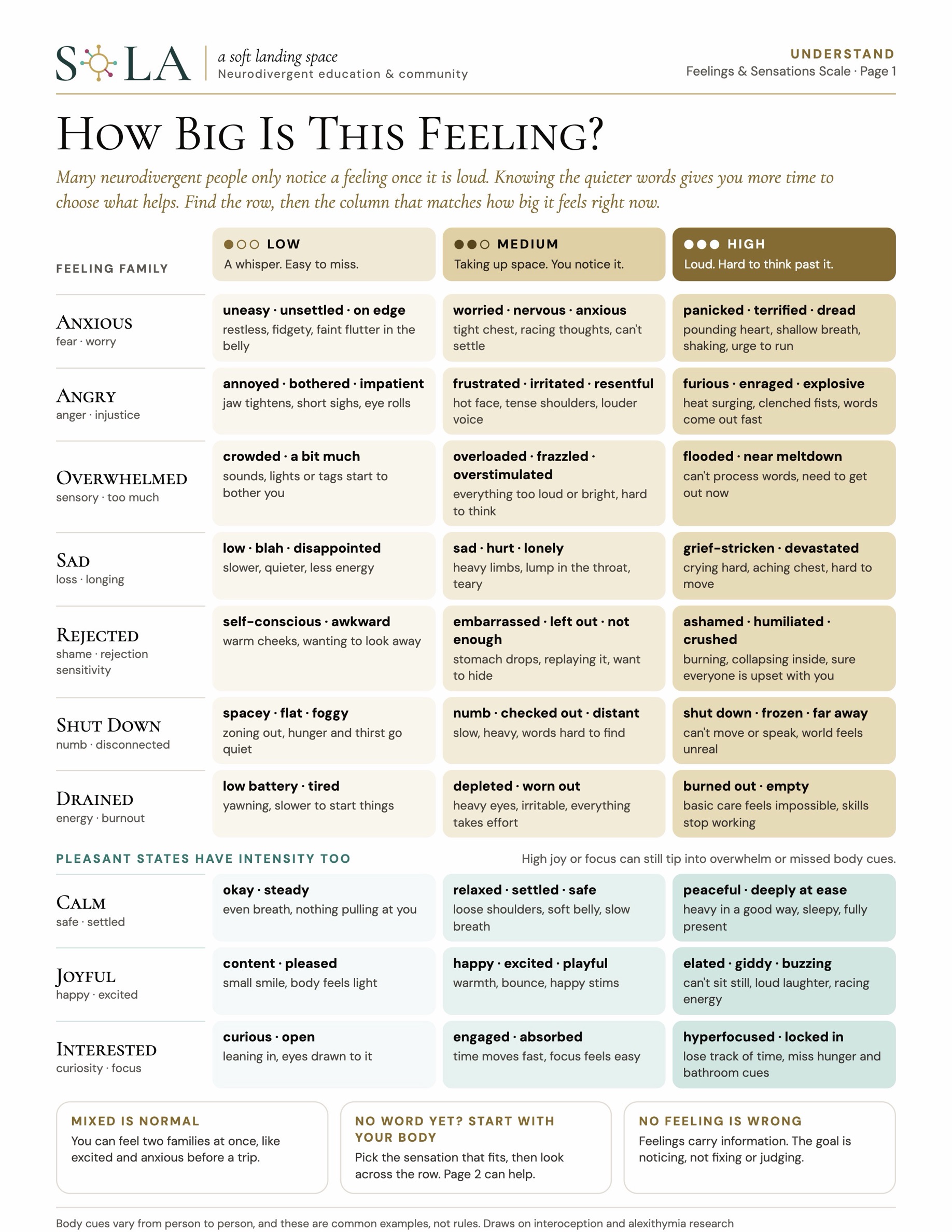
Many neurodivergent people only notice a feeling once it is loud. Knowing the quieter words gives you more time to choose what helps. Find the row, then the column that matches how big it feels right now.
The guide, as designed. The same content is written out below.
See page 2
How Big Is This Feeling?
, then three sizes:
- Low: A whisper. Easy to miss.
- Medium: Taking up space. You notice it.
- High: Loud. Hard to think past it.
· fear · worry
- Low: uneasy · unsettled · on edge. Restless, fidgety, faint flutter in the belly
- Medium: worried · nervous · anxious. Tight chest, racing thoughts, can't settle
- High: panicked · terrified · dread. Pounding heart, shallow breath, shaking, urge to run
· anger · injustice
- Low: annoyed · bothered · impatient. Jaw tightens, short sighs, eye rolls
- Medium: frustrated · irritated · resentful. Hot face, tense shoulders, louder voice
- High: furious · enraged · explosive. Heat surging, clenched fists, words come out fast
· sensory · too much
- Low: crowded · a bit much. Sounds, lights or tags start to bother you
- Medium: overloaded · frazzled · overstimulated. Everything too loud or bright, hard to think
- High: flooded · near meltdown. Can't process words, need to get out now
· loss · longing
- Low: low · blah · disappointed. Slower, quieter, less energy
- Medium: sad · hurt · lonely. Heavy limbs, lump in the throat, teary
- High: grief-stricken · devastated. Crying hard, aching chest, hard to move
· shame · rejection sensitivity
- Low: self-conscious · awkward. Warm cheeks, wanting to look away
- Medium: embarrassed · left out · not enough. Stomach drops, replaying it, want to hide
- High: ashamed · humiliated · crushed. Burning, collapsing inside, sure everyone is upset with you
· numb · disconnected
- Low: spacey · flat · foggy. Zoning out, hunger and thirst go quiet
- Medium: numb · checked out · distant. Slow, heavy, words hard to find
- High: shut down · frozen · far away. Can't move or speak, world feels unreal
· energy · burnout
- Low: low battery · tired. Yawning, slower to start things
- Medium: depleted · worn out. Heavy eyes, irritable, everything takes effort
- High: burned out · empty. Basic care feels impossible, skills stop working
Pleasant states have intensity too
High joy or focus can still tip into overwhelm or missed body cues.
· safe · settled
- Low: okay · steady. Even breath, nothing pulling at you
- Medium: relaxed · settled · safe. Loose shoulders, soft belly, slow breath
- High: peaceful · deeply at ease. Heavy in a good way, sleepy, fully present
· happy · excited
- Low: content · pleased. Small smile, body feels light
- Medium: happy · excited · playful. Warmth, bounce, happy stims
- High: elated · giddy · buzzing. Can't sit still, loud laughter, racing energy
· curiosity · focus
- Low: curious · open. Leaning in, eyes drawn to it
- Medium: engaged · absorbed. Time moves fast, focus feels easy
- High: hyperfocused · locked in. Lose track of time, miss hunger and bathroom cues
You can feel two families at once, like excited and anxious before a trip.
Pick the sensation that fits, then look across the row. Page 2 can help.
Feelings carry information. The goal is noticing, not fixing or judging.
Where Do I Feel It?
Low · Medium · High. Same three sizes as page 1
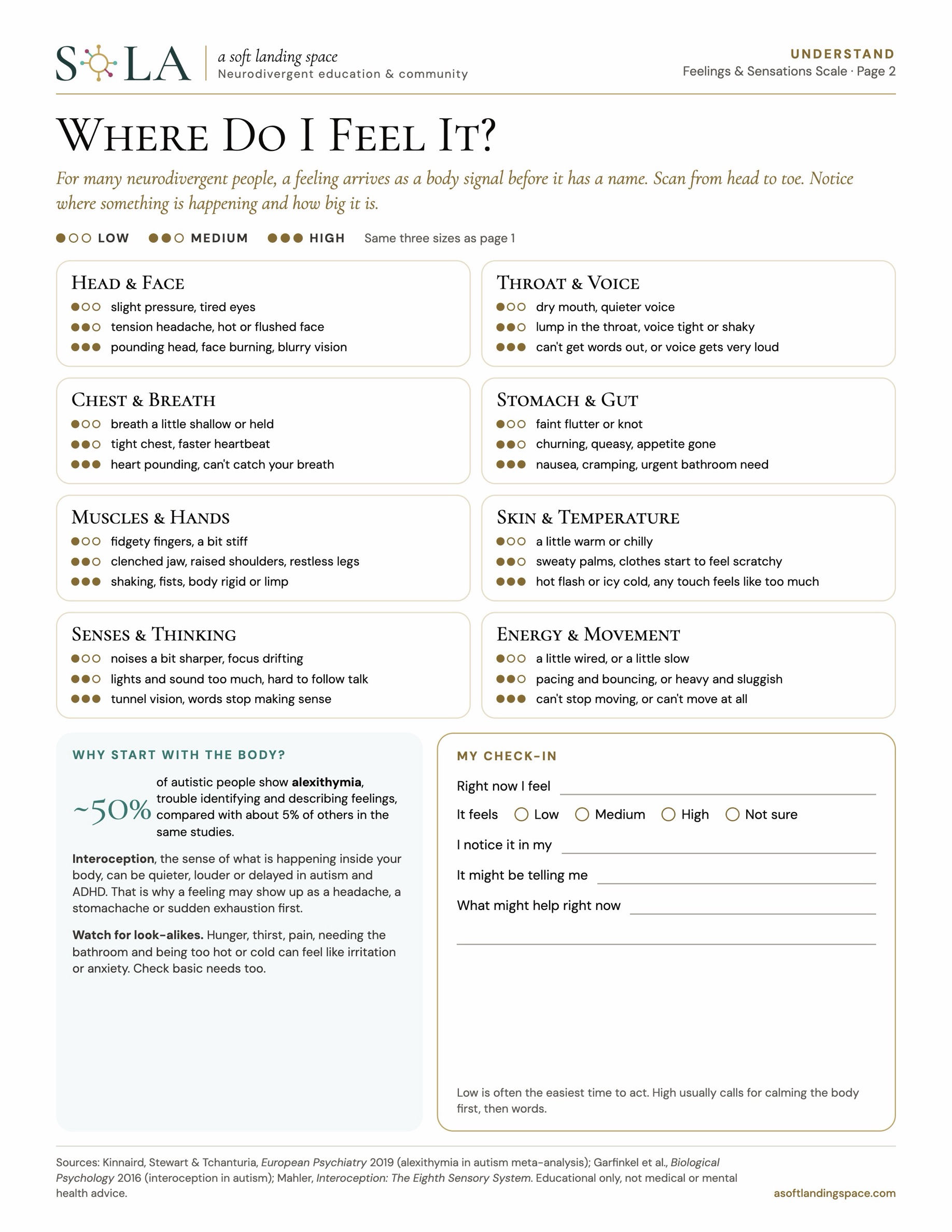
For many neurodivergent people, a feeling arrives as a body signal before it has a name. Scan from head to toe. Notice where something is happening and how big it is.
- Low: slight pressure, tired eyes
- Medium: tension headache, hot or flushed face
- High: pounding head, face burning, blurry vision
- Low: dry mouth, quieter voice
- Medium: lump in the throat, voice tight or shaky
- High: can't get words out, or voice gets very loud
- Low: breath a little shallow or held
- Medium: tight chest, faster heartbeat
- High: heart pounding, can't catch your breath
- Low: faint flutter or knot
- Medium: churning, queasy, appetite gone
- High: nausea, cramping, urgent bathroom need
- Low: fidgety fingers, a bit stiff
- Medium: clenched jaw, raised shoulders, restless legs
- High: shaking, fists, body rigid or limp
- Low: a little warm or chilly
- Medium: sweaty palms, clothes start to feel scratchy
- High: hot flash or icy cold, any touch feels like too much
- Low: noises a bit sharper, focus drifting
- Medium: lights and sound too much, hard to follow talk
- High: tunnel vision, words stop making sense
- Low: a little wired, or a little slow
- Medium: pacing and bouncing, or heavy and sluggish
- High: can't stop moving, or can't move at all
Why start with the body?
of autistic people show alexithymia, trouble identifying and describing feelings, compared with about 5% of others in the same studies.
, the sense of what is happening inside your body, can be quieter, louder or delayed in autism and ADHD. That is why a feeling may show up as a headache, a stomachache or sudden exhaustion first.
Hunger, thirst, pain, needing the bathroom and being too hot or cold can feel like irritation or anxiety. Check basic needs too.
My check-in
It feels Pick one
- Low
- Medium
- High
- Not sure
Low is often the easiest time to act. High usually calls for calming the body first, then words.
Educational only, not medical or mental health advice.
Sources and credits. Body cues vary from person to person, and these are common examples, not rules. Draws on interoception and alexithymia research. Sources: Kinnaird, Stewart & Tchanturia, European Psychiatry 2019 (alexithymia in autism meta-analysis); Garfinkel et al., Biological Psychology 2016 (interoception in autism); Mahler, Interoception: The Eighth Sensory System.