Learn
Listening inward.
Interoception
A neurodivergent guide to the messages your body sends — and gentle ways to get better at hearing them.
The guide, as designed. The same content is written out below.
See page 2
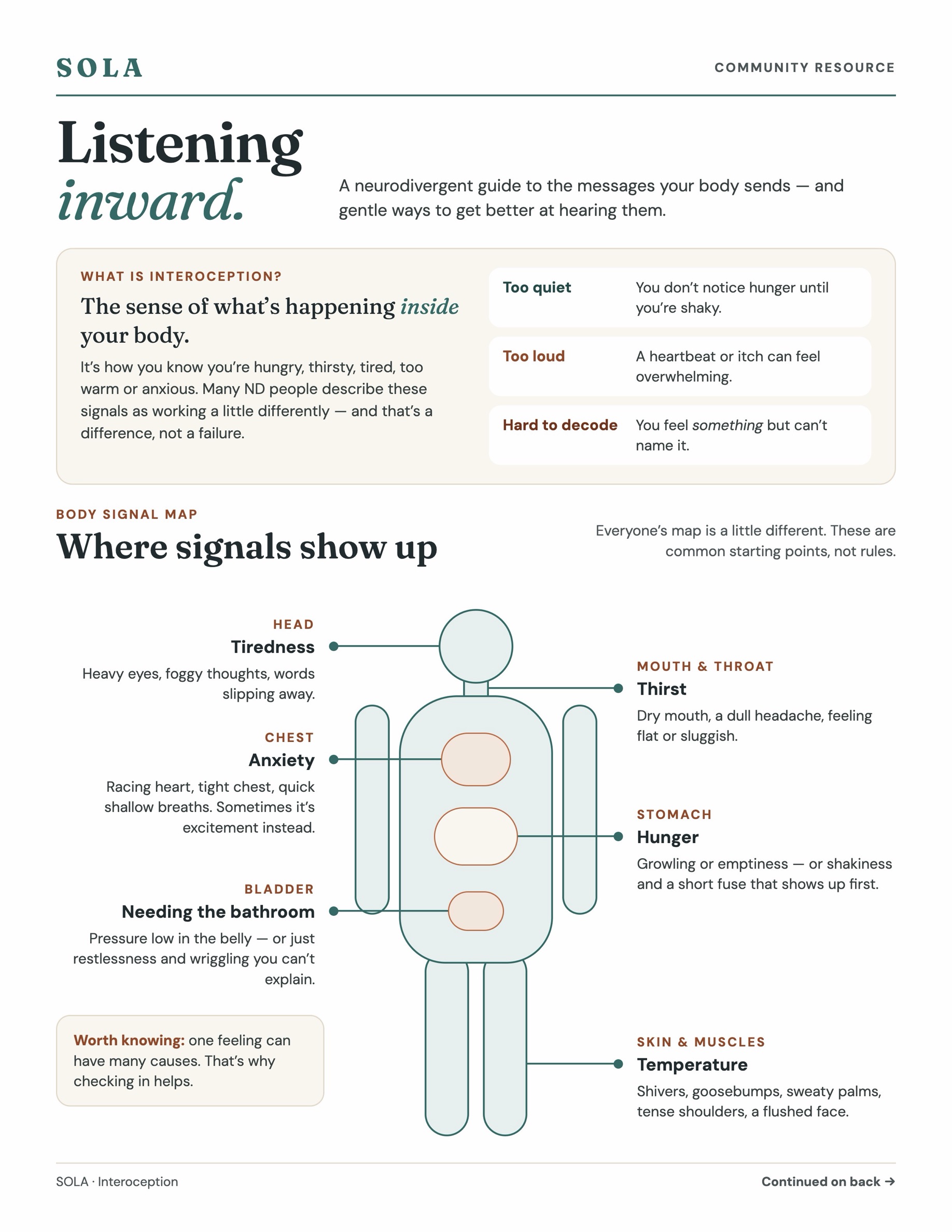
What is interoception?
It’s how you know you’re hungry, thirsty, tired, too warm or anxious. Many ND people describe these signals as working a little differently — and that’s a difference, not a failure.
You don’t notice hunger until you’re shaky.
A heartbeat or itch can feel overwhelming.
You feel something but can’t name it.
Where signals show up
Body signal map. Everyone’s map is a little different. These are common starting points, not rules.
Heavy eyes, foggy thoughts, words slipping away.
Dry mouth, a dull headache, feeling flat or sluggish.
Racing heart, tight chest, quick shallow breaths. Sometimes it’s excitement instead.
Growling or emptiness — or shakiness and a short fuse that shows up first.
Pressure low in the belly — or just restlessness and wriggling you can’t explain.
Shivers, goosebumps, sweaty palms, tense shoulders, a flushed face.
one feeling can have many causes. That’s why checking in helps.
When a feeling is hard to read
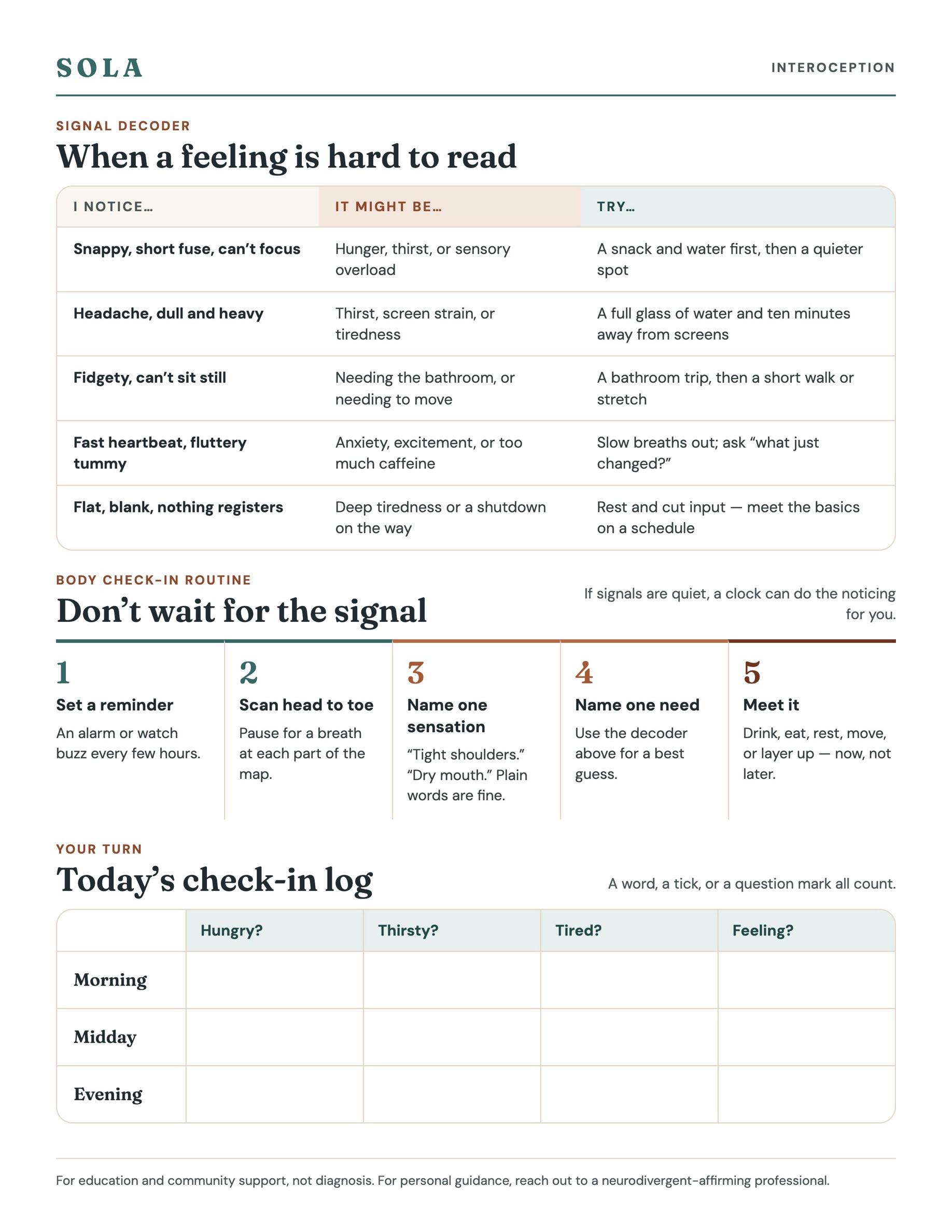
Signal decoder. I notice… / it might be… / try…
- It might be: Hunger, thirst, or sensory overload
- Try: A snack and water first, then a quieter spot
- It might be: Thirst, screen strain, or tiredness
- Try: A full glass of water and ten minutes away from screens
- It might be: Needing the bathroom, or needing to move
- Try: A bathroom trip, then a short walk or stretch
- It might be: Anxiety, excitement, or too much caffeine
- Try: Slow breaths out; ask “what just changed?”
- It might be: Deep tiredness or a shutdown on the way
- Try: Rest and cut input — meet the basics on a schedule
Don’t wait for the signal
Body check-in routine. If signals are quiet, a clock can do the noticing for you.
An alarm or watch buzz every few hours.
Pause for a breath at each part of the map.
“Tight shoulders.” “Dry mouth.” Plain words are fine.
Use the decoder above for a best guess.
Drink, eat, rest, move, or layer up — now, not later.
Today’s check-in log
Your turn. A word, a tick, or a question mark all count.
| Hungry? | Thirsty? | Tired? | Feeling? | |
|---|---|---|---|---|
| Morning | ||||
| Midday | ||||
| Evening |
For education and community support, not diagnosis. For personal guidance, reach out to a neurodivergent-affirming professional.
Sources and credits. SOLA · Community Resource · Interoception