Learn
Vitamins and first aid.
Small things you do regularly to build capacity, and quick tools for when you start to overflow.
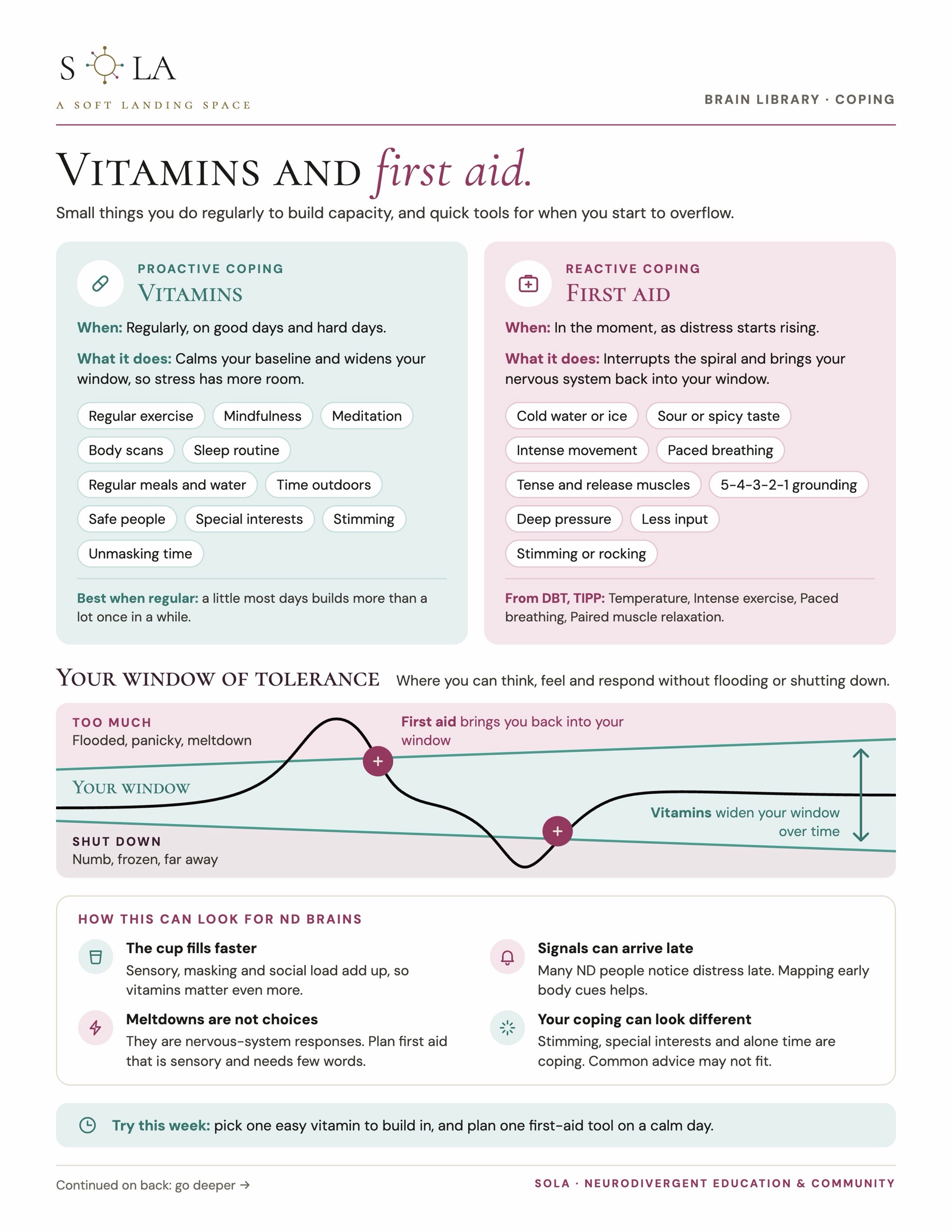
The guide, as designed. The same content is written out below.
See page 2
Vitamins
Proactive coping
When: Regularly, on good days and hard days.
What it does: Calms your baseline and widens your window, so stress has more room.
- Regular exercise
- Mindfulness
- Meditation
- Body scans
- Sleep routine
- Regular meals and water
- Time outdoors
- Safe people
- Special interests
- Stimming
- Unmasking time
Best when regular: a little most days builds more than a lot once in a while.
First aid
Reactive coping
When: In the moment, as distress starts rising.
What it does: Interrupts the spiral and brings your nervous system back into your window.
- Cold water or ice
- Sour or spicy taste
- Intense movement
- Paced breathing
- Tense and release muscles
- 5-4-3-2-1 grounding
- Deep pressure
- Less input
- Stimming or rocking
From DBT, TIPP: Temperature, Intense exercise, Paced breathing, Paired muscle relaxation.
Your window of tolerance
Where you can think, feel and respond without flooding or shutting down.
A band diagram: a line rises above the window and dips below it.
Too much: Flooded, panicky, meltdown
Your window
Shut down: Numb, frozen, far away
First aid brings you back into your window. Vitamins widen your window over time.
How this can look for ND brains
Sensory, masking and social load add up, so vitamins matter even more.
They are nervous-system responses. Plan first aid that is sensory and needs few words.
Many ND people notice distress late. Mapping early body cues helps.
Stimming, special interests and alone time are coping. Common advice may not fit.
pick one easy vitamin to build in, and plan one first-aid tool on a calm day.
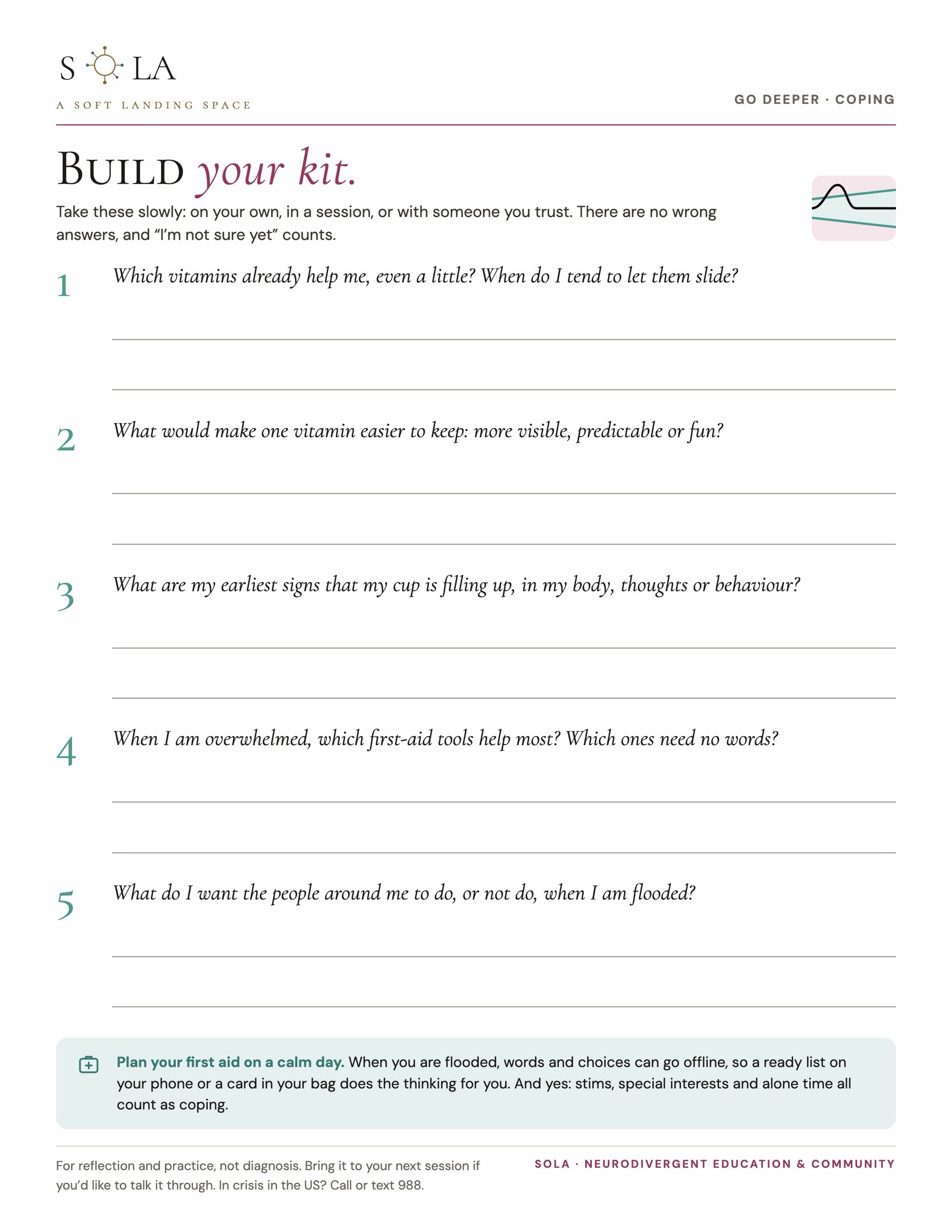
Build your kit.
Take these slowly: on your own, in a session, or with someone you trust. There are no wrong answers, and "I'm not sure yet" counts.
Plan your first aid on a calm day. When you are flooded, words and choices can go offline, so a ready list on your phone or a card in your bag does the thinking for you. And yes: stims, special interests and alone time all count as coping.
For reflection and practice, not diagnosis. Bring it to your next session if you'd like to talk it through. In crisis in the US? Call or text 988.
Sources and credits. Brain Library · Coping. SOLA · Neurodivergent education & community