Learn
The Window of Tolerance
The window of tolerance.
The zone where you can think, feel and respond. Everyone drifts in and out of it.
The guide, as designed. The same content is written out below.
See page 2
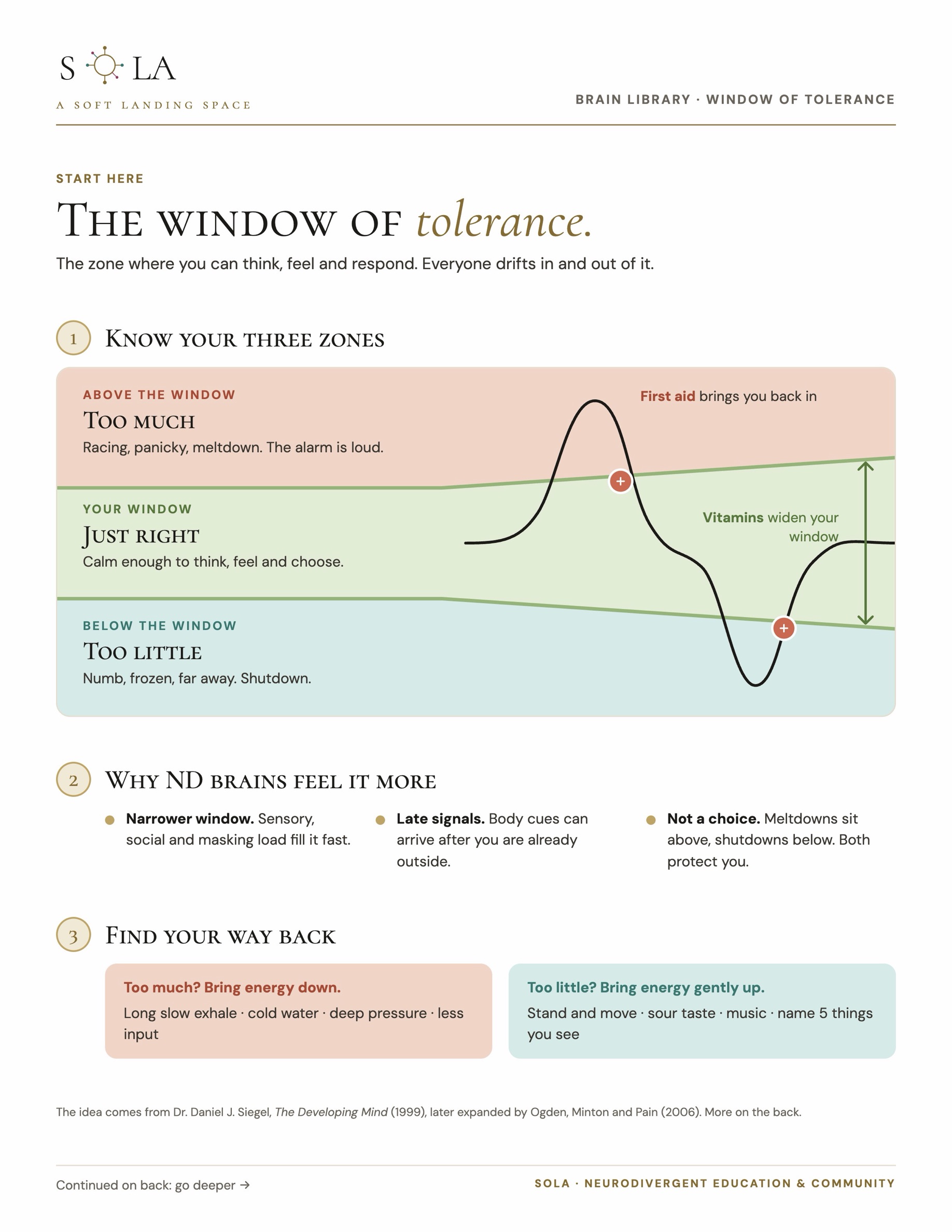
Know your three zones
Start here
Racing, panicky, meltdown. The alarm is loud.
Calm enough to think, feel and choose.
Numb, frozen, far away. Shutdown.
The diagram shows a line rising above the window and dipping below it. First aid brings you back in. Vitamins widen your window.
Why ND brains feel it more
- Narrower window. Sensory, social and masking load fill it fast.
- Late signals. Body cues can arrive after you are already outside.
- Not a choice. Meltdowns sit above, shutdowns below. Both protect you.
Find your way back
Long slow exhale · cold water · deep pressure · less input
Stand and move · sour taste · music · name 5 things you see
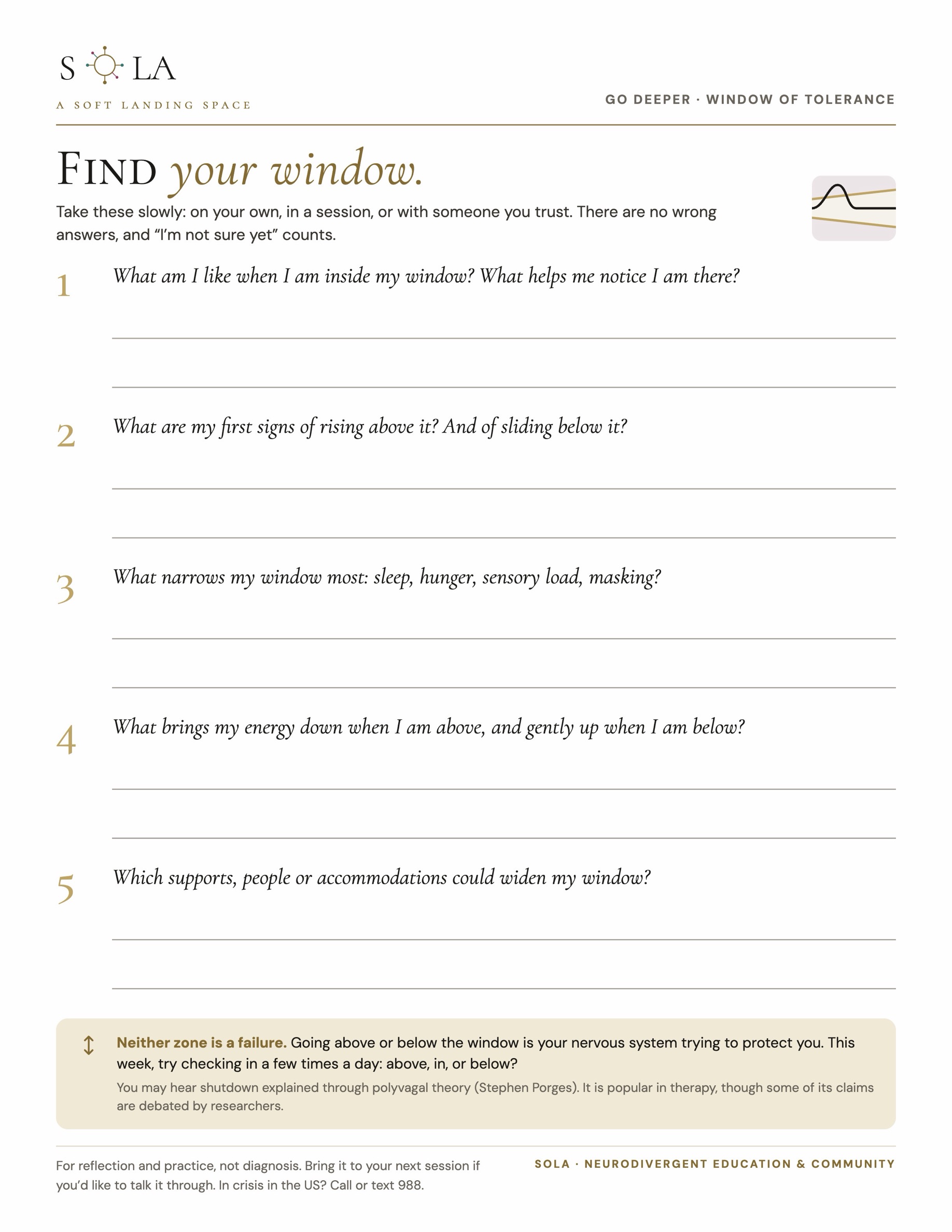
Find your window.
Take these slowly: on your own, in a session, or with someone you trust. There are no wrong answers, and "I'm not sure yet" counts.
Neither zone is a failure. Going above or below the window is your nervous system trying to protect you. This week, try checking in a few times a day: above, in, or below?
You may hear shutdown explained through polyvagal theory (Stephen Porges). It is popular in therapy, though some of its claims are debated by researchers.
For reflection and practice, not diagnosis. Bring it to your next session if you'd like to talk it through. In crisis in the US? Call or text 988.
Sources and credits. The idea comes from Dr. Daniel J. Siegel, The Developing Mind (1999), later expanded by Ogden, Minton and Pain (2006).