Learn
Your sensory fingerprint.
Sensory Profiles
Every nervous system has its own settings. Knowing yours helps you plan around what drains you — and lean on what steadies you.
The guide, as designed. The same content is written out below.
See page 2
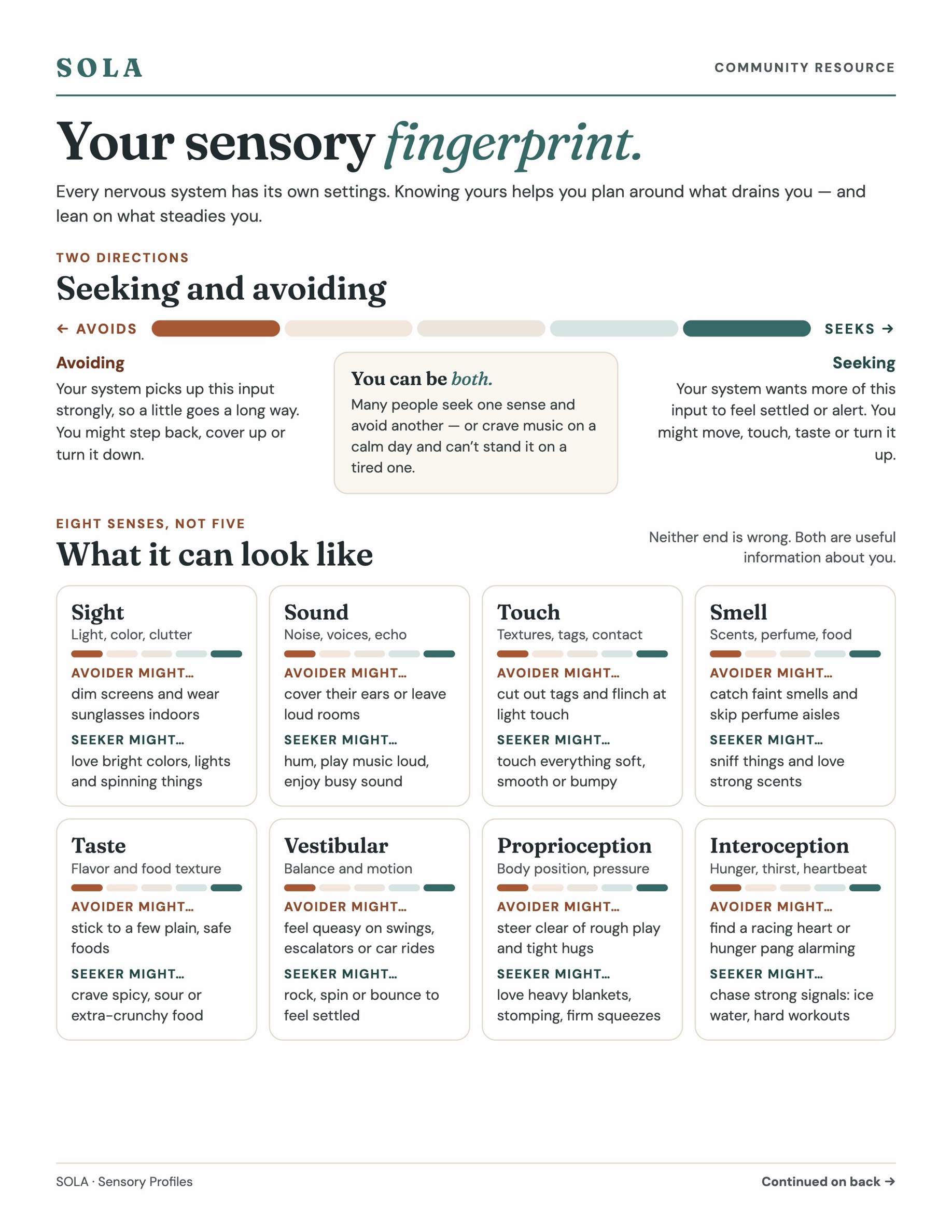
Seeking and avoiding
Two directions
← Avoids · Seeks →
Your system picks up this input strongly, so a little goes a long way. You might step back, cover up or turn it down.
Many people seek one sense and avoid another — or crave music on a calm day and can’t stand it on a tired one.
Your system wants more of this input to feel settled or alert. You might move, touch, taste or turn it up.
What it can look like
Eight senses, not five. Neither end is wrong. Both are useful information about you.
Light, color, clutter
Avoider might… dim screens and wear sunglasses indoors
Seeker might… love bright colors, lights and spinning things
Noise, voices, echo
Avoider might… cover their ears or leave loud rooms
Seeker might… hum, play music loud, enjoy busy sound
Textures, tags, contact
Avoider might… cut out tags and flinch at light touch
Seeker might… touch everything soft, smooth or bumpy
Scents, perfume, food
Avoider might… catch faint smells and skip perfume aisles
Seeker might… sniff things and love strong scents
Flavor and food texture
Avoider might… stick to a few plain, safe foods
Seeker might… crave spicy, sour or extra-crunchy food
Balance and motion
Avoider might… feel queasy on swings, escalators or car rides
Seeker might… rock, spin or bounce to feel settled
Body position, pressure
Avoider might… steer clear of rough play and tight hugs
Seeker might… love heavy blankets, stomping, firm squeezes
Hunger, thirst, heartbeat
Avoider might… find a racing heart or hunger pang alarming
Seeker might… chase strong signals: ice water, hard workouts
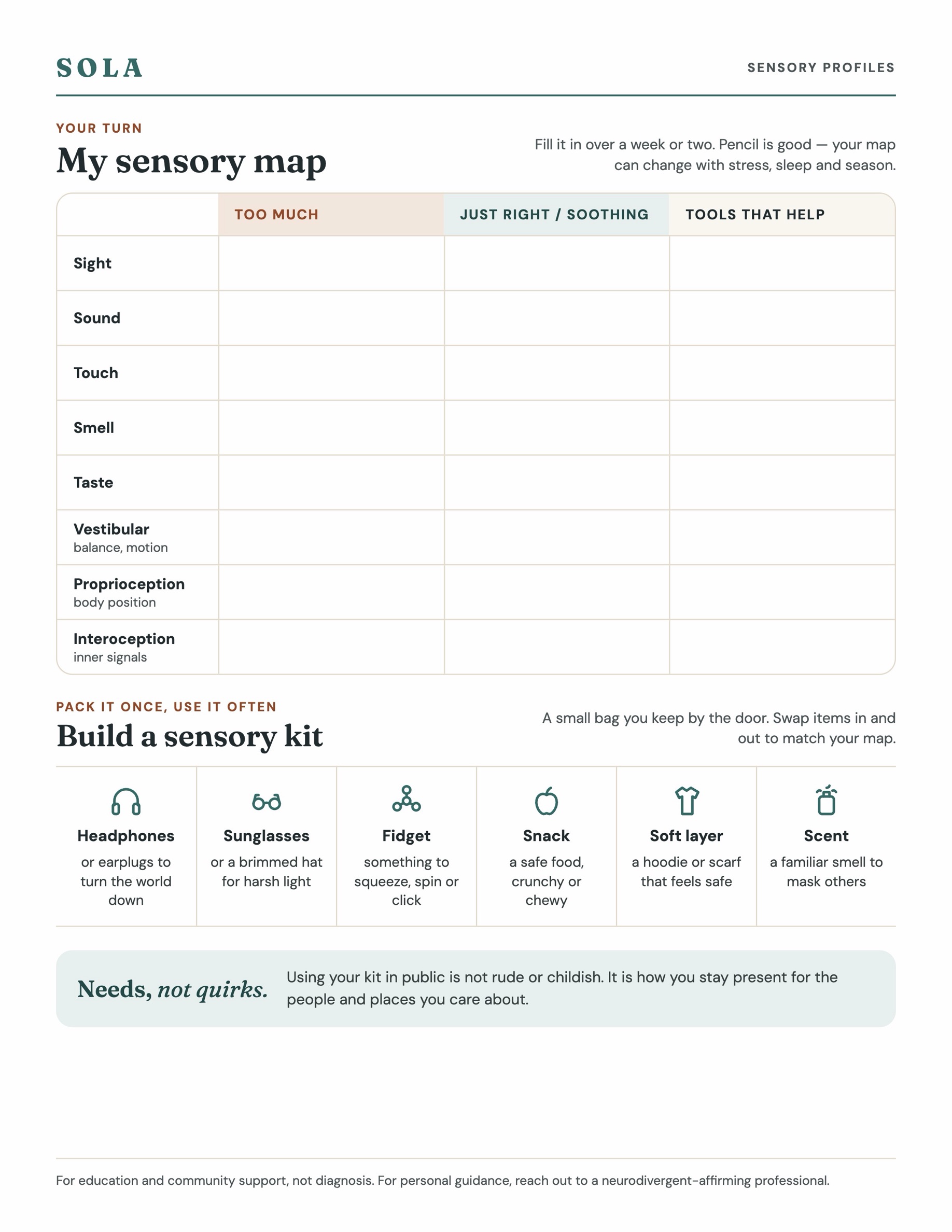
My sensory map
Your turn. Fill it in over a week or two. Pencil is good — your map can change with stress, sleep and season.
| Too much | Just right / soothing | Tools that help | |
|---|---|---|---|
| Sight | |||
| Sound | |||
| Touch | |||
| Smell | |||
| Taste | |||
| Vestibular (balance, motion) | |||
| Proprioception (body position) | |||
| Interoception (inner signals) |
Build a sensory kit
Pack it once, use it often. A small bag you keep by the door. Swap items in and out to match your map.
or earplugs to turn the world down
or a brimmed hat for harsh light
something to squeeze, spin or click
a safe food, crunchy or chewy
a hoodie or scarf that feels safe
a familiar smell to mask others
Using your kit in public is not rude or childish. It is how you stay present for the people and places you care about.
For education and community support, not diagnosis. For personal guidance, reach out to a neurodivergent-affirming professional.
Sources and credits. SOLA · Community Resource · Sensory Profiles