Learn
Stimming, explained.
Brain Library · Stimming
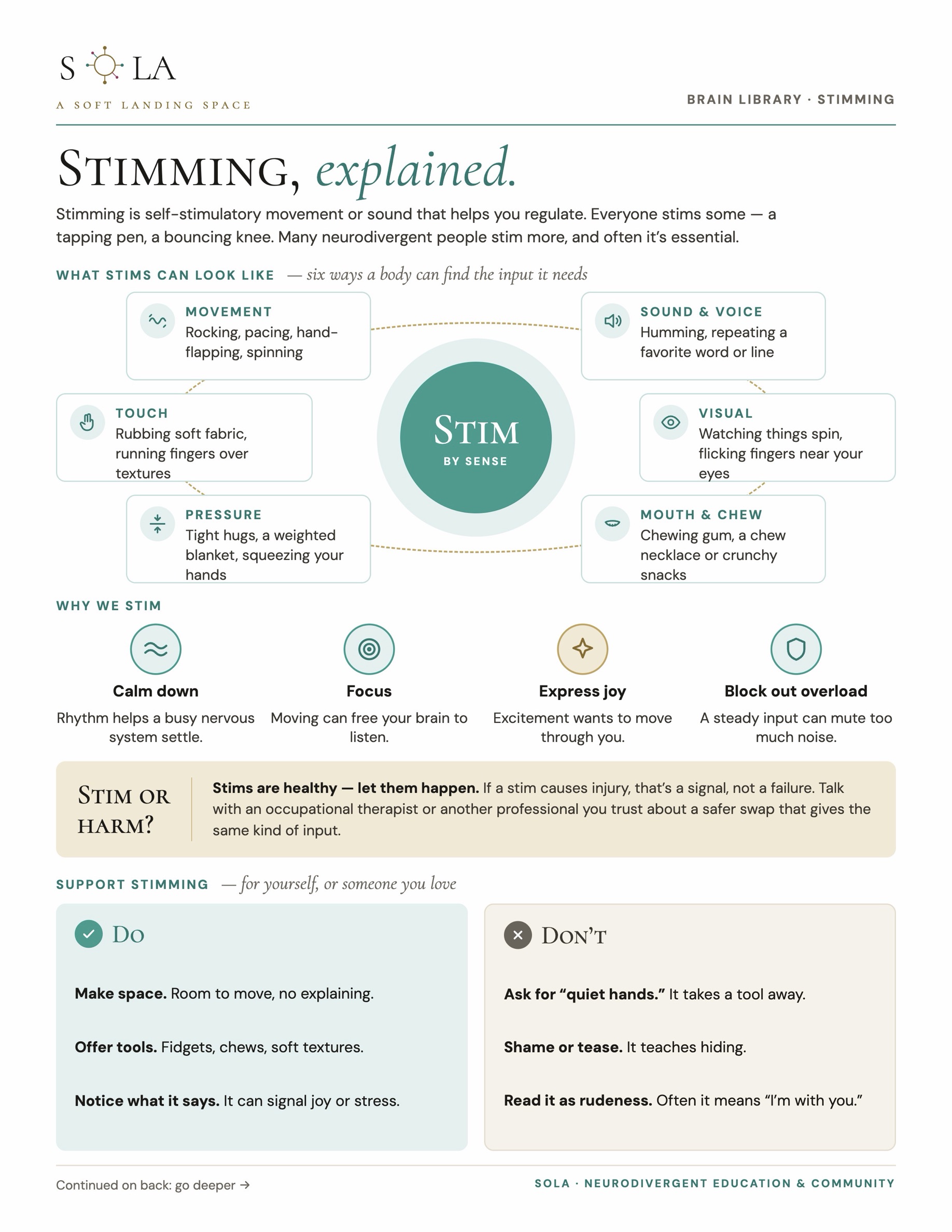
Stimming is self-stimulatory movement or sound that helps you regulate. Everyone stims some — a tapping pen, a bouncing knee. Many neurodivergent people stim more, and often it’s essential.
The guide, as designed. The same content is written out below.
See page 2
What stims can look like
six ways a body can find the input it needs
Rocking, pacing, hand-flapping, spinning
Humming, repeating a favorite word or line
Rubbing soft fabric, running fingers over textures
Watching things spin, flicking fingers near your eyes
Tight hugs, a weighted blanket, squeezing your hands
Chewing gum, a chew necklace or crunchy snacks
Why we stim
Rhythm helps a busy nervous system settle.
Moving can free your brain to listen.
Excitement wants to move through you.
A steady input can mute too much noise.
Stim or harm?
Stims are healthy — let them happen. If a stim causes injury, that’s a signal, not a failure. Talk with an occupational therapist or another professional you trust about a safer swap that gives the same kind of input.
Support stimming
for yourself, or someone you love
- Make space. Room to move, no explaining.
- Offer tools. Fidgets, chews, soft textures.
- Notice what it says. It can signal joy or stress.
- Ask for “quiet hands.” It takes a tool away.
- Shame or tease. It teaches hiding.
- Read it as rudeness. Often it means “I’m with you.”
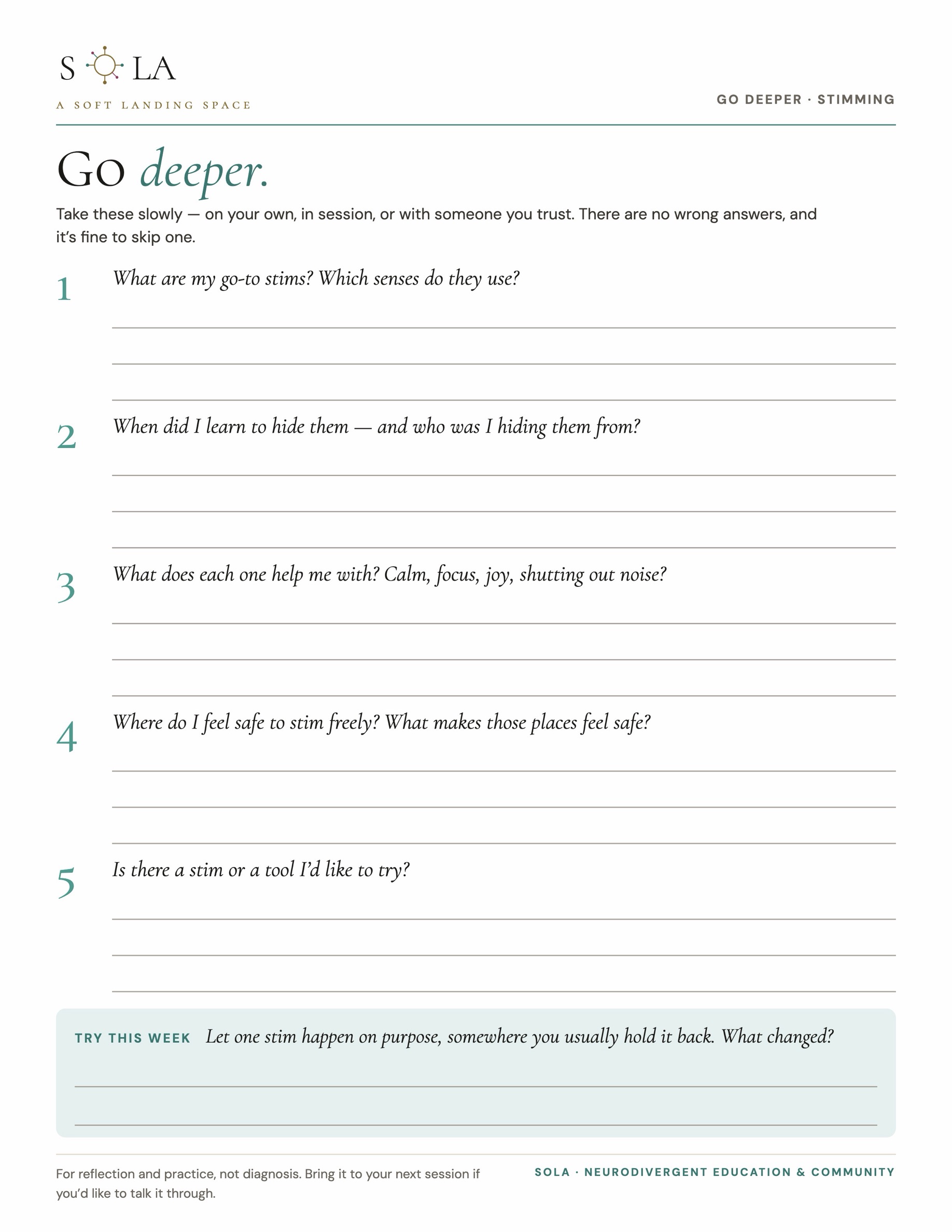
Go deeper.
Take these slowly — on your own, in session, or with someone you trust. There are no wrong answers, and it’s fine to skip one.
Try this week
For reflection and practice, not diagnosis. Bring it to your next session if you’d like to talk it through.
Sources and credits. SOLA · Neurodivergent Education & Community